 Anna Duplantis -
2 hours ago
In summary
• American ended its last long-haul international First Class flight.• U.S. airlines are replacing First with larger, better Business Class.
• Luxury remains, but it’s now sold to more passengers.
For decades, international First Class was the ultimate symbol of luxury on a U.S. airline: larger suites, better food, more privacy and a ticket price that could easily reach five figures. But that era has now effectively ended.
American Airlines has operated its final long-haul international First Class flight, making it the last major U.S. carrier to eliminate the cabin on overseas routes. Delta and United had already moved away from international First Class, and American is now following them by replacing a tiny ultra-premium cabin with something airlines increasingly believe is more profitable: a much larger and more luxurious Business Class.
The change does not mean premium travel is disappearing. In fact, the opposite is happening. U.S. airlines are putting more money into premium cabins than ever, but instead of reserving the best experience for eight First Class passengers, they are trying to sell upgraded Business Class seats to dozens of travelers on the same flight.
American’s Last International First Class Flight Marks the End of an Era
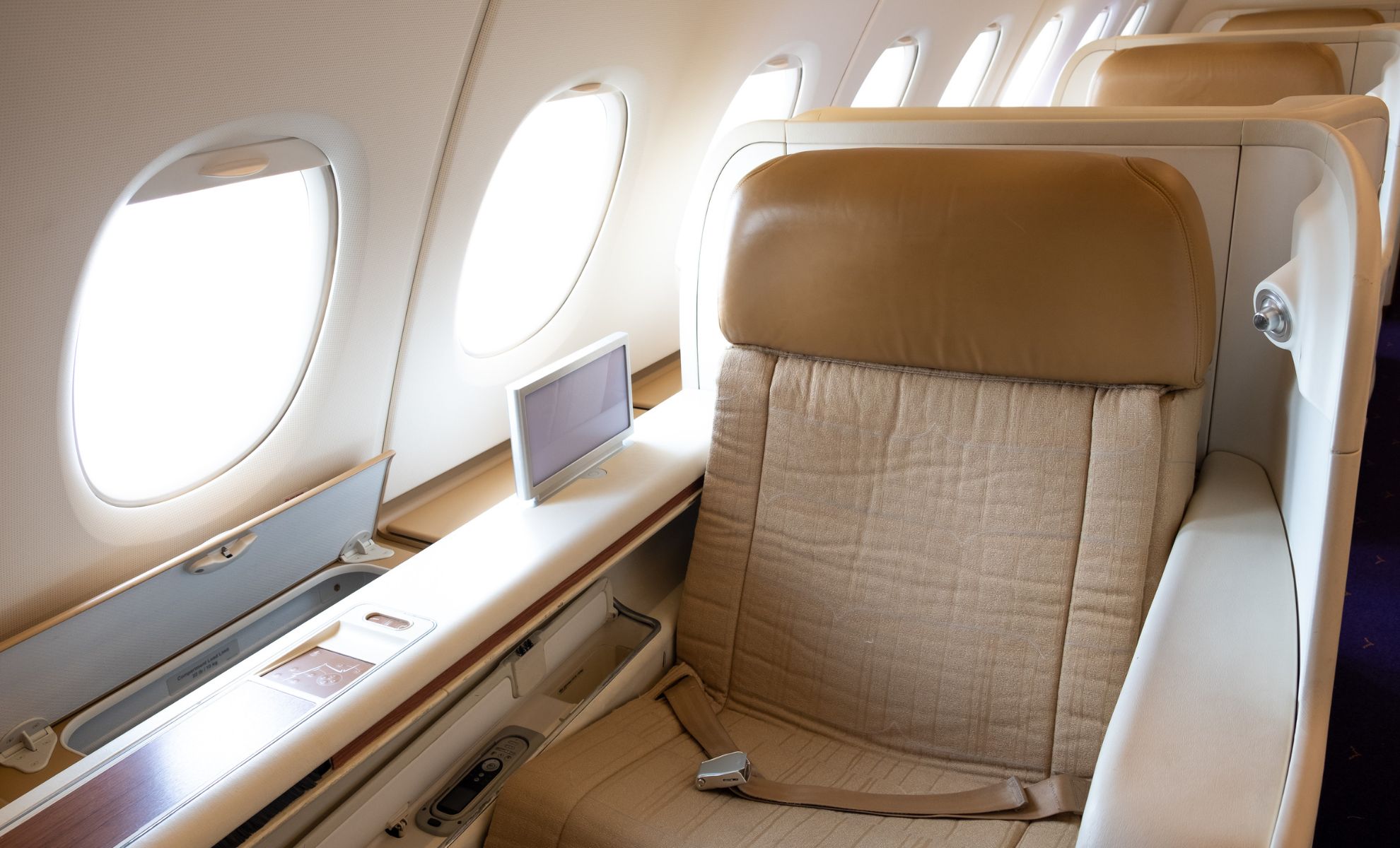
American had been the final major U.S. airline still offering a separate long-haul First Class cabin. Its last flight carrying the product departed Sydney for Los Angeles, closing a chapter that had survived even after competitors abandoned similar cabins.
The old Boeing 777-300ER configuration had just eight First Class suites alongside 52 Business Class seats. American’s redesigned aircraft removes First Class entirely and replaces the front of the plane with 70 Flagship Suite Business Class seats, the largest Business Class cabin currently offered by a U.S. airline. The aircraft also includes 44 Premium Economy seats, meaning 144 seats onboard are now considered premium.
American is not stopping there. The airline already operates Boeing 787-9s with 51 Business Class suites and is evaluating whether to increase the number of premium suites on some Boeing 787-8s from 20 into the 30s. Its broader strategy calls for roughly 50% growth in lie-flat Business Class and Premium Economy seating by the end of the decade.
Business Class Has Become So Good That First Class Was Harder to Justify
Part of the problem for First Class is that Business Class has become dramatically better.
New premium cabins increasingly offer lie-flat beds, direct aisle access, sliding privacy doors, larger entertainment screens, wireless charging, upgraded bedding and better dining. American’s latest Flagship Suites include closing doors, more storage and a chaise-lounge position, while the roomier Flagship Suite Preferred offers even more bed and living space.
That has narrowed the practical difference between the two cabins. CNBC noted that some of American’s remaining distinctions between First and Business had become surprisingly small, including extras such as soup, olives with warm nuts and additional bedding.
The price difference, however, could remain substantial. CNBC found a one-way Los Angeles-to-London ticket on American priced at roughly $12,994 in Business Class versus $15,669 in First Class during the final week of the old cabin. When Business already provides a flat bed, privacy and lounge access, convincing enough passengers to spend several thousand dollars more becomes increasingly difficult.
Airlines Have Realized They Can Sell Luxury to More People
The economics are a major part of the shift.
Eight extremely expensive First Class seats occupy a lot of valuable aircraft space. Replacing them with a larger Business Class cabin allows an airline to sell premium tickets to far more passengers, including corporate travelers whose employers may authorize Business Class but refuse to pay for First.
American Chief Commercial Officer Nat Pieper told CNBC that airlines need enough premium seats to make the economics work, saying the aircraft increasingly needs to become a “yield play.” In practical terms, carriers would rather sell dozens of expensive Business Class tickets than depend on a handful of passengers paying even more for First.
That explains why Delta One, United Polaris and American Flagship Suite have become the new top tier for the major U.S. international airlines.
First Class Is Not Dead Everywhere
The disappearance is specifically a U.S. airline story.
International carriers including Air France, Lufthansa, Singapore Airlines and British Airways continue investing in dedicated First Class products. British Airways is even upgrading First Class while planning an enormous 106-suite Business Class cabin on its Airbus A380.
There is also a strange countertrend closer to home. While the biggest U.S. airlines are eliminating ultra-premium international First Class, smaller carriers including JetBlue, Frontier and Allegiant have been expanding or introducing premium seating on domestic and shorter routes.
American will also continue operating lie-flat First Class on some transcontinental Airbus A321T flights for a few more months, but the airline says that product will disappear as well for travel beginning March 28, 2027.
For U.S. Travelers, Business Class Is Becoming the New First Class
The name on the ticket may be changing, but airlines are not abandoning wealthy travelers. They are simply redesigning the cabin around a larger audience willing to pay for comfort.
The new model is less about having eight passengers isolated at the very front of the plane and more about filling dozens of private suites with travelers willing to spend thousands of dollars for better sleep, privacy and service.
For passengers, that could ultimately mean more opportunities to book premium seats, especially with miles or upgrades. But it also signals where U.S. airlines believe the money is going.
International First Class is disappearing from American carriers.
Luxury flying is not. It is just being renamed, expanded and sold to a lot more people.
