 Anna Duplantis -
4 days ago
Anna Duplantis -
4 days ago In summary
• Bolotana is a rural Sardinian village with medieval streets and ancient ruins.• It offers hiking, local food, textiles, and a slow-travel experience inland.
• Researchers say its many women centenarians may signal a new blue zone.
Far from Sardinia’s famous beaches and luxury resorts, the mountain village of Bolotana offers medieval streets, ancient ruins and a slower way of life. Now, its extraordinary number of centenarians is giving travelers another reason to look inland.
Most Americans traveling to Sardinia come for the obvious reasons: translucent Mediterranean water, white-sand beaches and glamorous coastal destinations such as Costa Smeralda. But roughly halfway across the island, far from the yacht-filled marinas, a small hillside community is drawing attention for something entirely different.
Bolotana sits in Sardinia’s Marghine region, near the towns of Macomer and Nuoro. Home to only a few thousand residents, it is the kind of place travelers could easily drive past on the way from one of Sardinia’s airports to the coast. That would be a mistake. Its narrow medieval streets, surrounding forests and remarkable collection of archaeological remains make it an intriguing stop for travelers interested in experiencing a side of Italy that feels far removed from the country’s busiest destinations.
The Sardinia Most Tourists Never See
Bolotana does not offer the polished tourism infrastructure Americans may associate with Italy’s better-known vacation towns. That is precisely part of its appeal.
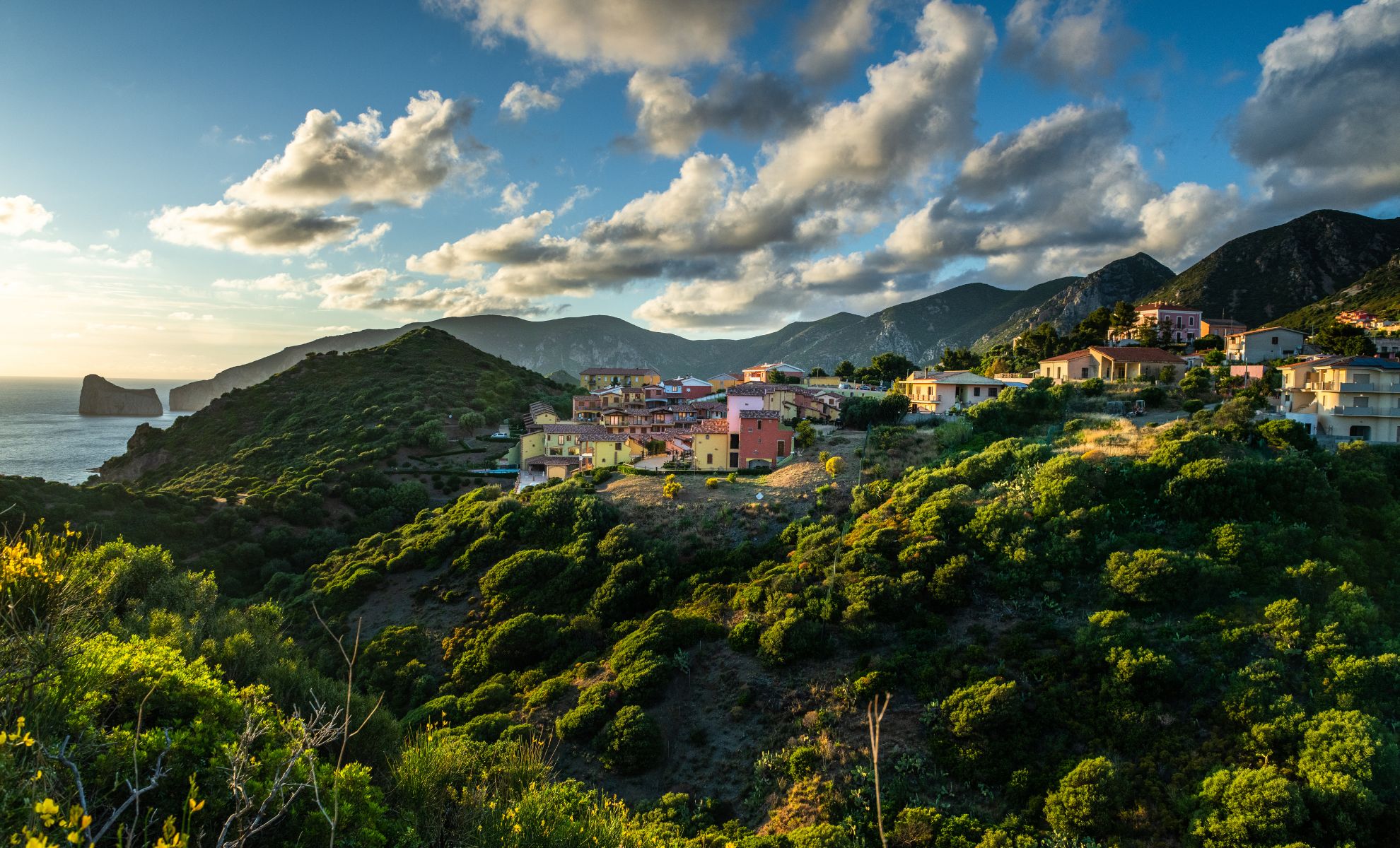
The historic center is a maze of narrow, irregular streets climbing the hillside, while the surrounding landscape stretches from the Marghine mountains toward the Tirso Valley. Forests, natural springs and agricultural land surround the village, creating an environment that feels noticeably greener and more rural than Sardinia’s coastal resort areas.
The area also has an unusually dense concentration of archaeological sites. Travelers can find prehistoric burial chambers known as domus de janas, Giants’ Tombs, sacred wells and dozens of nuraghi, the mysterious stone towers built by Sardinia’s Nuragic civilization thousands of years ago. One of the most significant nearby sites is Nuraghe Tittiriola, a basalt tower dating roughly from 1600 to 1000 B.C.
For American visitors accustomed to seeing ancient Italy through Rome, Pompeii or Tuscany, Sardinia offers a very different historical timeline. Much of what survives around Bolotana predates the Roman Empire by centuries.
There Is More Here Than Ancient History
One of Bolotana’s most distinctive attractions is Villa Piercy, a late-19th-century residence built for British engineer Benjamin Piercy, who played an important role in developing Sardinia’s railway system. Its gardens contain exotic plants brought back from Piercy’s travels, creating an unexpected botanical landscape in the Sardinian countryside.
The village is also known for traditional textile production, particularly Sardinian rugs woven with geometric patterns, and for agricultural products including olive oil, bread, sweets and mirto, the island’s distinctive myrtle liqueur. Local religious festivals remain an important part of community life, another reminder that Bolotana is primarily a living Sardinian town rather than a destination built around visitors.
That distinction matters. Travelers looking for luxury boutiques and resort nightlife will find better options elsewhere on the island. Bolotana makes more sense for those interested in hiking, archaeology, local food and slow travel.
Now Bolotana Has Another Claim to Fame
The village has recently attracted international attention for a much more unusual reason: its residents appear to live exceptionally long lives.
As The Guardian recently reported, researchers studying Bolotana found that about 13.8% of women who reach age 70 eventually live to 100, an extraordinary survival rate that has led scientists to consider the village a potential new “blue zone” for longevity. Researchers recorded 38 centenarians born there between 1900 and 1925, while 12 centenarians were still living in the community in 2025. All of them were women.
The discovery is especially interesting because Sardinia was already famous in longevity research. The island’s original blue-zone area became known partly for its unusually high concentration of male centenarians. Bolotana appears to present a different pattern, with women accounting for its most exceptional longevity.
Scientists have not identified a single explanation. Researchers have instead pointed toward a combination of factors that could include genetics, physical activity, traditional eating habits, the natural environment and unusually strong social connections maintained throughout life.
That uncertainty may actually make Bolotana more compelling as a destination. Visitors will not find a packaged “longevity experience” or some miracle food being marketed on every corner. What they encounter instead is a community where walking, family ties, traditional foods and everyday social interaction remain woven into daily life.
Is Bolotana Worth Adding to a Sardinia Trip?
For most American travelers, Bolotana probably works best as part of a road trip rather than as the centerpiece of an entire Sardinian vacation. A rental car is particularly useful for exploring the island’s interior, where public transportation is less convenient for visitors trying to reach small villages, archaeological sites and rural attractions.
The payoff is a version of Sardinia that many international tourists miss. Instead of spending an entire trip moving between beaches, travelers can combine the island’s famous coastline with mountains, prehistoric ruins and communities where Sardinian traditions remain highly visible.
Bolotana is unlikely to replace Costa Smeralda on the American vacation map anytime soon. It does not need to. Its appeal lies precisely in the fact that it feels removed from the Sardinia most visitors know, and its remarkable concentration of centenarians has now given travelers one more reason to turn inland and discover it.
