
Summary:
- A destination that asks more listening than planning.
- A culture that is lived, not displayed.
- Landscapes shaped by continuity rather than interruption.
- A form of travel that rewards patience over performance.
Haida Gwaii does not announce itself loudly. Reaching the archipelago already requires a small shift in mindset. Longer routes, fewer connections, and weather that decides more than schedules. This distance has never been a weakness here. It has protected ways of living deeply anchored in place.
For visitors, the islands are not about highlights or must-see lists. What matters happens between moments. A quiet shoreline, a conversation, the feeling of being slightly out of sync with the outside world. Exploring Haida Gwaii means accepting a slower and more present form of travel, one that leaves space for uncertainty.
A territory that is still lived in
Haida Gwaii is not curated for visitors. Around 5,000 people live on the islands, many of them Haida, and daily life unfolds without staging. Fishing boats come and go, children attend school, and community gatherings take place as part of ordinary island life.
Totem poles are everywhere, yet rarely framed as landmarks. They stand near homes, along roads, or facing the sea. Each one carries a family story, a responsibility, and a memory tied to place. Their presence feels natural, almost understated, until you realize how unusual that quiet continuity has become elsewhere.
The Haida languages, spoken differently in the north and south of the archipelago, are still heard today. They are not widespread, but they are alive, taught, practiced, and defended through long-term community effort.
Local perspective:
Some places on Haida Gwaii invite presence rather than movement. Standing still, observing, and knowing when not to enter matters as much as knowing where you are.
Why the land feels deeper here
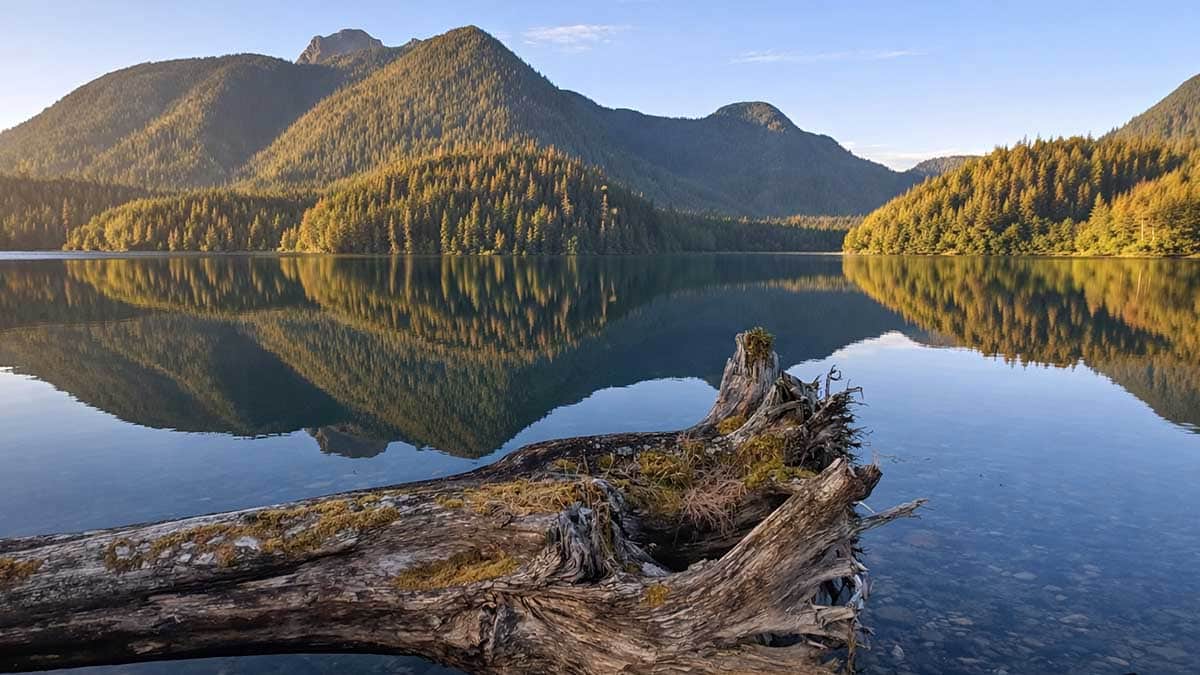
Something about Haida Gwaii feels dense, almost layered. Part of that comes from its geological history. Large areas of the archipelago were not covered by ice during the last glacial period. That allowed forests and wildlife to develop without being erased.
Old cedar and spruce forests dominate the landscape. Rivers run cold and clear, supporting salmon runs that still structure both wildlife and local life. Over time, isolation has shaped animals found here into distinct local forms, quietly different from their mainland relatives.
Offshore, the rhythm continues. Whales pass seasonally, sea lions rest along exposed rocks, and seabirds gather in numbers that only make sense once witnessed. Nothing here feels designed to impress. That absence of performance is part of its strength.
| What you notice | Why it feels different |
| Forests | No sense of recent reset |
| Wildlife | Traits shaped by isolation |
| Rivers | Salmon remain central |
| Coastline | Constant movement without spectacle |
Two ways to experience the islands
Most travelers encounter Haida Gwaii through two realities. The north, where everyday life is visible. The south, where access is limited and deliberate. Each offers a distinct relationship to place.
The north, grounded and open
Graham Island is where most residents live. Communities such as Skidegate and Masset offer a clear sense of contemporary island life, where culture is not separated from the present but woven into it.
The Haida Heritage Centre in Skidegate helps put this into context. Rather than freezing history in the past, it explains how stories, art, and social structures continue to adapt. It makes it easier to understand how continuity actually works.
Outside the villages, beaches stretch wide and forests open onto informal trails. Exploration here feels open-ended, guided more by curiosity than instruction. Encounters feel less framed and more personal.
The south, quiet and protected
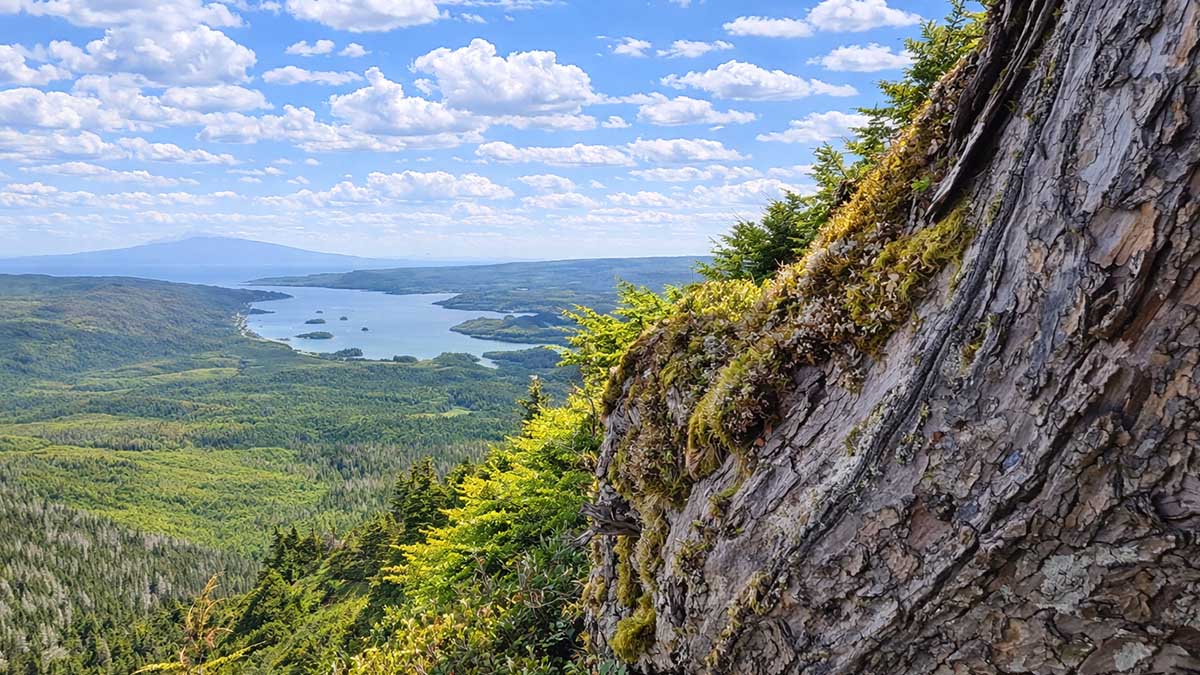
The southern part of Haida Gwaii feels markedly different. Gwaii Haanas is tightly protected and jointly managed by the Haida Nation and the Canadian government. Access is limited, and that limitation is intentional.
Most visits involve boats or kayaks. Village sites appear without barriers, totems stand where they have stood for generations, and hot springs emerge quietly along the coast. The absence of signage reinforces a sense of responsibility rather than entitlement.
Traveler’s note:
In the south, preparation replaces spontaneity. Weather, distance, and self-sufficiency shape every decision.
Visiting without taking over
Haida Gwaii was never meant to host large numbers of visitors. Accommodation is limited, transport depends on conditions, and services are spread out. Rather than obstacles, these realities act as natural filters.
Traveling well here comes down to a few simple principles:
- Favor locally owned guides and businesses.
- Follow access rules without trying to bend them.
- Keep your presence light, especially around wildlife.
- Accept plans that shift or fall apart.
What this means for you:
The less you try to control the experience, the more the islands reveal themselves.
Haida Gwaii does not compete for attention. It offers something quieter and more lasting. Without crowds or spectacle, travel becomes less about accumulation and more about being fully present.Those who leave often struggle to describe exactly what stayed with them. Not a list of sights, but a way of being somewhere without needing to extract anything from it. That feeling is rare, and it is what gives the journey its depth.