Show summary Hide summary
- A raised atoll with real relief (yes, that exists in the Tuamotu)
- Rusty rails and phosphate memories: Makatea’s hidden second life
- What you actually do in Makatea: walk, watch, climb, and slow down
- Getting to Makatea: plan ahead and leave space for uncertainty
- Visiting Makatea with respect: the island is small, the impact is big
- Makatea vs a classic Tuamotu atoll: which one fits you?
Summary:
- Makatea is a rare raised atoll, shaped by uplift and limestone, not by a classic lagoon setting.
- The island still shows clear traces of phosphate mining, with rails and abandoned structures.
- The best experiences are simple: walking, viewpoints, caves, and a slower rhythm.
- Getting there takes planning, usually by boat, and staying requires flexibility.
- Makatea rewards travelers who like quiet, rugged places over easy comfort.
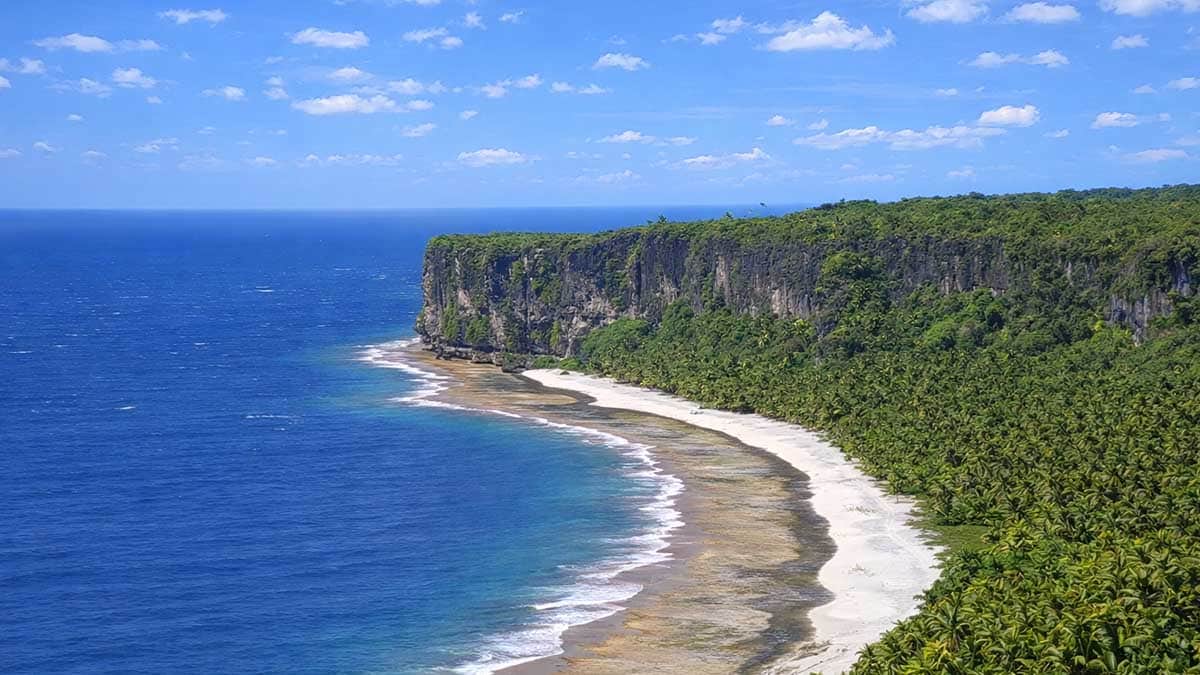
Makatea is one of those islands that immediately feels “off” in the best way. You arrive expecting a flat atoll, and instead you find height, cliffs, and sharp coral rock under your shoes. Even the light feels different when you look down at the ocean from above rather than out across a lagoon.
What makes it special is not just the landscape. It’s also the way Makatea carries its past. The island had an industrial life, and the remnants still sit in the vegetation, unpolished and uncurated. If you enjoy destinations that don’t try to entertain you, but rather invite you to explore and pay attention, Makatea is worth the detour.
Bhutan: the country that quietly slows you down (and you’ll thank it for)
Europe in 2026: the trips worth planning around real dates
A raised atoll with real relief (yes, that exists in the Tuamotu)
Makatea is one of the Pacific’s rare raised atolls. While most Tuamotu islands stay low and flat, Makatea stands higher, with a plateau surrounded by cliffs. This uplifted geography gives it a very different personality, closer to a rugged island than a typical coral ring.
For travelers, that means fewer “lazy beach days” and more movement. The terrain is uneven and often sharp, and the best way to understand Makatea is simply to walk. You don’t come here for soft sand. You come for height and horizon, for the feeling of being somewhere that hasn’t been smoothed out for visitors.
Rusty rails and phosphate memories: Makatea’s hidden second life
Makatea once relied heavily on phosphate mining, and the island still wears the evidence. Even without a guide, you’ll notice rails, metal fragments, platforms, and pieces of infrastructure that look like they were left behind in a hurry.
The interesting part is that nothing is staged. There’s no museum path, no polished narrative. You’re walking through a living landscape where nature has slowly started to reclaim what industry left behind. It creates a mood that feels both quiet and slightly haunting, and it gives Makatea a layer of history you don’t often encounter in French Polynesia.
What you actually do in Makatea: walk, watch, climb, and slow down
Makatea is not an “activity island” in the conventional sense. There are no big tours to hop on every day. The island works better when you lean into its rhythm and treat your days like exploration rather than entertainment.
Here’s what tends to make a visit feel full:
- Hike across the plateau to reach viewpoints and old mining areas
- Follow cliff edges for wide Pacific panoramas
- Explore caves and rocky paths where the terrain keeps changing
- Spend time with locals and learn what daily life looks like far from major routes
Makatea is also known among some climbers for its limestone walls. If you climb, this can be a real highlight. If you don’t, the presence of climbing routes still reinforces what the island is about: movement, rock, and space, not lounging by a pool.
Getting to Makatea: plan ahead and leave space for uncertainty
Makatea isn’t hard in a dramatic way, but it is not designed for fast travel. Access is generally by boat, sometimes via cargo or local rotations that can change with sea conditions and logistics. That’s why flexibility matters as much as planning.
On the island, accommodation is usually simple, often guesthouses or local stays. Services can be limited, and that’s part of the point. Makatea stays special because it hasn’t been built for mass tourism.
A few essentials make the difference:
- Cash (ATMs can be unreliable or absent)
- A headlamp for early nights and dark paths
- Proper shoes for sharp limestone
- Sunscreen and insect repellent
- A calm mindset when schedules shift
If you arrive prepared, Makatea feels easy. If you arrive expecting convenience, it won’t.
Visiting Makatea with respect: the island is small, the impact is big
Makatea has a small community, and visitors stand out quickly. That doesn’t mean you need to be invisible. It just means you need to be thoughtful. Your impact is bigger on an island like this than on a busy tourist hub.
A few habits go a long way:
- Ask before photographing people or private spaces
- Leave places exactly as you found them
- Support local guides and local stays when possible
- Don’t treat the island like a backdrop
- Respect the island’s pace and limitations
Makatea stays quiet because it has not been overexposed. Visiting with humility and care is part of what keeps it worth visiting.
Makatea vs a classic Tuamotu atoll: which one fits you?
| Feature | Makatea | Classic Tuamotu atoll |
| Landscape | Cliffs, plateau, caves | Flat coral ring |
| Main appeal | Hiking, exploration, history | Lagoon, snorkeling, diving |
| Atmosphere | Quiet, rugged, off-grid | Soft, beach-focused |
| Accessibility | More complex | Often easier |
| Best for | Curious travelers, walkers | Lagoon lovers |
Reynisfjara right now: what changed on Iceland’s black sand beach
Europe’s 2026 travel shortlist: Madeira, Tbilisi, Milan, Glasgow
Makatea isn’t “better.” It’s simply different. If you want lagoons and diving, there are other Tuamotu islands that fit perfectly. If you want something that feels like a geological surprise, with a story sitting quietly in the background, Makatea is the one.
Makatea is not a place you visit to tick a box. It’s a place you visit when you want to slow down and feel the island under your feet. Its cliffs, plateau, and abandoned mining traces create a rare mix of nature and memory.If you’re open to rougher terrain, fewer services, and a destination that doesn’t try to impress you, Makatea can easily become one of the most distinctive islands you experience in French Polynesia.