
Summary:
- The cultural influences that shaped each region.
- How architecture reveals local identity.
- Celebrations that keep traditions alive.
- Food rooted in everyday life.
Many travelers imagine the Mediterranean as an endless ribbon of beaches and blue horizons, but Spain’s eastern coast tells a more textured story. In Alicante, cliffs carved by the wind overlook quiet coves; farther north, the jagged edges of Cap de Creus signal a coastline shaped by storms, fishermen, and passing civilizations. These places do not just welcome visitors, they carry the memory of older worlds.
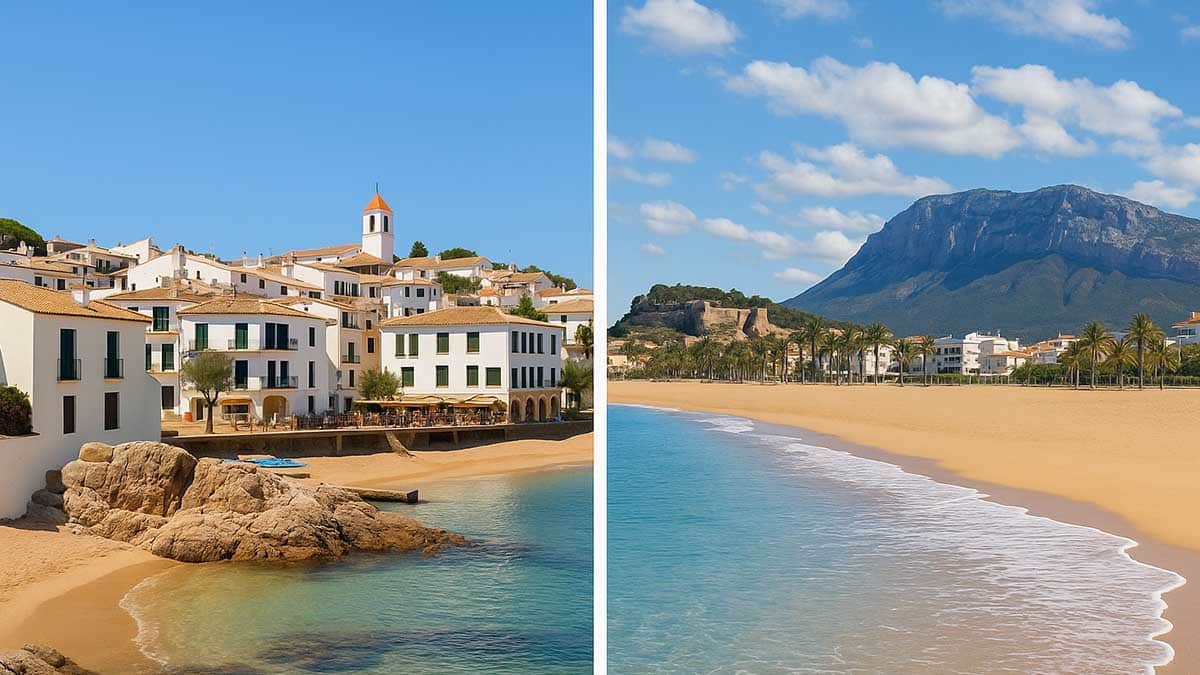
Costa Blanca and Costa Brava each express this heritage in their own rhythm. One leans toward sunlit villages softened by white facades, the other toward stone streets where every corner feels like a page from an older chapter. Instead of trying to decide which coast is better, this article explores how culture appears in everyday scenes, meals, and traditions. The goal is simple: understand how these two coasts reveal what Mediterranean Spain truly is. Let’s dive in.
Two coasts, two ways of holding onto the past
Mediterranean Spain has long been a crossroads shaped by centuries of exchanges. Both regions share this layered history, yet each one carries it differently, sometimes proudly displayed, sometimes quietly woven into daily life.
Costa Blanca: echoes of southern roots
Costa Blanca blends coastal trade, rural communities, and former Muslim influences. The fortress of Guadalest stands above a narrow pass and sets the tone for the region. Down the slopes, daily life unfolds at a calmer pace; small markets open early, terraces fill with locals, and the atmosphere feels grounded and lived. It is a heritage you sense rather than read.
Costa Brava: the northern mosaic
Costa Brava expresses its identity through European and Catalan history. Girona’s cathedral rises above medieval lanes framed by stone arches. Nearby rivers soften the urban landscape. Along the coast, villages like Tossa de Mar or Cadaqués carry a different energy shaped by fishing traditions and a long relationship with art. The region often feels like a natural meeting point between culture and coastline.
Architecture that reveals a sense of place
Buildings act like open books. They tell you who lived here, what mattered, and how people adapted to their surroundings.
Costa Blanca’s light-filled villages
In Altea, whitewashed houses capture sunlight with striking clarity. The blue-tiled dome above the old town adds a calm presence to the landscape. Coastal towns follow the same balance: modest churches, small fortifications, and plazas where people still gather. The architecture invites you to pause and experience the region at its own pace.
Costa Brava’s stone landscapes and artistic twists
Costa Brava’s architecture has a firmer texture. Girona’s Roman wall, stone staircases, and cathedral towers give the city a grounded presence. Outside the city, Cadaqués offers a more whimsical scenery. Narrow lanes twist unexpectedly and white houses scatter along uneven coves. It becomes easy to understand why Salvador Dalí found inspiration here and how the landscape seems to mirror creative minds.
Traditions that keep culture alive
To understand a region, pay attention to what people celebrate and how they come together.
Costa Blanca: celebrations with a warm pulse
In Alicante, the Bonfires of San Juan are one of the year’s highlights. Streets fill with sculptures, food stalls, and open-air gatherings. The atmosphere is joyful, anchored in community bonds. In smaller towns, traditions linked to agriculture, crafts, and local saints still shape the rhythm of the year and give a sense of continuity across generations.
Costa Brava: festivals rooted in stories and memory
Costa Brava celebrates differently. In Girona, fall’s Fires de Sant Narcís fill the old town with concerts and shared moments. North of the city, summer festivals such as those in Peralada highlight the region’s taste for music and storytelling. These events feel woven into local life rather than created for visitors, offering an authentic insight into Catalan traditions.
Food that speaks for the region
Mediterranean cuisine grows directly from the land and the sea. Nothing feels forced; flavors evolve naturally across generations.
Costa Blanca’s blend of coast and countryside
Rice dishes cooked with seafood, pericana made from dried fish and peppers, local olive oils, and turrón create a simple yet expressive culinary identity. At Alicante’s Mercado Central, stands overflow with ingredients that define the region’s food culture. Walking through the aisles, you feel how cuisine anchors daily life.
Costa Brava’s Catalan character
Catalan cuisine blends inland recipes with refined coastal dishes. The vineyards of Empordà enrich this culinary landscape with reds, whites, and rosés that pair naturally with local meals. Girona’s xuixo pastry, filled with crema catalana, offers a sweet connection to the past and reflects the region’s taste for tradition and comfort.
Where encounters bring culture into focus
Some of the most vivid memories come not from monuments but from the people who share their stories.
What this means for you
- Visit artisan workshops where knowledge is passed from one generation to the next.
- Explore markets with someone who knows the producers and can explain their craft.
- Visit historical sites with guides who add personal context.
- Wander into smaller villages where the strongest sense of place often appears far from the crowds.
Costa Blanca and Costa Brava offer two distinct ways of understanding Mediterranean Spain. One invites you into bright villages and gentle atmospheres; the other draws you through stone alleys and dramatic coastlines that inspired artists. Explore both with curiosity and you will uncover stories that stay long after the trip ends.