
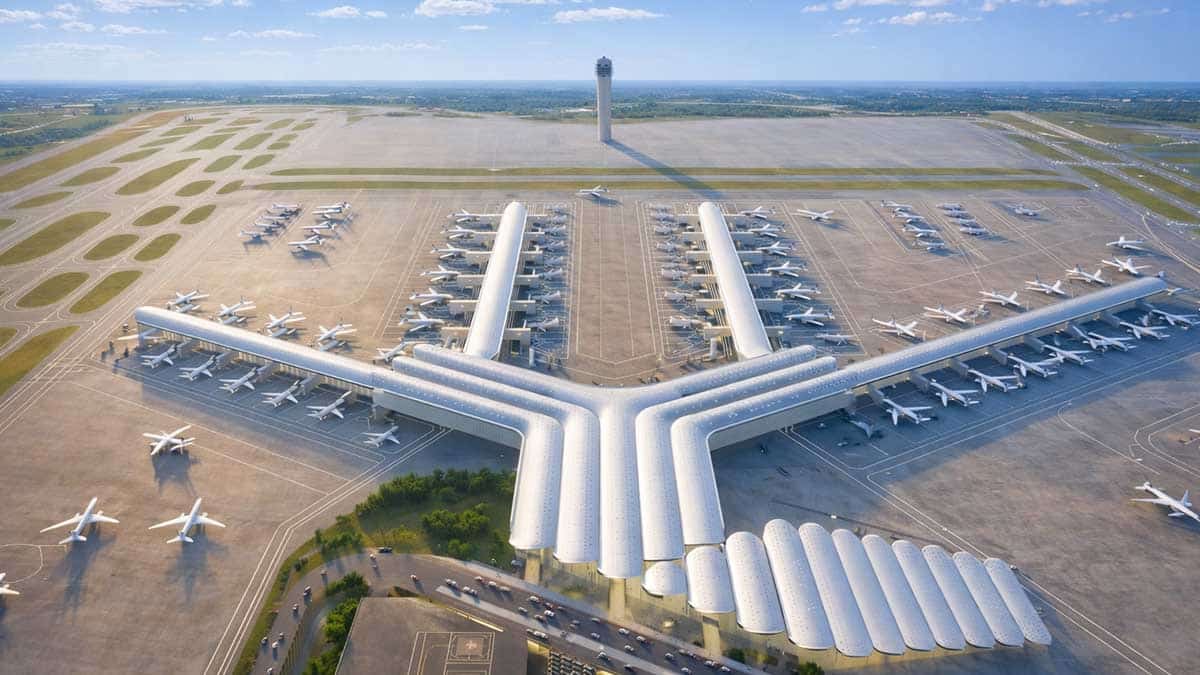
Summary:
- Port Polska is the new name for a long-running project once known as CPK.
- The airport is expected to target around 40 million passengers per year.
- The plan relies heavily on rail links, not just flights.
- Supporters see it as a future Central Europe transit hub.
- The big unknown is delivery: timelines, politics, and infrastructure trade-offs.
If you have traveled through Europe recently, you know the feeling: landing is the easy part, getting out of the airport can be the real headache. Long transfers, unclear signage, slow buses, and a train station that feels bolted on as an afterthought. The airports people remember fondly are rarely the flashiest, they are the ones that just work.
That is what makes Port Polska worth paying attention to. Poland is not only talking about a large airport near Warsaw, it is talking about building it with rail at the center, so you can arrive and keep moving without relying on a car. On paper, it sounds great. In practice, everything will depend on execution, because an airport is only as good as the connections that bring you to it and take you away.
Port Polska: a new name, a project with a long backstory
Port Polska is not a sudden idea. For years, the project was known as CPK (Centralny Port Komunikacyjny). The location remains broadly the same, between Warsaw and Łódź, and the ambition has always been to create a central transport hub with a major airport at its core.
The project was approved in 2017, but it later faced delays and political controversy. Since 2023, the Polish government has spoken about relaunching the plan with a clearer framework and a more internationally friendly identity. That is part of why the name changed, Port Polska is simpler to remember and easier to present abroad.
For travelers, the branding is secondary. What matters is the intent: an airport designed to function as a central gateway, where planes and trains meet in a practical, time-saving way.
The headline numbers: big goals, but still goals
The airport is expected to be designed for around 40 million passengers per year, which would place it among the larger airports in Europe. The early plan includes two parallel runways, with infrastructure intended to expand later if traffic grows.
Here is a simple translation of what the public targets imply:
| What is being announced | What it means for travelers |
| Planned opening: 2032 | A long timeline, but route planning can shift years before launch. |
| Capacity target: 40M passengers/year | Poland is aiming for a serious role in regional aviation. |
| Two runways at launch | Better scheduling flexibility and room for peak demand. |
| Built to expand later | The airport is designed to grow if airlines commit. |
It is worth repeating: these are targets, not guarantees. Large infrastructure projects often change over time, sometimes the scope grows, sometimes timelines stretch, sometimes budgets force compromises.
The real bet is rail, and that is where it gets interesting
What makes Port Polska different from a typical airport development is the way rail is presented as a core feature, not a bonus. The plan aims to bring a significant share of passengers by train, with fast access from Warsaw and potential links to other major cities.
For travelers, this could be the real win. If the rail connections are frequent, reliable, and well integrated into the airport layout, it changes the whole experience. You land, you walk to the station, and you keep going without juggling taxis or complicated transfers. That is the difference between an airport that feels like a dead end and one that works like a clean doorway.
But that is also the risk. If the rail component is delayed or under-delivered, the airport becomes less distinctive, and the promise of smooth travel weakens. This is the part to watch most closely, because it will decide whether Port Polska feels modern and convenient, or simply large.
A future Central Europe hub, or a long construction story?
Poland is positioning Port Polska as a potential hub for Central Europe, not just a national airport. Geography helps, Poland sits between Western Europe, the Baltics, and parts of Eastern Europe, which makes it a natural transit point on the map.
Still, hubs do not emerge automatically. Airlines need hard reasons to shift routes and commit aircraft, and those reasons usually come down to reliability, costs, demand, and operational efficiency. Politics matters too, because projects of this scale can slow when leadership changes, budgets tighten, or local opposition grows.
So the honest view is this: Port Polska looks coherent on paper and could become genuinely useful, but it is also the kind of project that can stretch across years. If you travel often in the region, it is worth keeping an eye on, not because it will change everything overnight, but because it could gradually influence routes, connections, and airport choices well before 2032.
What to take away, without wishful thinking
Port Polska is a mega-airport project planned between Warsaw and Łódź, with an opening date currently announced for 2032. The key ambition is not only size, but integration, an airport built alongside fast rail access, meant to make cross-country travel easier and reduce dependence on cars.
If it is delivered as planned, it could simplify domestic travel and create a new transit option for Central Europe. If delays hit, or rail links are weaker than expected, it may end up as a big airport with a less convincing role. Either way, it is one of the largest transport projects in the region, and it will likely influence travel decisions long before the first flight takes off.