
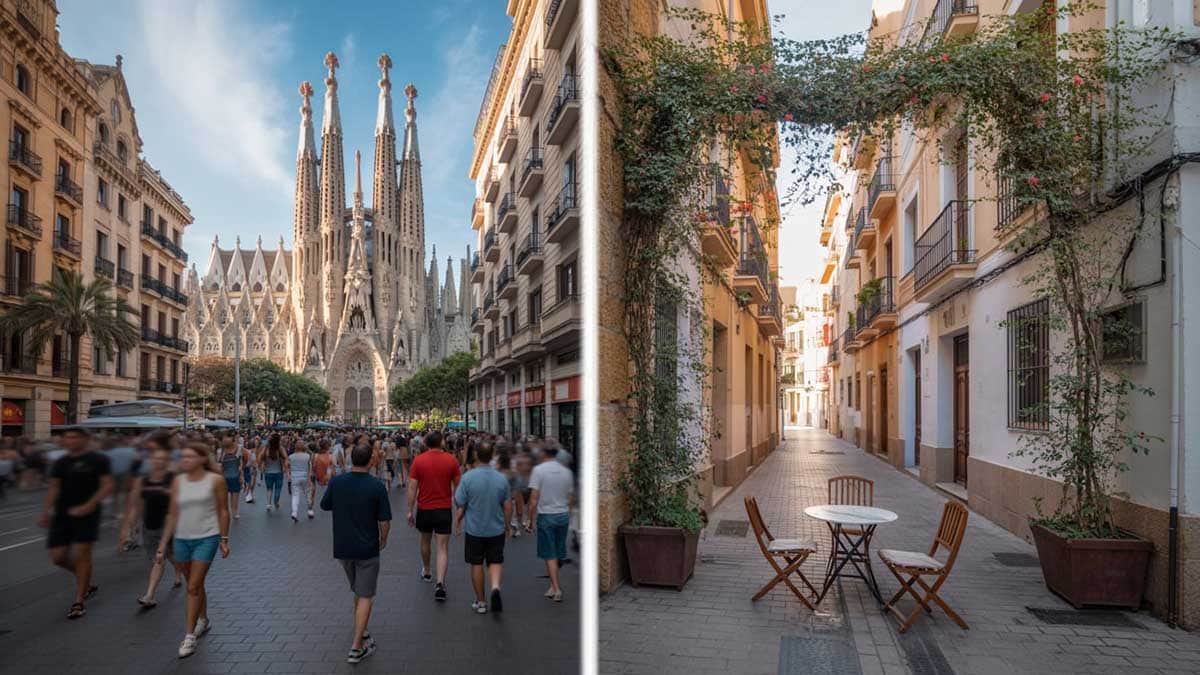
Summary:
- What the numbers really mean for travelers (Spain vs France, and why it matters)
- Where pressure is highest (cities and islands that fill up first)
- How to dodge the worst crowds without missing the good stuff
- Simple planning moves to keep your budget and your mood intact
Spain is still one of Europe’s best returns on happiness: food, light, beaches, museums, late dinners, and that feeling that a Tuesday can turn into a small celebration. But when a destination becomes a magnet, the experience shifts. Accommodation gets pricier, and the “just wing it” approach starts to backfire in the busiest places.
This article is a practical guide, not a lecture. You will get the big picture, a few reality checks, and a plan to travel smarter and calmer in Spain in 2026. Think less queue, fewer booking regrets, more actual Spain.
Spain vs France: the comparison everyone oversimplifies
People love a rankings story, but “who’s number one” is not the useful part. What matters is how tourism shows up on the ground: where people concentrate, and how much those trips cost once you are there.
Spain sits close to France on arrivals, but the travel experience differs because Spain’s demand is heavily clustered in a few headline places. Barcelona, the Balearic Islands (especially Ibiza), and parts of the Canary Islands can feel like separate countries in summer, with different prices and different friction.
Here’s a clean snapshot to keep your expectations aligned:
| Quick travel snapshot | Spain (recent stats) | France (recent stats) |
| International visitors (2024) | 93.8M | 100M |
| Pattern you feel most | Peak-zone saturation | Wide geographic spread |
| What hits your wallet first | Stays and activities | Stays in Paris + transport |
The takeaway is simple: Spain is not “too touristy” everywhere. It is very touristy in specific pockets, and that’s where your planning choices matter most.
Why Spain can feel more expensive than you expect
You can travel “normally” and still get surprised by the bill. Not because Spain suddenly became luxury-only, but because a few costs have become stubborn in high-demand areas, especially during peak months. The price curve is steeper, and it kicks in earlier.
Accommodation is the main pressure point
If you stay in the exact center of the most famous places, in the most popular weeks, you pay for that convenience. It’s not dramatic, it’s cumulative: average rooms cost more, “good value” disappears faster, and late booking becomes a tax you pay with money and stress. Sleeping location is leverage, more than people think.
Islands amplify everything
On islands, capacity is limited. There is only so much housing, only so many rental cars, only so many restaurant tables with sea views. When demand spikes, everything tightens at once. If you want the island vibe without the island crunch, timing becomes your best friend. Shoulder season wins.
The “easy activity” trap
Tours are not bad. They are just easy to overspend on. Catamaran trips, food tours, sunset packages, VIP club bundles, the kind of stuff you book because it looks simple. In peak zones, these can be priced for maximum demand. Pick one or two paid highlights, then let the rest be Spain doing Spain: markets, beaches, long lunches, walks. Less scheduling often feels richer.
A useful mindset: Spain is still affordable in many regions, but the famous zones operate like a premium product in summer. You can either pay knowingly, or travel one step differently.
Where the pressure is highest, and what changes for travelers
Crowds alone are not the problem. Concentration is. When a few neighborhoods and coastlines carry the weight of millions of visits, local life gets squeezed, especially through housing and noise. That’s why some places have become stricter about short stays. Rules are not abstract anymore, you can feel them in booking friction and enforcement.
Places that fill up first
- Barcelona: intense demand, packed districts, tighter scrutiny around tourist rentals
- Ibiza and parts of the Balearic Islands: high-season compression, high prices, limited availability
- Canary Islands: heavy seasonal tourism in specific resort corridors, plus growing local debate about capacity
What that means in practice:
- Listings can be more regulated and more likely to be checked. Legitimacy matters.
- Neighbors are less tolerant of late-night noise in residential buildings. Respect buys peace.
- Some “too good to be true” deals carry risk: unclear check-in, cancellations, or mismatched expectations.
A simple travel rule that keeps life easy: if you book an apartment, choose listings with clear terms, consistent reviews, and straightforward communication. In pressure zones, clean and boring beats cheap and suspicious.
The smarter Spain plan for 2026: calm, value, and real life
If you want Spain to feel like Spain again, you do not need a complicated itinerary. You need a few high-impact choices: when you go, where you sleep, and how you build your days. Small shifts produce big relief.
1) Win with the calendar
Late spring and early autumn are the sweet spot. Weather stays excellent in many regions, and prices soften. You also get the version of cities you actually want: you can walk, sit, and eat without fighting the tide. Timing is your cheapest upgrade.
2) Stay near the headline, not inside it
You can visit the famous core and still sleep somewhere calmer. That alone changes your trip: better rest, better meals, fewer tourist traps by default.
Examples of “near, not inside,” depending on your style:
- Day trip into Barcelona, then sleep outside the densest areas
- Pick quieter corners of the Balearic Islands, or consider a less party-centric base than peak Ibiza zones
- In the Canary Islands, choose stays that match your goal: nature and hiking, or beach and resort, but not automatically the busiest strip
The point is not to be far away. The point is to place yourself where evenings feel normal. Your base sets your mood.
3) Build days that breathe
Here’s a simple rhythm that works almost anywhere in Spain:
- Morning: one “busy” thing early, museum, old town, market
- Midday: slow lunch, shade, reset
- Late afternoon: beach, walk, viewpoint
- Evening: tapas, a neighborhood bar, then sleep
You do not need constant motion to have a great trip. In Spain, the best memories are often the unplanned ones: the waiter who recommends a dish, the tiny bakery, the random plaza with a band playing. Leave room for that.
4) Quick booking checklist
Before you hit confirm, run this list:
- Can I shift dates by 2 to 3 weeks to dodge peak pricing? Flex saves cash.
- Is the accommodation clear, legal-looking, and consistent in reviews? Clarity prevents headaches.
- Am I stacking multiple hotspots back-to-back? Alternate intense and calm.
- Do I have at least one day away from obvious highlights? Detours are the upgrade.
Spain is not getting worse. It’s getting busier in very specific places. If you plan with that reality, you will get a trip that feels lighter, more local, and more enjoyable, without sacrificing the big sights.