
Summary:
- A handpicked selection of filming locations across Europe, Asia and Oceania.
- Practical notes to help turn film moments into a real itinerary.
- Cultural hints that explain why these spots attracted directors.
- Ideas for slow, enjoyable exploration away from rushed checklists.
Certain films leave you with more than a plot. A village bathed in afternoon light, a mountain ridge, a street corner that feels familiar. Visiting these places later can create a gentle sense of déjà vu. That is what drives many travellers toward cinema themed routes: the pleasure of reconnecting with a story through their own steps.
In this guide, we explore filming locations you can experience without special access or complicated logistics. New Zealand’s vast horizons, Tokyo’s late-night glow, the charm of Lombardy or the softness of Montmartre each place carries its own rhythm. Think of this as an invitation to wander through landscapes you already know, but from a new and personal angle. Let’s dive in.
Fantasy worlds you can actually walk into
Middle-Earth exists (almost): New Zealand’s epic filming sites
New Zealand did not need much embellishment to become Middle-Earth. The landscapes speak for themselves and standing there often feels surprisingly close to the films, especially if you already know every frame by heart.
- Tongariro National Park: The volcanic slopes around Mount Ngauruhoe look exactly as dramatic as in the trilogy. Trails go from gentle walks to challenging hikes and the views feel larger than expected.
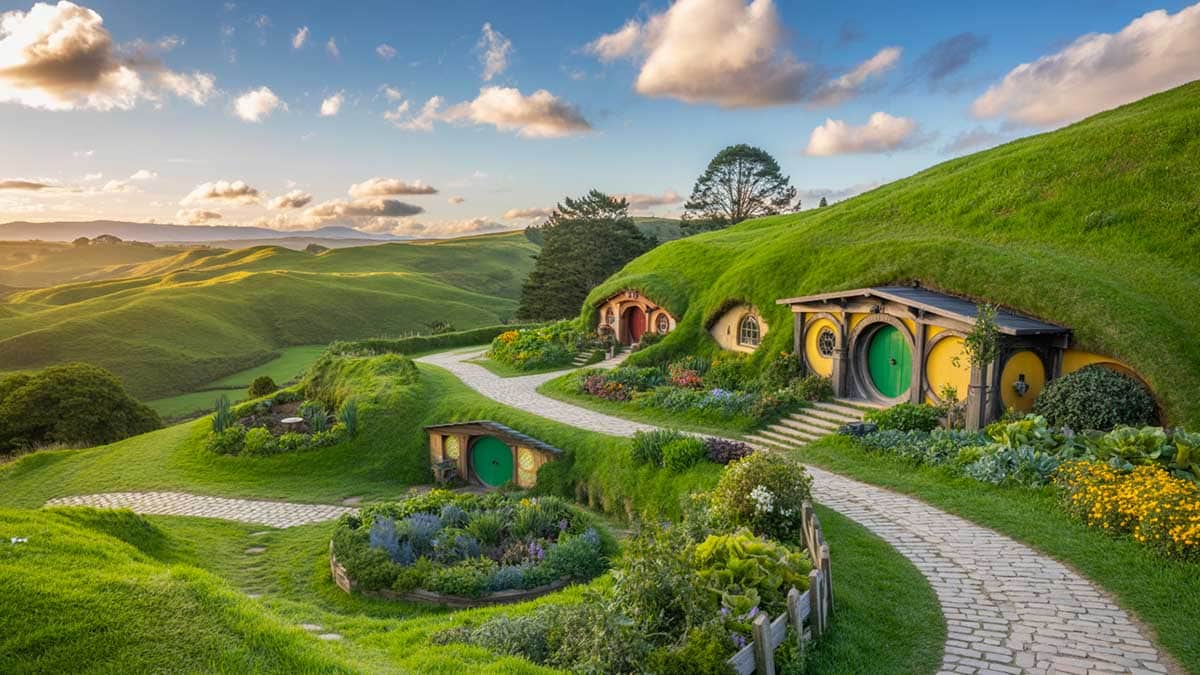
- Hobbiton, Matamata: The Hobbit village is full of tiny details. The site was rebuilt permanently for visitors which is why it looks so polished and immersive.
- Glenorchy: A peaceful spot at the end of Lake Wakatipu. Early mornings bring low fog and quiet reflections that make the area feel almost untouched by time.
Local tip
Alpine weather changes fast. Pack layers, even on bright days, to enjoy the outdoor trails comfortably.
Harry Potter’s real-life backdrops across the UK
Many Harry Potter settings existed long before the films, which enhances the feeling of recognition when you walk through them as a visitor and not just as a fan behind a screen.
- King’s Cross Station (London): The “Platform 9¾” corner is simple yet surprisingly emotional for long-time readers.
- Christ Church College (Oxford): The hall, staircases and cloisters create an atmosphere that feels close to early Hogwarts without turning into a full theme park.
- Durham Cathedral: The peaceful cloisters match several courtyard scenes and are usually less crowded than the London spots.
Travel note
A long weekend is enough to connect the main sites by train and explore at a comfortable pace.
Romantic spots turned into cinematic landmarks
Call Me by Your Name: wandering through northern Italy’s soft light
Much of the film’s charm comes from Lombardy’s gentle rhythm. The region’s warm tones and quiet roads add a layer of intimacy that is easy to feel in person, especially if you take time to slow down between each stop.
- Moscazzano: Even if the villa is private, the village lanes and stone houses reflect the film’s calm and sunlitatmosphere.
- Crema: The main piazza changes mood throughout the day. Early mornings offer the same softness seen on screen, with locals slowly filling cafés and terraces.
- Bergamo Alta: Narrow streets and views over the valley create a peaceful break between film-related stops and give you a sense of everyday Italian life.
Amélie’s Paris: rediscovering Montmartre without the clichés
Step away from the busiest corners and Montmartre reveals the soft Paris the film captured so well, somewhere between postcard views and the small routines of local life.
- Café des Deux Moulins: Still lively and cosy, perfect for a short stop and a quiet look at the constant flow of regulars and visitors.
- Canal Saint-Martin: Morning reflections give the area a pastel look close to the film’s tone and invite a slow walk along the water.
- Rue Lepic and Rue des Trois-Frères: Perfect for aimless wandering. A sign or a staircase can suddenly bring back part of the movie without feeling forced.
Traveler’s tip
Weekdays and late mornings help you enjoy the neighbourhood at a slower rhythm, especially around the canal and the back streets.
When modern cities become film characters
Lost in Translation: following Tokyo’s glow and quiet corners
Tokyo can be loud or silent depending on where you go. The film plays with this duality and visiting its locations brings that contrast into focus, from neon chaos to soft, empty spaces.
| Location | Area | Why it matters |
| Park Hyatt Tokyo | Shinjuku | A central setting with calm, wide views over the city. |
| Karaoke-Kan | Shibuya | Immediately recognisable from the neon scenes and late-night energy. |
| Jougan-ji Temple | Nakano | A peaceful break that shows Tokyo’s quieter, more reflective side. |
Budget insight
For skyline views without spending too much, visit the Tokyo Metropolitan Government Building, which has free observatories and long opening hours.
La La Land: Los Angeles from everyday streets to dreamlike moments
The film shows LA without studio gloss. It highlights the places where locals actually spend time, and where a simple evening can suddenly feel strangely cinematic.
- Griffith Park: Sunset colours give the city a soft tone close to the film’s dance scene and make the skyline feel more intimate.
- South Pasadena: The cinema remains a friendly neighbourhood spot that fits naturally into a slow walk around the area.
- Burbank: Diners and small streets convey a quieter version of LA that many visitors overlook in favour of the better-known landmarks.
Action scenes you can step into
Spectre: from crowded streets to alpine silence
Each location in Spectre stands firmly on its own and reflects a distinct mood, from festival energy to high-altitude stillness.
- Mexico City: Walking through the filming streets shows how architecture and colour shaped the opening sequence, even without extras and costumes.
- Rome: Night strolls make it easy to recognise parts of the chase, while still enjoying the city at a slower, less dramatic pace.
- Sölden, Austria: The Ice Q building blends futuristic lines with sweeping mountain views and feels like a real-life set planted on a ridge.
Local tip
If you plan to reach Ice Q in winter, check lift schedules in advance. Snowfall often affects access and can change your plans at the last minute.Cinema travel is not about copying scenes. It is about meeting familiar places with fresh eyes. Some landscapes feel larger than expected, others softer, but each one offers a perspective no screen can reproduce. If a film has ever stayed with you long after the credits rolled, exploring its real locations might reveal unexpected details you never noticed before and give you a new way to remember the story.