
Summary
- A simple way to read the city without chasing a “historic center” that doesn’t really exist
- The places that give you the right feel, even if you only have 24 hours
- Three experiences that reveal Tashkent fast: market, metro, evening park
- The dishes that tell the story of Uzbekistan, without the tourist gloss
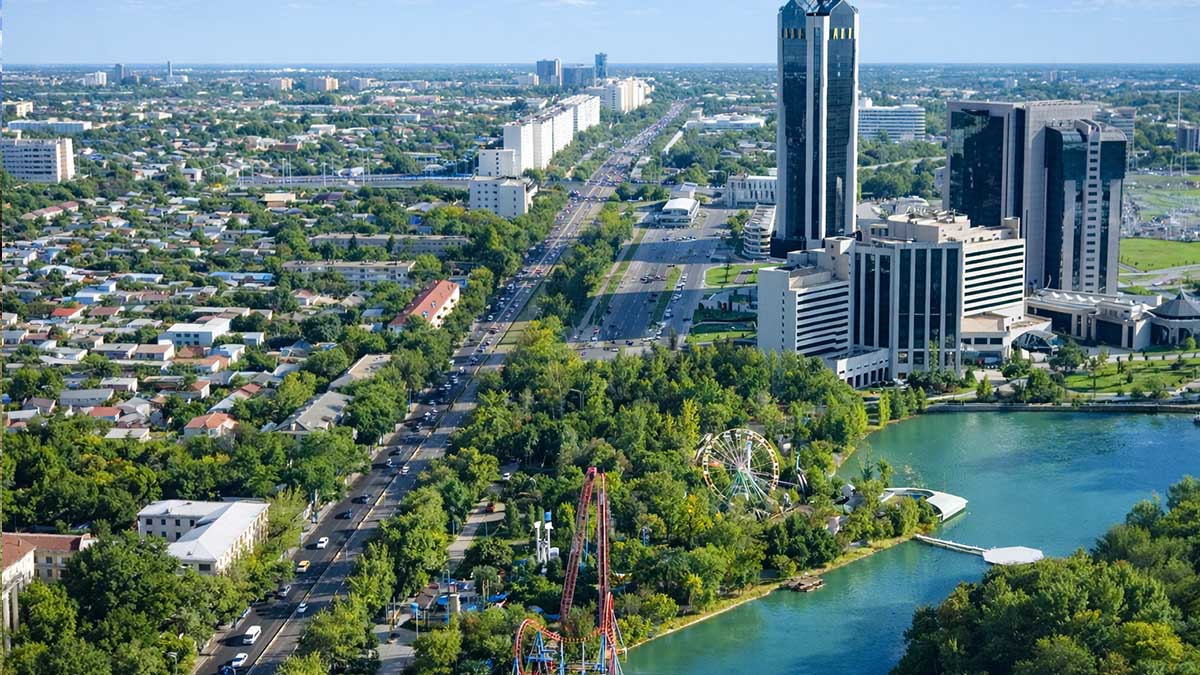
Tashkent doesn’t hit like Samarkand. There are fewer domes, fewer ancient lanes, and less of that instant “Silk Road magic.” Instead, you land in a real working capital, with wide roads, long distances, and neighborhoods that change mood from one metro stop to the next.
The first impression can feel blunt. Some people call it cold at first, then end up liking it because it doesn’t pretend. You see modern Uzbekistan, the daily rhythm, the people, the parks, the markets, and the city’s confidence. Give it a day and it becomes far more interesting than it looks from a car window.
Keep one thing in mind: you don’t “tour” Tashkent in a straight line. You collect scenes. A market, a quiet religious square, a few metro stations, then a slow evening outside. That’s how the city starts making sense.
Rebuilt after 1966, and it shows
If you want the key to Tashkent, it’s this: the 1966 earthquake changed everything. Large parts of the city were rebuilt afterward, heavily shaped by Soviet planning. That’s why you get broad avenues, monumental public buildings, and neighborhoods designed to be practical, strong, and clear.
As you walk around, you’ll notice:
- big, geometric apartment blocks
- imposing civic buildings
- open squares with a “grand scale” feel
- streets built for movement rather than charm
It’s easy to make the wrong comparison and expect small, cute streets everywhere. Tashkent plays a different game. Its beauty is often in scale and structure, in how the city opens up and breathes.
A simple travel tip: distances here are bigger than they look on the map. Plan your day with fewer stops, but do them well.
Hazrati Imam: the quiet pause inside the capital
When you want a softer, calmer side of the city, head to Hazrati Imam. The atmosphere changes immediately. It feels slower, more reflective, and it offers a clear link to Uzbekistan’s Islamic heritage without leaving the capital.
One of the most famous spots here is the Muyi Mubarak Madrasa, known for holding an ancient Quran manuscript often associated with the Quran of Uthman. You’ll hear different versions of the story depending on the source, so it’s best to approach it as a place of strong symbolic and cultural value, rather than a single fixed narrative.
Even if you’re not into museums, this stop works because:
- the space is peaceful and beautifully laid out
- the architecture gives you a true break from the city’s noise
- you get a more grounded sense of what matters here
Ask yourself a simple question while you’re there: did you expect this calm, right in the middle of a fast, modern capital?
Chorsu, the metro, and an evening park: three scenes that explain Tashkent
You can visit ten landmarks and still miss the city. Or you can do three things and come away with a real impression. If you want a quick, honest Tashkent, build your day around these.
Chorsu Bazaar: the city in raw form
Chorsu Bazaar is where you catch the pulse. It’s loud, colorful, and full of daily life. You’ll see piles of spices, warm round bread, dried fruit, herbs, vegetables, and vendors who look like they’ve been here forever.
Even if you don’t buy much, it gives you:
- a direct look at local habits and daily routines
- a sensory hit of smells, textures, and movement
- a feeling that you’ve actually stepped into the city
The metro: not just transport, a small discovery game
Tashkent’s metro is famous for several stations decorated in a Soviet style. It’s one of those unexpected pleasures: you hop on to get somewhere, then start getting off just to look around.
Keep it simple: pick three or four stations, give yourself one hour, and treat it like a mini underground walk. You don’t need to “complete the set” to enjoy it.
The evening park: where the city becomes gentle
Late afternoon and evening are when Tashkent turns warm. Families come out, kids run around, food stalls appear, teenagers gather in groups, and the whole city becomes easier to read.
This is the moment that often stays with you. Not because it’s spectacular, but because it’s real. A park bench, soft light, people living their lives. That’s the capital in its most honest form.
What to eat in Tashkent: plov, samsa, and the city’s mixed table
Food in Tashkent reflects the country’s layers. Uzbek classics are central, but you’ll also notice Russian and Soviet-era influences in salads and meal customs. It feels natural here, not forced.
Try these at least once:
- Plov, the national rice dish, filling and generous
- Samsa, a baked pastry that’s perfect on the go
- Shorba, a rich soup, great in cooler weather
- Non bread, round and essential
- Russian-style salads, often served as part of shared meals
Quick food guide
| What to try | Why it’s worth it | Best time to eat it |
| Plov | The signature dish, deeply local | Lunch |
| Samsa | Quick, tasty, everywhere | Morning or afternoon |
| Shorba | Comfort food, warm and satisfying | Evening |
| Non bread | The constant on every table | Anytime |
| Russian-style salads | A quiet reminder of modern history | Shared meals |
A practical budget note: you can eat extremely well here without chasing fancy places. Simple local restaurants often give the best balance of price, portion size, and flavor.
A simple 1-day plan (and a 2-day option if you want to breathe)
Tashkent is big, and it’s easy to waste time on transport if you improvise. With a basic plan, one day can be enough to get the city.
If you have 1 day
- Morning: Hazrati Imam for calm and heritage
- Midday: Chorsu Bazaar for lunch and energy
- Afternoon: a walk through Soviet-era avenues and central districts
- Evening: metro stations, then a park, then dinner
If you have 2 days
Add:
- a longer metro session, just for the pleasure of it
- a modern district walk (cafés, newer buildings, shopping streets)
- a slow, unplanned half-day where you simply wander
The most common mistake is treating Tashkent like a quick transit stop. If you give it a full day, it gives you something back: a clearer view of Uzbekistan today, not just its past.
Tashkent might not be the “prettiest” part of your trip, but it can be one of the most revealing. It’s a capital shaped by the 1966 earthquake, marked by Soviet planning, and filled with scenes of everyday life that feel unmistakably Uzbek.
If you mix one cultural stop, one market, a few metro stations, and an evening in a park, you won’t just pass through Tashkent. You’ll understand it.