Show summary Hide summary
Summary:
- The UNESCO sites people search for again and again.
- What keeps these places so present in our imagination.
- How travel habits and geography shape curiosity.
- Ways to experience iconic sites without reducing them to a checklist.
UNESCO World Heritage Sites are often described as must-sees, but that label hides something more subtle. These places don’t just attract visitors. They stay in people’s heads long before a trip is booked, sometimes for years. Among the thousands of protected sites worldwide, a small group consistently draws more attention than the rest.
Search data gives us a useful clue. It shows which places people actively think about, plan for, and return to in their research. Looking at these patterns helps explain not only where travelers want to go, but also what kind of stories, images, and experiences continue to resonate. Let’s take a closer look.
Bhutan: the country that quietly slows you down (and you’ll thank it for)
Europe in 2026: the trips worth planning around real dates
Why certain UNESCO sites never fade from view
Popularity alone doesn’t explain why some heritage sites dominate searches year after year. What stands out is how easily these places connect with people, even from afar.
Stories that stick
Many of the most searched sites are tied to stories that are easy to grasp and remember. The Taj Mahal is linked to love and loss. Machu Picchu feels remote, almost suspended in time. These narratives don’t require detailed historical knowledge to be felt.
People don’t just search for places. They search for the feelings and images attached to them.
Images we recognize instantly
Visual familiarity plays a major role. The Christ the Redeemer overlooking Rio or the silhouette of Stonehenge are recognizable in a single glance. Films, books, school lessons, and travel photography reinforce these images again and again.
Over time, they become reference points. Even travelers who know little about the site’s history still feel they know the place.
The ease of imagining a visit
There is also a practical side. Sites that are well-documented and clearly explained online feel less intimidating to plan. Clear transport options, visitor rules, and published itineraries reduce hesitation.
For many travelers, that sense of clarity is what turns curiosity into an actual search.
The UNESCO sites most people look up
Based on global search trends, these ten UNESCO World Heritage Sites consistently attract the highest level of interest:
| Rank | UNESCO Site | Country |
| 1 | Taj Mahal | India |
| 2 | Machu Picchu | Peru |
| 3 | Rio de Janeiro (Christ the Redeemer) | Brazil |
| 4 | Yellowstone National Park | United States |
| 5 | Stonehenge | United Kingdom |
| 6 | Statue of Liberty | United States |
| 7 | Petra | Jordan |
| 8 | Cinque Terre | Italy |
| 9 | Palace of Versailles | France |
| 10 | Chichén Itzá | Mexico |
What these places have in common
They differ in geography and history, yet several elements return again and again:
- A clear symbolic meaning that goes beyond tourism.
- A strong visual identity people recognize immediately.
- Long exposure through education, media, and popular culture.
- The ability to spark curiosity even without context.
They are not just destinations. They are cultural landmarks in the collective imagination.
Three icons, three very different experiences
Taj Mahal, India
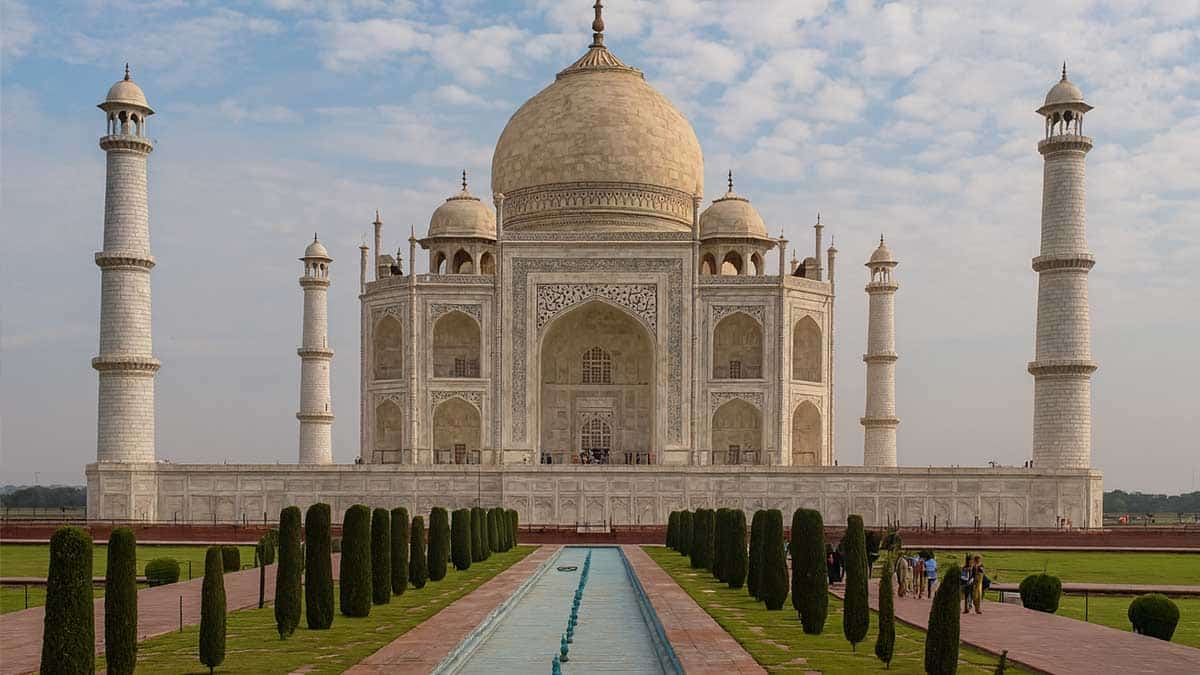
The Taj Mahal tops global search rankings year after year. Built in the 17th century, it is widely understood as a monument to devotion. Its clean lines, white marble, and changing light throughout the day give it a quiet presence that photographs only partially capture.
Traveler’s note: Early mornings tend to be calmer and offer softer light, especially outside peak season.
Machu Picchu, Peru
Perched high in the Andes, Machu Picchu feels deliberately out of reach. The steep terrain and shifting clouds contribute to the sense that this place was meant to be discovered slowly, not rushed.
What this means for you: Entry slots are limited, so planning well ahead is not optional.
Palace of Versailles, France
Versailles tells a very different story. It reflects power, control, and excess, but also remarkable craftsmanship. The gardens, in particular, reveal how carefully space and perspective were used to impress and intimidate.
Its continued popularity shows that political history can still feel tangible and relevant.
What search trends say about travelers
Looking at global rankings is only part of the picture. When searches are examined country by country, more personal patterns appear.
Curiosity often points outward
In many countries, the most searched UNESCO sites are located abroad. French travelers frequently look up Pompeii, while people in smaller European nations tend to focus on nearby landmarks rather than distant ones.
Distance, budget, and cultural proximity quietly shape what feels realistic and desirable.
A quieter interest in closer places
Periods of limited travel have also encouraged people to explore sites closer to home. Some lesser-known UNESCO locations have seen renewed attention, often from travelers looking for depth rather than spectacle.
Local tip: Smaller heritage sites often allow for longer visits and more meaningful exchanges.
Visiting famous sites without rushing them
High visibility almost always leads to crowds. That doesn’t mean these places should be avoided, but they benefit from a slower approach.
Simple ways to improve the experience
- Visit outside peak hours or seasons when possible.
- Respect visitor limits and local guidelines.
- Choose local, licensed guides for context rather than speed.
- Balance major sites with time in nearby towns or landscapes.
Looking beyond the postcard view
Petra extends far beyond its famous Treasury. The area around Machu Picchu includes villages and trails that many visitors never see. These surrounding spaces often provide the moments people remember most.
Giving time to the margins helps restore balance to the experience.
Reynisfjara right now: what changed on Iceland’s black sand beach
Europe’s 2026 travel shortlist: Madeira, Tbilisi, Milan, Glasgow
The UNESCO sites people search for most are not just popular. They are familiar, loaded with meaning, and easy to imagine. That combination keeps them present in travel dreams long before a ticket is booked.
Approached with curiosity and patience, these places offer more than a photo opportunity. They invite travelers to slow down and connect with stories that extend far beyond the visit itself.