
Summary:
- Why Triberg is the easiest place to compare cuckoo clocks in real life
- The quick signs of solid craftsmanship you can spot without being an expert
- What actually drives the price, from entry-level to collector pieces
- Traditional chalet styles vs modern design clocks, how to choose for your home
- A simple checklist for testing, buying, and shipping safely
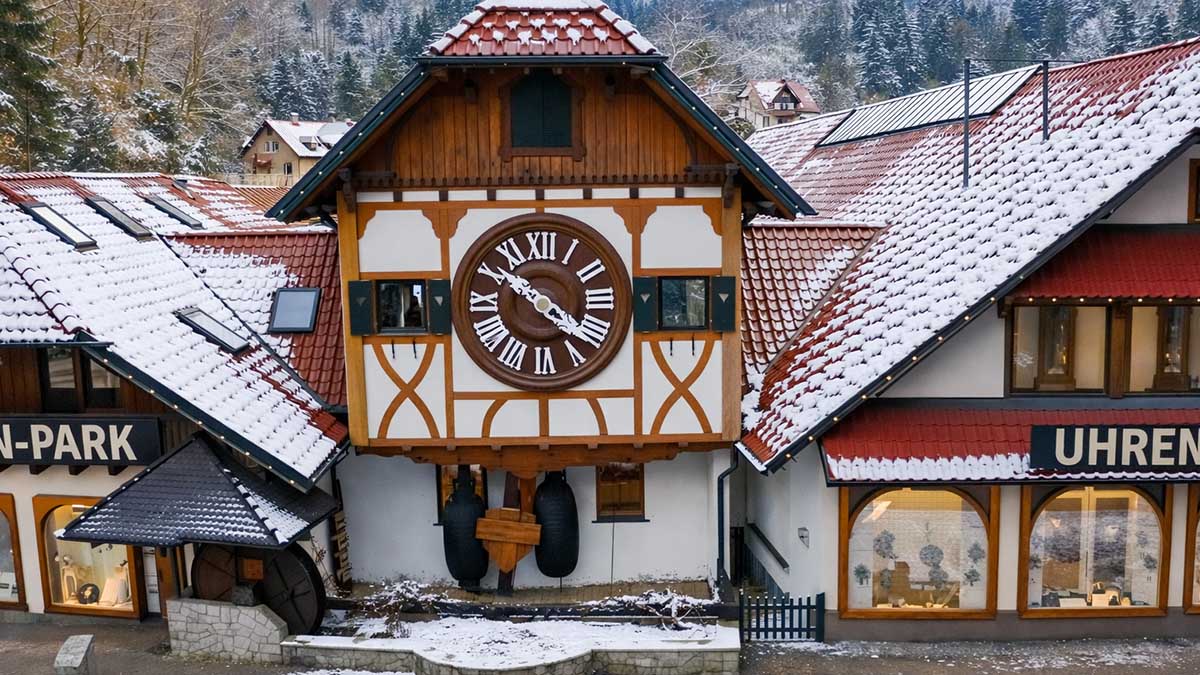
Most people arrive in the Black Forest with the same mental image, pine trees, a postcard village, then a cuckoo clock somewhere in the background. But in Triberg, the cuckoo clock is not background. It is front and center, in shop windows, in conversations, in the way people lean in to listen to the “cuckoo” like it is a tiny performance.
And that is exactly why it is a great place to buy one. You can compare models side by side, hear the difference, ask direct questions, and walk away if it does not feel right. Because a good cuckoo clock should not feel like a souvenir you tolerate. It should feel like a piece you want to live with, year after year.
Triberg is the best place to shop because you can actually compare
Triberg calls itself a “clock town”, and it leans into it, lots of shops, lots of variety, and even museum mentions of special pieces like the world’s smallest cuckoo clock. In practical terms, it means you can do something most travelers never do: compare properly, not just buy the first one that looks “Black Forest enough”.
Walk into two or three stores and you will notice how quickly your eye sharpens. One clock feels crisp and confident, the door snaps cleanly, the carving has depth. Another looks fine from two meters away, then starts to feel a bit flimsy up close. That contrast is your best friend.
Quick reality check: if someone refuses a full demo or answers everything with vague “authentic” claims, you do not need to argue, you can simply move on.
How to spot a well-made cuckoo clock in under a minute
You do not need to be a clockmaker to catch the basics. A good cuckoo clock gives you a sense of precision and sturdiness the moment you handle it.
Look for these simple signals, no drama, no jargon:
- The case feels solid, not hollow or “light for its size”
- The cuckoo door opens and closes smoothly, without wobble
- Carved details look sharp, leaves and fur and edges are not blurred
- Paint and varnish feel controlled, not rushed, not patchy
- The hands and dial sit straight and clean
Now the real test: ask to hear it, properly. A convincing clock sounds clear and confident, not muffled, not timid. If the shop owner happily runs a full cycle and explains how to live with the clock, you are in a better place already.
A note on authenticity certificates
If you want an extra anchor, the VdS certificate is one widely referenced marker tied to Black Forest mechanical cuckoo clocks. The VdS describes it as a certificate of authenticity to prove origin in the region. It is not the only thing that matters, but it is a useful clue when you want something beyond a generic “made for tourists” item.
Prices in the Black Forest, what you are really paying for
The price range is wide, and it is not automatically a scam. You can find clocks in the few-hundred-euro range, and you can also see pieces that climb into many thousands. Some high-end clocks can go beyond €10,000, usually because you are paying for time, detail, and complexity, not just for a famous place name.
Here is a simple way to read the market without overthinking it:
| Budget (EUR) | What you often get | Best for |
| 300 to 900 | Smaller size, simpler carving, classic cuckoo function | First buy, gifts |
| 900 to 3,000 | Cleaner finishing, better carving, stronger presence | A long-term home piece |
| 3,000 to 8,000 | Larger clocks, richer scenes, more moving elements | Enthusiasts, statement decor |
| 8,000 and up | Showcase pieces, deep carving, heavy complexity | Collectors, big splurge |
What tends to push the price up, in plain language:
- Size and depth, bigger clocks need more wood and more work
- Carving detail, sharp relief costs time
- Moving scenes, dancers, animals, extra animations
- Music and mechanics, more parts, more tuning
- Finishing quality, the difference between “ok” and “wow” lives here
If you want a good deal, the trick is not hunting for the cheapest clock. The trick is paying for the things you will notice every day, sound, finish, proportions, then ignoring the marketing fog.
Traditional chalet or modern design, choose what you will still like next year
Traditional models are the ones everyone expects, chalet shapes, carved leaves, hunting scenes, little figures. They are charming, but they are also visually loud. If your home is minimalist, that charm can turn into “why is this dominating my wall”.
That is where modern cuckoo clocks make sense. Cleaner lines, fewer carvings, sometimes bold color, still a cuckoo clock, just easier to live with. You keep the ritual, you lose the heavy folklore vibe.
A simple question helps more than any trend:
Will I still enjoy this clock in twelve months, on a random Tuesday, when the trip is a memory?
If the answer is yes, you have your clock.
Shipping and care, the unglamorous part that saves your purchase
A cuckoo clock is not fragile in a dramatic way, but it does not like careless travel. Most disappointment stories are not about the clock itself, they are about bad packing and rushed transport.
Before you pay, ask these practical questions:
- How is the movement secured for travel?
- Are the weights removed and packed separately?
- How are fragile carved parts protected?
- Is shipping insured for the declared value?
- What happens if damage shows up on arrival?
If the shop answers calmly and specifically, you are in good hands. If they wave it off, that is a warning.
A small EU angle, for people who care about origin
From 1 December 2025, producers can apply for EU-wide protection of geographical indications for craft and industrial products under Regulation (EU) 2023/2411, with the EUIPO involved in the system. This does not automatically certify every cuckoo clock you see, but it shows that origin-linked crafts are being taken seriously at EU level.
The quick no-regret checklist
Here is the short version you can keep on your phone:
- Compare at least two shops in Triberg
- Ask for a full sound demo, not a quick peek
- Check door, case stability, carving edges, finishing
- Ask one simple care question, then listen to the clarity of the answer
- Get shipping details in writing if you are not carrying it yourself
A good cuckoo clock should make you smile every time it calls. That is the only metric that really matters.