Show summary Hide summary
Summary:
- Why Swiss cities shaped distinct chocolate cultures.
- Where chocolate feels tied to place rather than branding.
- How milk, altitude, and seasons change what you taste.
- How to travel with chocolate in mind without turning it into a checklist.
Yet chocolate is one of the simplest ways to understand Switzerland. Not through excess or spectacle, but through everyday places, habits, and choices. Follow chocolate across cities and mountains, and you start to see how the country works, how it values craft, balance, and patience. This is not a food tour. It is a way of traveling differently.
Cities where chocolate learned to take its time
Swiss chocolate did not become what it is overnight. Cities gave it space to evolve, slowly and deliberately.
Bhutan: the country that quietly slows you down (and you’ll thank it for)
Europe in 2026: the trips worth planning around real dates
Basel tells that story well. Sitting close to France and Germany, the city has long been open to ideas, trade, and movement. Chocolate makers here benefited from that openness. They refined textures, adjusted recipes, tested methods. Nothing flashy, just steady improvement. Walk through the city today and you still feel that discreet relationship with craft over spectacle.
Geneva feels different. International, elegant, sometimes reserved, it treats chocolate much like it treats watchmaking or jewelry. Small batches, careful finishes, restrained flavors. Many workshops keep a low profile. You find them by walking, not searching. Chocolate here is meant to be understood slowly, not to impress at first glance.
Zurich played another role altogether. It helped chocolate travel. Production, consistency, and reliability mattered here. Thanks to that, Swiss chocolate earned trust beyond its borders, without losing its identity.
What travelers often miss
These cities are not competing. They are telling different parts of the same story. Tasting chocolate in each one feels subtly different, even when the ingredients look similar.
When chocolate becomes part of the walk, not the program
In Switzerland, the most memorable chocolate experiences are rarely the biggest ones. They happen when chocolate feels integrated into daily life, not staged for visitors.
Walking tours led by locals often reveal more than factory visits. They weave chocolate into the city itself. A stop in a quiet street. A shop you would never enter on your own. A chocolatier who explains why they do less, not more. These moments feel personal, almost incidental, which is exactly why they stay with you.
Museums dedicated to chocolate can be surprisingly grounded. The best ones avoid branding narratives and focus instead on origins, transformations, and gestures. Smelling raw cacao, touching ingredients, seeing how texture changes makes the process tangible, even for visitors with no technical background.
Some workshops invite you behind the counter. Not to perform, but to understand. Tempering chocolate by hand, even briefly, changes the way you taste it afterward. You notice texture, balance, and restraint.
A simple rule
If an experience feels rushed or crowded, it is probably missing the point.
Mountains, milk, and quiet influence
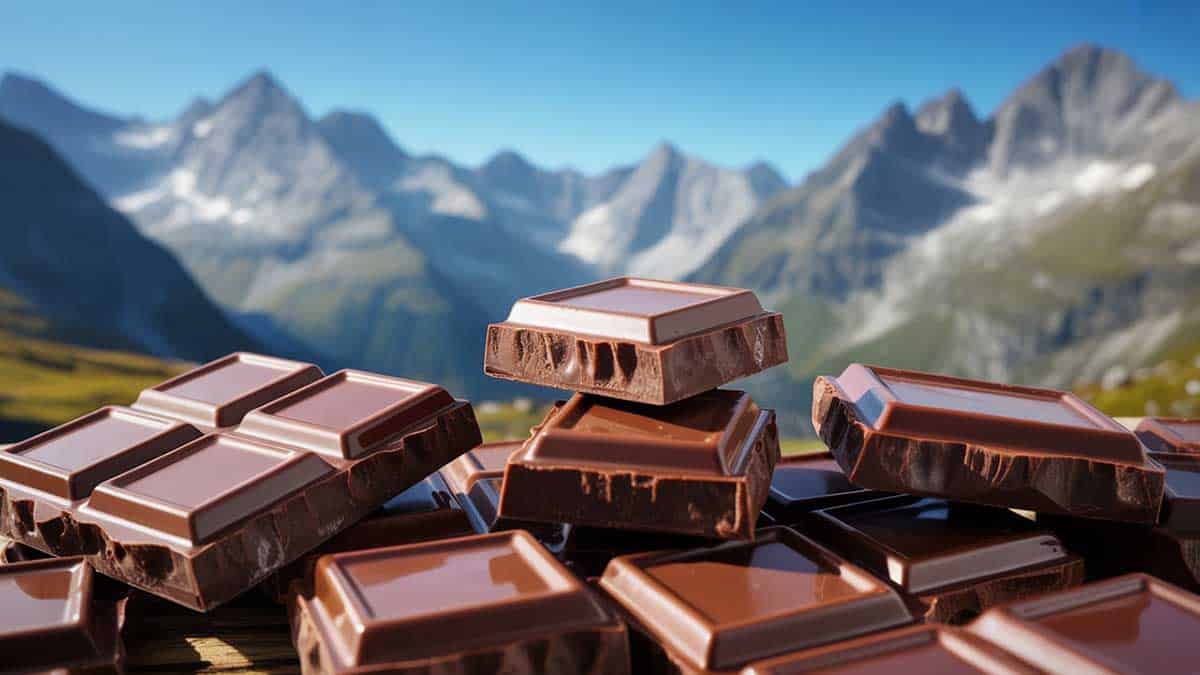
Chocolate may begin far from Switzerland, but much of its character is shaped at home. Especially by milk and landscape.
Milk is central. In alpine regions, cows graze at altitude, feeding on grasses that change with the seasons. The milk reflects that. Rich without being heavy, clean without being flat. Chocolate made with this milk has a softness that feels natural, not engineered.
In places like Gruyère or the Fribourg Alps, chocolate exists alongside cheese making, not above it. Local artisans sometimes blend the two worlds, creating flavors that reflect where they come from, rather than following trends. These chocolates do not travel far. They do not need to.
Seasonality matters too. Winter favors deeper, comforting notes. Summer brings lighter recipes, often paired with fruit or lower sugar content. Nothing radical. Just small adjustments, in tune with the year.
How place shapes chocolate
| Where you are | What changes | What you notice |
| Cities | Style and balance | Subtle differences between workshops |
| Alpine regions | Milk quality | Softer textures, cleaner finishes |
| Tourist towns | Storytelling | Chocolate explained through place |
Traveler’s note
Pairing a city stay with even a short mountain stop changes how you understand Swiss chocolate.
Traveling with chocolate in mind, not in excess
You do not need to plan your entire trip around chocolate. In fact, it works better when you leave space for it.
Start with a city. Walk. Taste once or twice, not ten. Let chocolate appear naturally rather than chasing it. Then add a regional stop. A valley, a small town, a dairy area. Switzerland’s trains make this easy, and the journey itself becomes part of the experience.
Prices vary. Guided walks and museums are often fair value, especially when tastings are included. Workshops cost more, but they slow you down. That is usually worth the time.
And leave room for chance. Some of the best chocolates are found without recommendation, behind modest doors, in places that do not advertise much.
Before you go
- Book small group experiences early.
- Check opening days in rural areas.
- Leave space in your bag, not just your schedule.
- Accept that you will not see everything.
Reynisfjara right now: what changed on Iceland’s black sand beach
Europe’s 2026 travel shortlist: Madeira, Tbilisi, Milan, Glasgow
Traveling through Switzerland by following chocolate is not about indulgence. It is about attention. To places. To people. To small differences that only appear when you slow down.
Chocolate becomes a quiet guide. It leads you through cities without rushing you, into mountains without spectacle, and back to the idea that some of the best ways to travel are also the simplest.If you are curious to see Switzerland beyond the obvious, start with what is already in your hand.