Show summary Hide summary
Summary:
• Why a night at -5°C is easier than it sounds.
• How every room exists for one winter only.
• What makes the Icehotel surprisingly accessible.
• When to go, and how to plan a stay that feels right.
Where winter sets the rules
North of the Arctic Circle, life moves differently. Snow doesn’t come and go, it stays. Rivers don’t rush forward, they freeze. Near Kiruna, in Swedish Lapland, the Torne River becomes solid enough to walk across, drive over, and eventually build with.
Bhutan: the country that quietly slows you down (and you’ll thank it for)
Europe in 2026: the trips worth planning around real dates
Jukkasjärvi is not a resort town. It’s a working village shaped by cold and long winters. The Icehotel was never designed to soften that environment. It was built to exist within it, combining ice architecture, contemporary art and basic comfort. What follows is not a story about extremes, but about how this place actually works.
A hotel that accepts it won’t last
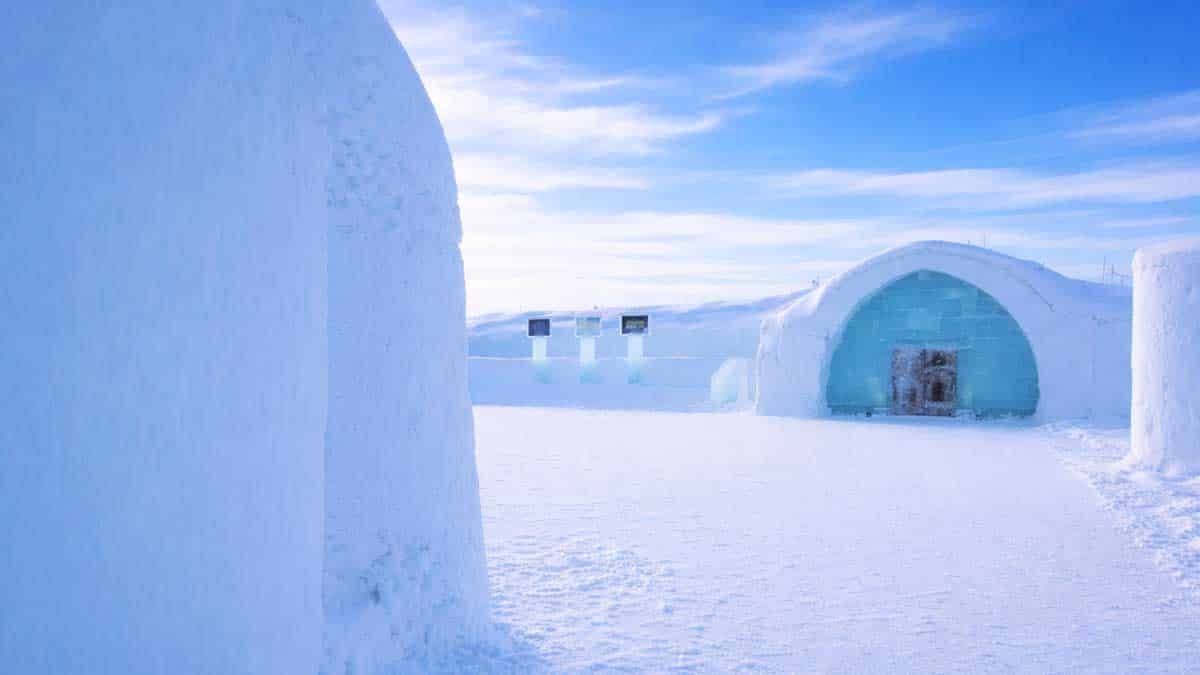
Each winter begins with the same ritual. Blocks of ice are cut from the Torne River, stored, and slowly shaped into walls, ceilings, beds and corridors. Snow mixed with ice helps hold everything together. When spring arrives, the structure melts and flows back into the river.
Nothing is saved. Nothing is repeated. Artists from around the world design the suites each season, knowing their work will disappear within months. The rooms are meant to be lived in, not preserved or recreated.
Why that changes the experience
Staying at the Icehotel feels different because it is temporary. You are not stepping into a place refined by decades of repetition. You are inside something that exists only for that winter, and only for the people who are there.
That awareness changes behavior. Guests lower their voices. They slow their pace. Details matter more. There is a shared sense that this moment will not return.
/html
Sleeping inside ice, without proving anything
The question comes up every time. Isn’t it unbearably cold? The answer is simpler than expected. Inside the Icehotel, temperatures stay stable, usually around -5°C. There is no wind, no humidity, no sudden shifts.
Guests sleep in thick thermal sleeping bags designed for Arctic conditions, laid over insulated beds covered with reindeer skins. The setup is practical, not symbolic.
What the night actually feels like
• The cold is dry and steady, not sharp.
• Silence fills the room, deeper than most people expect.
• Sleep often comes easily, sometimes longer than at home.
Showers, toilets and saunas are located in heated buildings nearby. In the morning, hot drinks are ready. There is no rush, only a gradual return to warmth.
Icehotel 365, when ice stays through summer
Not everything melts. A section of the Icehotel remains open all year. Known as Icehotel 365, it uses solar-powered cooling systems to keep ice rooms frozen during warmer months.
This changes who can experience the hotel. Travelers visiting Sweden outside winter can still walk through ice corridors and even sleep in ice rooms, without Arctic night conditions.
What stays open all year
| Space | What you’ll find |
| Ice suites | Artist-designed rooms kept below freezing |
| Icebar | Drinks served in hand-carved ice glasses |
| Ice gallery | Walk-through art space made of ice |
| Ice cinema | Short films shown inside an ice room |
Icehotel 365 does not replace the winter hotel. It offers another perspective, quieter and more controlled.
What happens outside the ice rooms
Most guests do not stay inside ice all day. The experience extends outward, into forests, frozen rivers and open skies.
In winter, activities include dog sledding, snowmobile trips, guided walks under the northern lights and ice sculpting sessions. Everything is supervised and adapted. The focus is not speed or performance, but being present in a vast, quiet landscape.
Eating with the landscape in mind
Food follows the same logic as the hotel. Menus rely on local ingredients, fish from nearby waters, reindeer meat, berries and seasonal plants.
Meals feel grounded and restrained. They don’t aim to impress. They fit the place.
When to go, and how to keep it balanced
Timing shapes the experience, but expectations matter more.
• December to March brings full winter and the best chances to see the northern lights.
• Late March and April offer longer daylight and fewer visitors.
• Summer allows access to Icehotel 365 and the surrounding region without snow.
Reynisfjara right now: what changed on Iceland’s black sand beach
Europe’s 2026 travel shortlist: Madeira, Tbilisi, Milan, Glasgow
Many travelers choose one night in an ice room, followed by heated accommodation on site. It keeps the experience intense but comfortable.
A quiet kind of memory
The Icehotel does not ask you to endure anything. It asks you to pay attention. To slow down. To accept cold as a setting, not a threat.By building something meant to disappear, the Icehotel avoids becoming fixed or predictable. Each winter begins again. For many travelers, that fleeting quality becomes the strongest memory of all.