
Summary:
- Quiet corners of Europe perfect for slow travelers.
- Scenic cycling and road-trip routes ideal for summer.
- Cooler destinations for those escaping the heat.
- Cultural spots entering a new chapter in 2026.
- Affordable alternatives to classic tourist magnets.
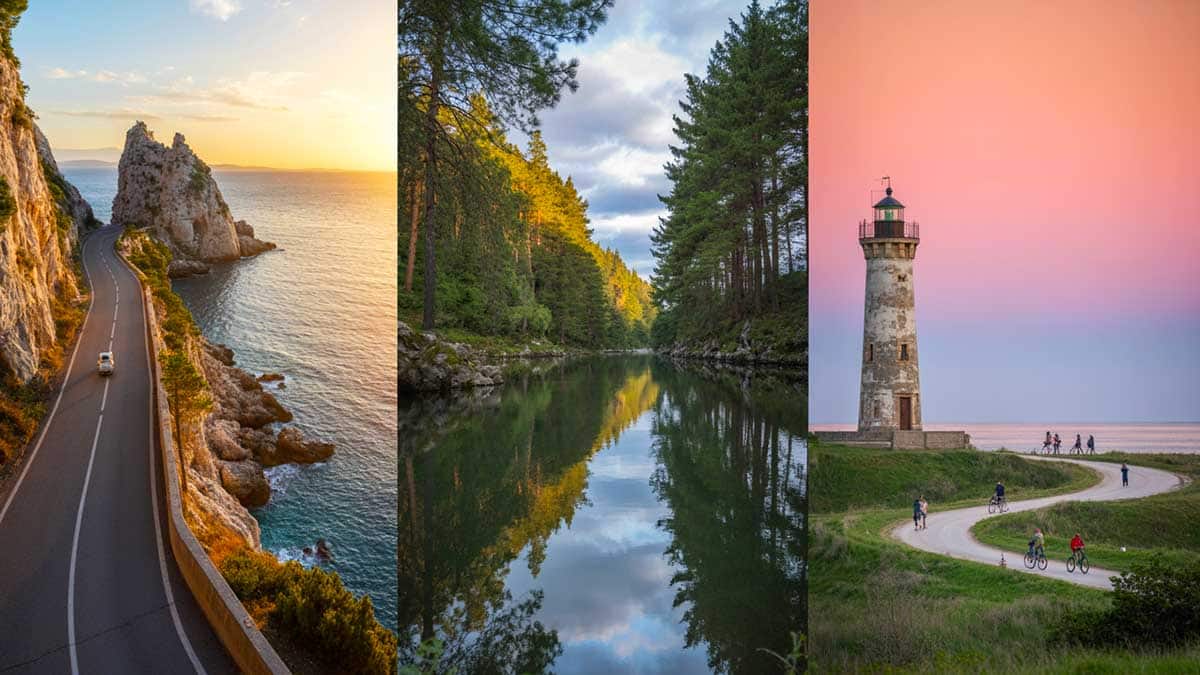
Planning a 2026 trip doesn’t require a big reinvention; curiosity is enough to start. Across Europe and beyond, you’ll find coastal paths shaped by the tides, forests that quiet the world, and towns where a simple coffee encourages you to slow down. Some destinations gain visibility this year thanks to cultural openings or easier access, while others stay quietly charming for travelers who enjoy looking a little deeper.
This guide brings together twelve destinations for road trippers, food lovers, mountain walkers, culture seekers, and anyone craving a change of air without crossing the planet. Each place offers its own version of escape and reconnection. Think of this list as an invitation to wander more freely, observe more closely, and rediscover the pleasure of unhurried travel. Let’s dive in.
Portugal’s N2: the road trip you didn’t know you needed
If you enjoy roads that tell a story, you’ll get along with the N2. Stretching from Chaves to Faro, it crosses thermal townsand vineyard valleys, slipping through cork-oak forests and villages where lunch still feels like a ritual. With landscapes shifting from deep greens to warm plains, it’s a portrait of Portugal seen through its everyday life rather than staged postcards.
Local tip
Grab the N2 passport. Each town stamps it, and by the end you’ll have a surprisingly charming collection of memories.
Scottish Highlands: the road where the sky does what it wants
Some landscapes speak louder than others. In the Highlands, the sky shifts constantly and the lochs mirror nature’s moods. Beyond the well-known viewpoints, you’ll find quieter scenes: a deer stepping out of the mist, a pub hidden after a bend, a sudden stripe of sunlight across a dark hillside. The North Coast 500 remains one of Europe’s most memorable loops, especially if you enjoy places where nature sets the tempo.
Traveler’s note
Layers are essential. Without them, you won’t think about anything else.
Gotland, Sweden: summer without the heat
Gotland feels like a secret finally shared. Its sandy coves and pine forests match perfectly with bike-friendly roads and limestone cliffs. The island has a unique light, soft and pastel in the morning, and evenings that stretch long enough for two dinners. Visby offers medieval charm, while Fårö brings rugged beaches and open horizons where the sea feels ever-present.
What this means for you
Long days, quiet beaches, and mild temperatures in July.
Albania: the Mediterranean with space to breathe
Albania is rising fast among Mediterranean destinations. The Riviera glows at sunset with turquoise coves, while towns like Berat or Gjirokastër reveal layers of centuries-old architecture without the crowds. The northern Alps remain one of Europe’s most underexplored regions; trails cross glacial valleys and high meadows. With Eurozone entry in 2026, travel will become even easier.
Budget insight
Expect far lower food and accommodation costs than in Greece or Croatia.
Chile: a country that feels like three continents in one
Chile’s geography feels almost theatrical. The Atacama Desert offers silent nights and star-filled skies, while Patagonia surprises with fjords, old forests, and lakes framed by volcanic silhouettes. The sense of vastness stays with travelers; distances are long, roads open, and horizons almost endless. Many pair Santiago with Valparaíso before flying south to meet Patagonia’s glacier winds.
Local tip
Distances are huge. Domestic flights save days of travel.
Egypt: a new chapter along the Nile
With the Grand Egyptian Museum now open near Giza, visitors have access to an extraordinary collection, from royal treasures to delicate everyday objects. The museum alone can fill hours, yet the experience becomes richer along the Nile. A cruise links Luxor, Aswan, and Kom Ombo with quiet river islands and stretches where daily life still follows the water.
The Doubs, France: nature at a soft pace
The Doubs is ideal for travelers seeking views without the crowds. You move between forests and cliffs, waterfalls, and villages with a gentle rhythm. The Saut du Doubs waterfall is an obvious highlight, but the region’s charm often lies in quieter scenes: shaded footpaths, small cheese shops, and overlooks where the only sound is the river echoing through the gorge.
Périgord Noir by bike: France’s most pleasant slow lane
Cycling through the Périgord Noir feels like leafing through a history book with better food. The region mixes prehistoric caves with medieval castles, walnut groves, and riverbanks. Rides are punctuated by markets, viewpoints, or picnic spots. Families enjoy the greenways while experienced cyclists tackle the hills for wider panoramas.
Northern Finistère, Brittany: the coast that doesn’t need filters
At the western edge of Brittany, the Route des Phares connects lighthouses perched above rugged shores. Along the GR34, cliffs, coves, dunes, and fishing villages follow one another naturally. On some stretches the sea feels close enough to touch; on others it opens fully, leaving only wind and waves shaping the horizon.
Savoie’s lakes: alpine freshness without the crowds
Annecy, Bourget, and Aiguebelette offer clear water and soft mountain silhouettes. Whether swimming, hiking, or wandering lakeside streets, the region encourages unhurried days. It’s the Alps through a calmer lens, with wooden pontoons replacing ski lifts and afternoons easing into the evening.
Thessaly, Greece: a region worth slowing down for
Thessaly deserves more than a quick drive-through. On the Pelion peninsula, stone villages hide among forested hills and beaches set below cliffs. The atmosphere is unmistakably Greek yet quieter than in the islands. From Volos, ferries make it easy to add the Sporades to the itinerary.
Emilia-Romagna, Italy: cities with character, plates with personality
Bologna, Ravenna, and Ferrara reward slow wandering. You walk under porticoes, step into centuries-old churches, and sit down for meals full of regional classics like Parmesan, tortellini, and real balsamic vinegar. The region cooks with confidence and generosity; it’s the kind of place where you promise to eat lightly and never do.
Traveler’s note
Spring and autumn bring comfortable temperatures and vibrant markets.
These twelve destinations offer something different for 2026; places where the pace slows, the air feels lighter, and culture blends naturally with the landscape. Whether you prefer long roads, mountain paths, quiet beaches, or cities with depth, there’s a trip here that stays with you long after you return.