

Summary:
- Smaller US cities are drawing increasing interest from Europe.
- Budget now weighs heavily in destination choices.
- Airlines are quietly adjusting their maps.
- Travelers want places that feel lived in, not staged.
For years, a first trip to the United States followed a familiar script. New York for the skyline. Los Angeles for the myth. Washington for the monuments. These cities still fascinate, but they no longer feel like the only way in. The classic entry points remain iconic, yet they no longer define the entire experience.
More and more European travelers are choosing a different route. Not out of rejection, but out of curiosity, practicality, and sometimes fatigue. High prices and dense crowds are pushing them to slow down and look elsewhere, often toward cities that feel easier to approach.
A change of pace, not a loss of interest
The United States hasn’t lost its appeal. What’s changing is the way people want to experience it. Instead of hopping from landmark to landmark, many travelers now prefer to stay longer in one place and let the city reveal itself gradually. Time and rhythm matter more than accumulation.
This mindset naturally favors destinations that are easier to read. Cities where moving around doesn’t feel like a daily challenge, where prices don’t dictate every decision, and where local life still sets the rhythm. The shift feels pragmatic rather than ideological, closer to how people actually want to travel.
When prices start to matter more than prestige
There’s no way around it. Cost plays a growing role in travel decisions, especially for long-haul trips. In major US cities, hotel prices have reached levels that force compromises. Shorter stays and constant trade-offs have become common.
In contrast, regional cities offer a different balance between comfort and cost, without sacrificing connectivity.
Average hotel prices per night
| City | Average price |
| New York City | $310+ |
| Los Angeles | $290 |
| Washington DC | $270 |
| Nashville | $175 |
| Dallas | $165 |
| Boise | $145 |
Over a ten or fifteen-day trip, the gap becomes hard to ignore. What seems minor per night becomes decisive overall, shaping the entire itinerary.
In practical terms
Lower accommodation costs often mean more freedom. Extra nights, spontaneous detours, or slower travel become realistic options instead of luxuries.
Cities that feel easier to live in, even for a short while
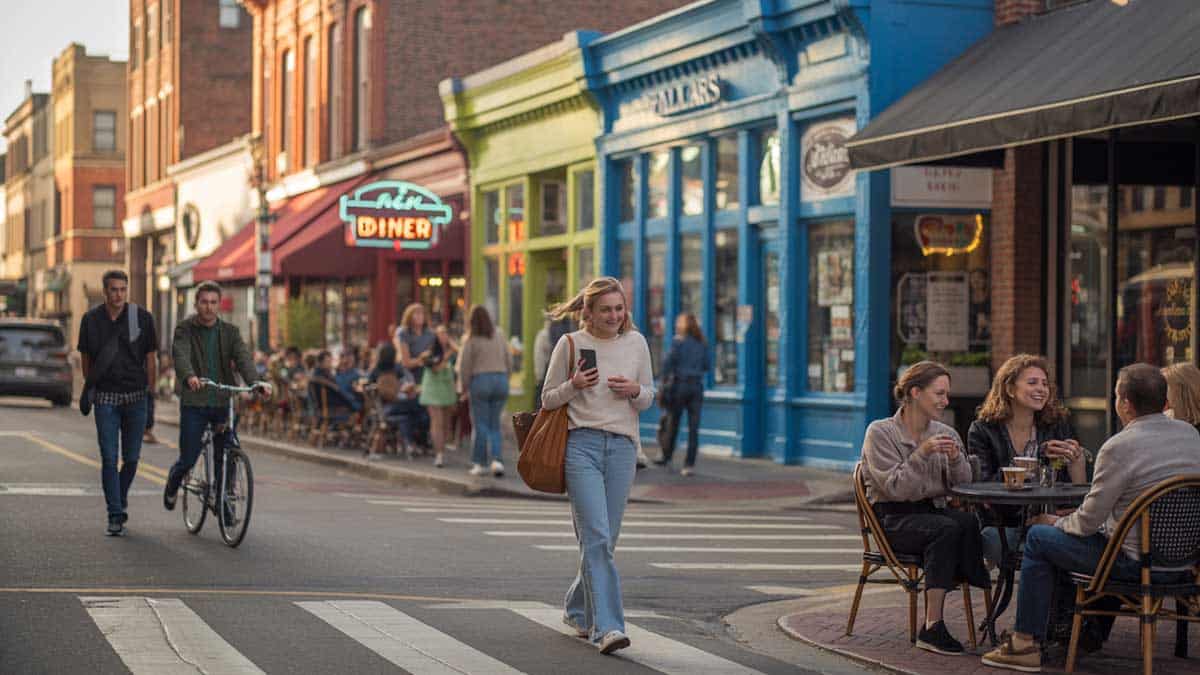
Affordability alone doesn’t explain the shift. Many European travelers describe the same feeling when talking about cities like Nashville, Austin, or Minneapolis. They feel approachable, human-sized, and less demanding. The pace feels manageable, even for a short stay.
Several elements come up repeatedly:
- Streets that don’t feel permanently congested.
- Cultural scenes rooted in local habits.
- Food, music, and sports tied to regional identity.
- Natural escapes just outside the city.
These places allow travelers to blend in more easily. You stop performing the trip and start living it, even briefly.
Airlines are making the shift easier
Air routes often tell a story before official reports do. Over recent months, European airlines have expanded connections to cities that once required multiple stopovers. Flight networks are quietly evolving to match demand.
New or reinforced routes to Nashville, St. Louis, or Minneapolis reflect steady interest. At the same time, some heavily served hubs see reduced frequencies outside peak periods. Accessibility plays a growing role in destination choices.
Worth noting
When a direct route settles in, it usually reflects sustained demand rather than a passing spike.
What this says about today’s travelers
This shift reveals more than a change of destination. It highlights evolving priorities. European visitors are increasingly planning with intention, choosing comfort over density, and accepting that missing a famous landmark isn’t a failure. Travel is becoming more selective and more personal.
With events like the 2026 World Cup set to spread attention across multiple US cities, this broader way of exploring the country is likely to continue. The map is opening up, not narrowing.
For many Europeans, the United States is no longer a checklist of famous streets and towers. It’s a collection of places with different rhythms, where travel feels less rushed and more present. Smaller cities offer space to observe and connect.Stepping away from the obvious doesn’t mean seeing less. It often means seeing better.