Show summary Hide summary
Summary:
- Where to find Gotland’s wildest coastal rock formations.
- Why Visby stands out as one of the Baltic’s most enchanting old towns.
- How to explore Fårö without rushing or meeting too many people.
- Local dishes and farm stops worth planning your day around.
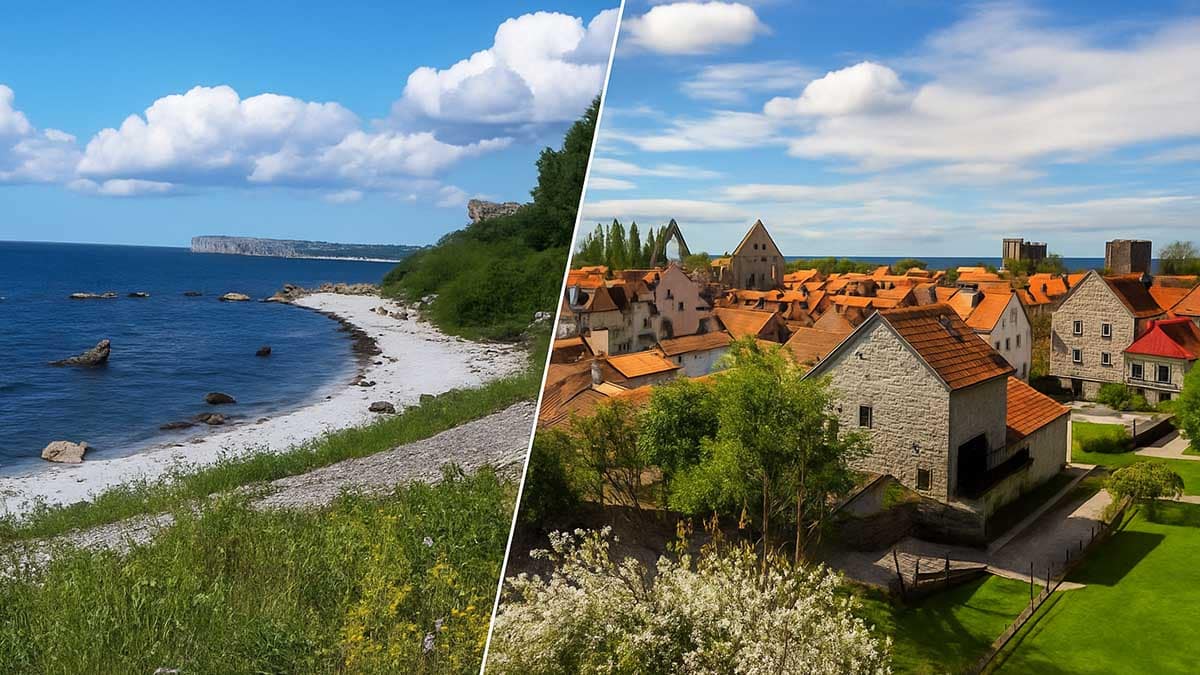
When most people imagine Sweden, they picture deep forests or lakes dotted with red cottages. Hardly anyone thinks of a limestone island floating in the middle of the Baltic Sea, shaped by wind, sheep and centuries of quiet human presence. Yet Gotland, reached in only a few hours from Stockholm, feels like a different Sweden, where medieval walls and empty beaches live side by side.
This guide is written for travelers who enjoy slow rhythms and places that reward curiosity. We explore Visby’s winding alleys and Fårö’s silent rock fields, along with the island’s farm culture and everyday life. If you are ready to step away from the usual postcard version of Sweden, let’s dive in.
Bhutan: the country that quietly slows you down (and you’ll thank it for)
Europe in 2026: the trips worth planning around real dates
Visby, the small capital that feels straight out of a story
Visby is not the typical old town. Its medieval walls still wrap around the city, and once inside, everything narrows. Locals tend gardens behind stone facades, climbing roses spread across doorframes, and cobbled lanes guide you toward the sea.
A town best explored on foot, not through a postcard
The charm of Visby lies in its details. A church ruin appears at the bend of a lane, the Baltic glows pink at sunset, and the silence returns once day visitors leave. It feels lived in and naturally elegant.
Traveler’s note:
For a quieter experience, walk the old town early in the morning or just after dusk.
Gotland, a playground for anyone curious about the past
Gotland is the kind of island where traces of the past sit in fields, forests and roadside clearings. A Bronze Age stone ship here, a Viking cemetery farther down the road and one of the largest collections of medieval churches in Sweden scattered across the island.
What you will see if you take your time
- Stone ships from the Bronze Age, like Tjelvar and Gnisvärd
- Viking cemeteries with thousands of graves in Stenkyrka
- Runestones near Buttle and Hablingbo
- More than 90 medieval churches still in use
Local tip:
Begin with the Gotlands Museum in Visby. The painted stones and Viking artefacts help make sense of what you will find across the island.
Landscapes shaped by wind, sea and patience
Despite being mostly flat, Gotland’s terrain is full of surprises. Pine forests, dunes and open fields dotted with sheep lead to the island’s most striking natural highlight: the raukars, limestone pillars sculpted over thousands of years.
Where to find the most impressive raukars
| Location | What you will see | Difficulty |
| Langhammars, Fårö | Towering raukars up to 8 metres high | Easy |
| Lergravsporten | Arched formations close to the sea | Easy |
| Hoburgsgubben | A rock resembling an old man’s profile | Very easy |
These formations are especially beautiful in the late afternoon, when shadows stretch across the pale ground.
Budget insight:
Every raukar site is free to access. Renting a bike is enough to visit several of them in a single day.
Fårö, the island where everything slows down even more
A short ferry ride away, Fårö feels even quieter than Gotland. The wind is stronger here, the beaches wider and the atmosphere more introspective. It is an island that invites you to breathe and move gently.
Following Ingmar Bergman’s quiet footsteps
Bergman discovered Fårö while searching for a filming location and stayed for decades. The Bergman Center explores his connection with the island through film excerpts, personal notes and guided routes.
Walking, cycling, breathing: Fårö’s open spaces
Sudersand is popular, but those seeking solitude should head to Norra Aura, a long stretch of dunes and sand where you can walk for minutes without crossing anyone. On windy days, the emptiness feels almost cinematic.
Eating local, living local, the Gotland way
Meals on Gotland often follow the rhythm of the land. Many farm shops open only when produce is ready, and restaurants work largely with local ingredients. This slower pace is part of what makes the island so memorable.
What to taste during your stay
- Gotland lamb, tender and slightly sweet
- Wild garlic in spring
- Local mushrooms and white asparagus
- The saffranspannkaka, a saffron rice pancake
- Gotlandsdricka, a juniper-flavoured farmhouse beer
Reynisfjara right now: what changed on Iceland’s black sand beach
Europe’s 2026 travel shortlist: Madeira, Tbilisi, Milan, Glasgow
Traveler’s note:
Lilla Bjers, a farm south of Visby, serves lunches made entirely with vegetables grown on-site.
Gotland is not an island that seeks the spotlight. Its appeal lies in quiet lanes, wind-shaped rocks and the sense of stepping into a gentler rhythm. For travellers who appreciate places that reveal themselves gradually, it leaves a lasting impression.