Show summary Hide summary
Summary:
- What makes a museum truly memorable.
- Architectural details that shape a visit.
- Collections spanning centuries of culture.
- How major museums welcome millions of visitors.
Travelers often expect a museum visit to be a simple pause with art or history, yet some places offer far more. They surprise you even before the entrance, with buildings that catch the eye or spaces that carry centuries of stories. These museums have a way of making each moment feel meaningful. Their design, atmosphere and legacy stay with youlong after the visit.
This article explores what gives these museums their lasting influence. Through examples across Europe, Asia and the Americas, it highlights the elements that shape a memorable experience, from architecture to heritage. Each museum offers a different window into the world, inviting visitors to slow down and connect with something larger than themselves. Let’s dive in.
Bhutan: the country that quietly slows you down (and you’ll thank it for)
Europe in 2026: the trips worth planning around real dates
When a building sets the tone
Bilbao’s Guggenheim, a museum that reshaped its surroundings
The Guggenheim in Bilbao is impossible to ignore. Its titanium curves, designed by Frank Gehry, have become part of the city’s identity since 1997. Visitors come for the art, of course, but also for the way the building plays with light and movement. The structure itself feels like an artwork, and its presence has helped bring renewed life to the area.
Soumaya museum, a magnetic silhouette in Mexico City
In Mexico City, the Soumaya museum grabs attention well before you reach the door. Its façade of 17,000 hexagons reflects sunlight in shifting patterns that change throughout the day. Designed by Fernando Romero and opened in 2011, it houses more than 64,000 artworks. The contrast between the futuristic shell and the classical pieces inside adds a unique charm.
Traveler’s note
If you enjoy photographing architecture, early morning visits often offer the clearest light and fewer crowds.
Collections that hold centuries of memory
The Hermitage, a journey across eras
The Hermitage in Saint Petersburg is one of the largest museum complexes in the world. Part of the former Winter Palace, it gathers more than 3.2 million pieces ranging from prehistoric objects to paintings and sculptures. Moving through its rooms feels like passing through time. Its scale gives visitors a rare sense of continuity, linking distant eras under the same roof.
National Palace Museum, where heritage finds a home
In Taipei, the National Palace Museum houses around 700,000 objects, many of which once belonged to the imperial collections of Beijing’s Forbidden City. Moved to Taiwan after the Chinese Civil War, these works now form one of the most important Asian art collections. The museum preserves a cultural memory that spans centuries, offering visitors a calm space to explore it.
Where past and present meet naturally
The Louvre, a palace of stories
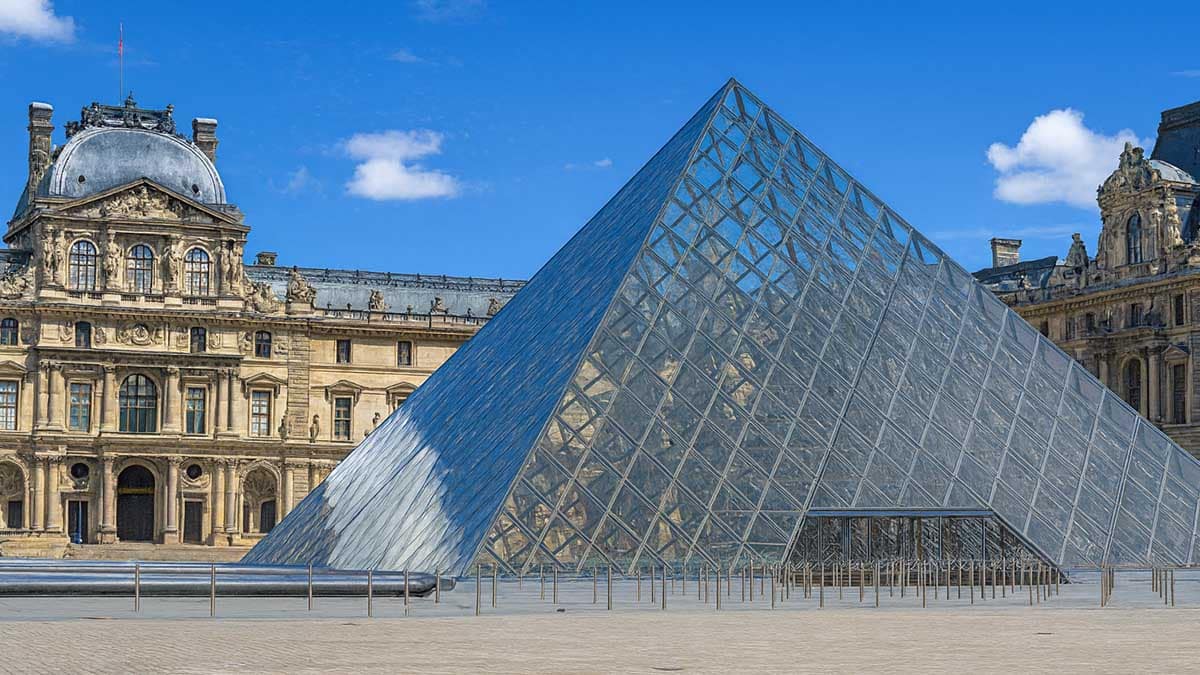
Long before becoming a museum, the Louvre was a royal residence. Since its opening to the public in 1793, it has grown into a place where different eras meet naturally. The glass pyramid designed by Ieoh Ming Pei has become its signature feature, standing at the intersection of modernity and heritage. With more than 36,000 objects on display, the museum offers a vast and layered experience.
Rijksmuseum, a gateway into the Dutch Golden Age
Opened in 1885, the Rijksmuseum in Amsterdam blends Renaissance and Gothic influences thanks to architect Pierre Cuypers. Its galleries highlight works by Rembrandt, Vermeer, Hals and Steen, alongside Asian art and a historic library of 300,000 monographs. Its atmosphere feels both grand and approachable, which helps explain why it attracts more than two million visitors each year.
A museum that carries a region’s identity
Museum of Islamic Art, a quiet landmark in Doha Bay
Built on an artificial island, the Museum of Islamic Art offers a peaceful setting shaped by Ieoh Ming Pei. Inspired by the Ibn Tulun mosque in Cairo, the building balances simplicity with presence. Inside, artworks from the 7th to the 19th century include ceramics, manuscripts, textiles and metalwork. The renovation completed in 2022 opened access to previously unseen pieces, making each visit richer.
A clear snapshot of these museums
| Museum | Location | What makes it stand out | Confirmed facts |
| Guggenheim Museum | Bilbao, Spain | Titanium curves, contemporary presence | Opened 1997, Solomon R. Guggenheim Foundation |
| Musée du Louvre | Paris, France | Former royal palace, glass pyramid | Public since 1793, 36,000+ objects |
| Hermitage Museum | Saint Petersburg, Russia | Immense collections across several buildings | 3.2+ million pieces, founded 1764 |
| National Palace Museum | Taipei, Taiwan | Major Asian art repository | 700,000 objects, linked to Forbidden City collections |
| Rijksmuseum | Amsterdam, Netherlands | Dutch masters, historic library | Opened 1885, about 2M annual visitors |
| Soumaya Museum | Mexico City, Mexico | Hexagonal reflective façade | Opened 2011, 64,000+ artworks |
| Museum of Islamic Art | Doha, Qatar | Design inspired by Ibn Tulun mosque | Renovated and reopened in 2022 |
These museums stand out not only for their size or their collections but for the feeling they create. Their architecture, setting and stories help visitors connect with culture in a simple and tangible way. They offer moments that stay with you, long after the visit or the trip has ended.