Show summary Hide summary
- 1) Packing smarter: the accessories that prevent 80% of travel stress
- 2) Long flights and night buses: comfort items that are worth the space
- 3) Safety and documents: stay organized without looking like a tourist
- 4) Power, adapters, and connectivity: avoid the worst kind of travel stress
- 5) Health and weather: small essentials that can save a whole day
Summary:
- 30 travel accessories that truly earn their place
- Comfort, safety, power, health, and packing essentials
- A quick table to choose what to pack based on your trip style
- Simple tips that make travel smoother, without overpacking
Most people don’t need more stuff, they need a better setup. When your bag is organized and your essentials are easy to reach, everything feels lighter. You waste less time searching, repacking, or worrying about losing something important.
This guide isn’t a list of trendy gadgets. It’s a practical selection of accessories travelers actually use, from quick city breaks to long-haul backpacking trips. You won’t need every item, but you’ll quickly spot the few that match your travel style and make your next trip easier.
Solo female travel: a simple guide to feel safe, social, and fully yourself
Lascaux IV in 2026: the 10th anniversary dates worth planning around
1) Packing smarter: the accessories that prevent 80% of travel stress
A calm trip often starts with a calm bag. The best packing accessories aren’t flashy, they’re the ones that help you stay organized and avoid common mistakes like overpacking, messy suitcases, or missing essentials.
Here are the basics that pay off quickly:
- Carry-on suitcase or travel backpack: airline-friendly, lightweight, durable, easy to carry.
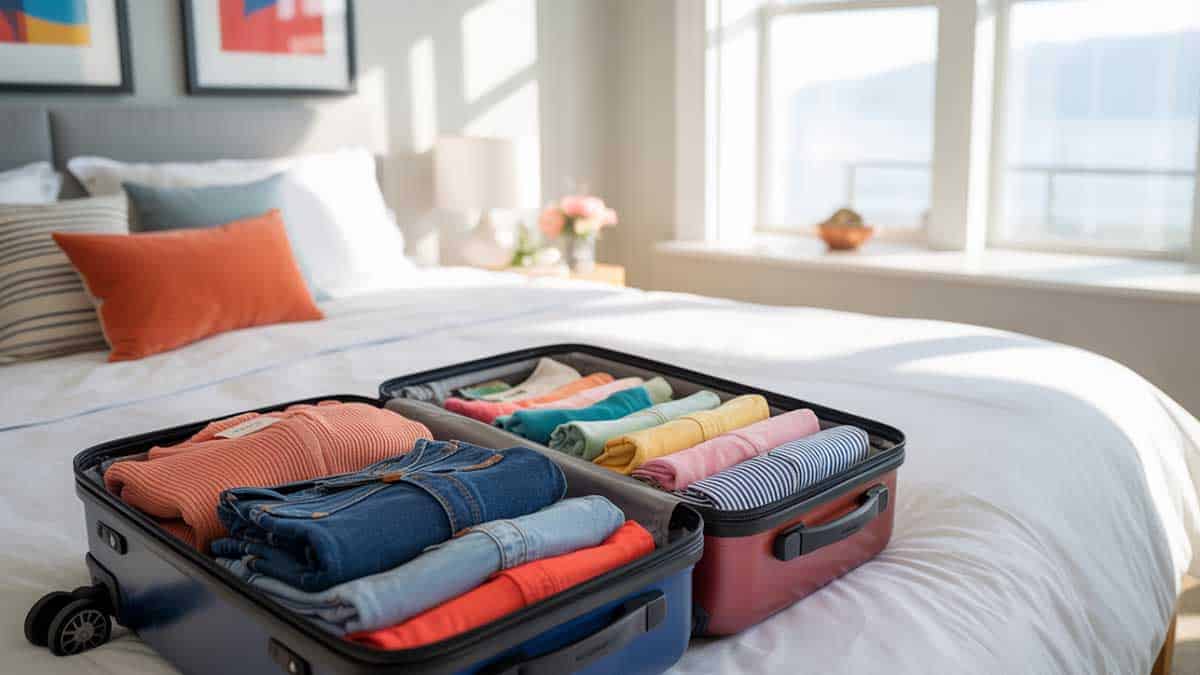
- Packing cubes (or compression organizers): separate outfits, speed up packing, keep your bag clean.
- Luggage scale: avoids surprise overweight fees and last-minute repacking.
- Luggage tag: still one of the simplest ways to recover a lost bag.
- Small padlock: useful for hostels, lockers, and train luggage racks.
A simple habit that works: pack one cube as your “next-day outfit” cube. When you arrive late, you grab that cube and you’re done. It’s a small thing, but it makes your bag feel effortless.
2) Long flights and night buses: comfort items that are worth the space
You can “survive” a long journey without comfort accessories. But you’ll usually arrive tired, and that can affect the rest of your trip. A few small items can make transport days much easier.
If you have long travel days, consider:
- Neck pillow: compact or memory foam, helps you actually rest.
- Sleep mask: useful on flights, in dorms, and in bright rooms.
- Earplugs: for sleep, calm, and focus in noisy places.
- Reusable water bottle: cheaper than buying water constantly.
- Microfiber towel: lightweight, dries fast, works everywhere.
- Small carabiners: hang bags, bottles, shoes, or wet clothes.
- Foldable daypack: perfect for day trips without your main bag.
A good rule: if you have at least one journey longer than six hours, comfort items stop being optional. They’re the difference between arriving drained and arriving ready.
3) Safety and documents: stay organized without looking like a tourist
Most travel theft doesn’t happen in dark alleys. It happens during transitions, airports, metro stations, hotel lobbies, busy streets. In other words, moments when you’re distracted.
The goal is not to feel paranoid, it’s to keep key items secure and easy to access.
- Passport holder: keeps your passport, cards, and boarding passes together.
- Hidden pouch or slim money belt: best for backup cash and a spare card.
- Crossbody bag with zipper: safer than open tote bags, still looks normal.
- Digital copies of documents: stored securely, ideally available offline.
- Mini cable lock: useful in hostels or cafés if you travel with a laptop.
A simple habit: never keep your passport, main card, and phone in the same place. If one thing goes missing, you still have a way forward.
4) Power, adapters, and connectivity: avoid the worst kind of travel stress
Your phone isn’t just a phone when you travel. It’s your map, translator, booking tool, camera, and sometimes your wallet. When it dies at the wrong moment, everything gets harder.
These tools keep you independent:
- Universal travel adapter: essential when crossing regions.
- Power bank (10,000 mAh): a solid size for one to two phone charges.
- Charging cables plus a spare: cables break, disappear, or get borrowed.
- Multi-port wall charger: great if you travel with others or carry multiple devices.
- eSIM plan or local SIM: useful if you arrive late and need data right away.
- Offline maps downloaded: a lifesaver when your connection fails.
- Small flashlight or headlamp: night arrivals, power cuts, hiking, or dark rooms.
One tip that saves headaches: download your offline maps before you leave. It takes two minutes, and it can save you an hour of stress later.
Quick table: what to pack depending on your trip style
| Trip style | Must-have accessories | Nice-to-have extras |
| City break (3 to 5 days) | Packing cubes, power bank, crossbody bag, earplugs | Luggage scale, compact umbrella |
| Backpacking (2+ weeks) | Universal adapter, microfiber towel, hidden pouch, daypack | Cable lock, headlamp |
| Nature plus hiking | Reusable bottle, headlamp, basic first-aid kit | Poncho, backpack rain cover |
| Family travel | Organizers, first-aid kit, spare cables, snacks pouch | Multi-port charger, mini laundry kit |
5) Health and weather: small essentials that can save a whole day
These are the items people skip because they seem minor. Then they get a blister, a mosquito bite, or a sudden rainstorm, and the day changes completely.
If you want fewer “ugh” moments, pack:
- Mini first-aid kit: plasters, antiseptic wipes, basic meds if needed.
- Blister patches: if you walk a lot, these are non-negotiable.
- Insect repellent: essential in many regions, especially tropical ones.
- After-bite gel: small, but very comforting when you need it.
- Light rain poncho or compact umbrella: quick protection, minimal space.
- Backpack rain cover: helpful if you carry tech or walk often in wet areas.
- Sunscreen stick: easy to reapply on the go.
A smart micro-habit: keep two plasters and two blister patches in your day bag. You might never use them, but when you do, you’ll be glad you planned ahead.
Guimarães 2026: Portugal’s Green Capital you’ll actually enjoy
Greece, Croatia, Albania: three neighbors, three very different travel moods for 2026
Travel accessories aren’t about buying more. They’re about removing friction. With the right essentials, you spend less time searching, fixing, repacking, or worrying, and more time actually enjoying where you are.
Start with a simple base kit, test what works for you, and refine it trip after trip. In the end, your best travel gear isn’t the fanciest, it’s the one that makes your travel feel easier, lighter, and more relaxed.