Show summary Hide summary
Summary:
- Most travel conflict comes from noise, space, and cleanliness in shared areas.
- Speakerphone calls and sound without headphones are among the fastest ways to annoy others.
- Seat and bag behavior matters more than people think in tight cabins and aisles.
- Beach and nature etiquette is still a major trigger, especially when trash is left behind.
- A few default habits make you instantly easier to travel next to.
Travel squeezes strangers into the same small bubble. When you are tired, delayed, and overstimulated, even minor habits can feel huge. That is why etiquette matters most in airports, trains, planes, hotel corridors, and beaches.
A survey conducted with 6,800 respondents across seven countries found that many people recognize they have been the annoying one at least once. In France, 87% said they have already irritated someone while traveling. This guide breaks down what usually triggers people, why it escalates so quickly, and what you can do to travel smoothly without overthinking it.
Solo female travel: a simple guide to feel safe, social, and fully yourself
Lascaux IV in 2026: the 10th anniversary dates worth planning around
The real trigger is not rudeness, it is “shared space pressure”
In daily life, people can step away. On a plane or a packed train, they cannot. That is why small behaviors feel bigger in transit: a loud voice, a bright screen at night, a bag blocking the aisle, or crumbs left behind. One person’s comfort can quickly become everyone else’s problem.
Think of it like this: shared spaces have a low tolerance for friction. You do not need to be “mean” to irritate people. You just need to forget that everyone around you is trapped in the same environment, hearing what you hear and seeing what you do.
Key idea: reduce your impact. Less noise, less sprawl, less mess.
The fastest ways to annoy people in 10 seconds
Most complaints fall into a few predictable buckets. They are not dramatic, they are repetitive, and repetition is what makes people snap. In the survey context, common irritations include speakerphone calls, sound without headphones, and hygiene or cleanliness issues like leaving trash behind.
Here are the habits that tend to trigger instant side eye:
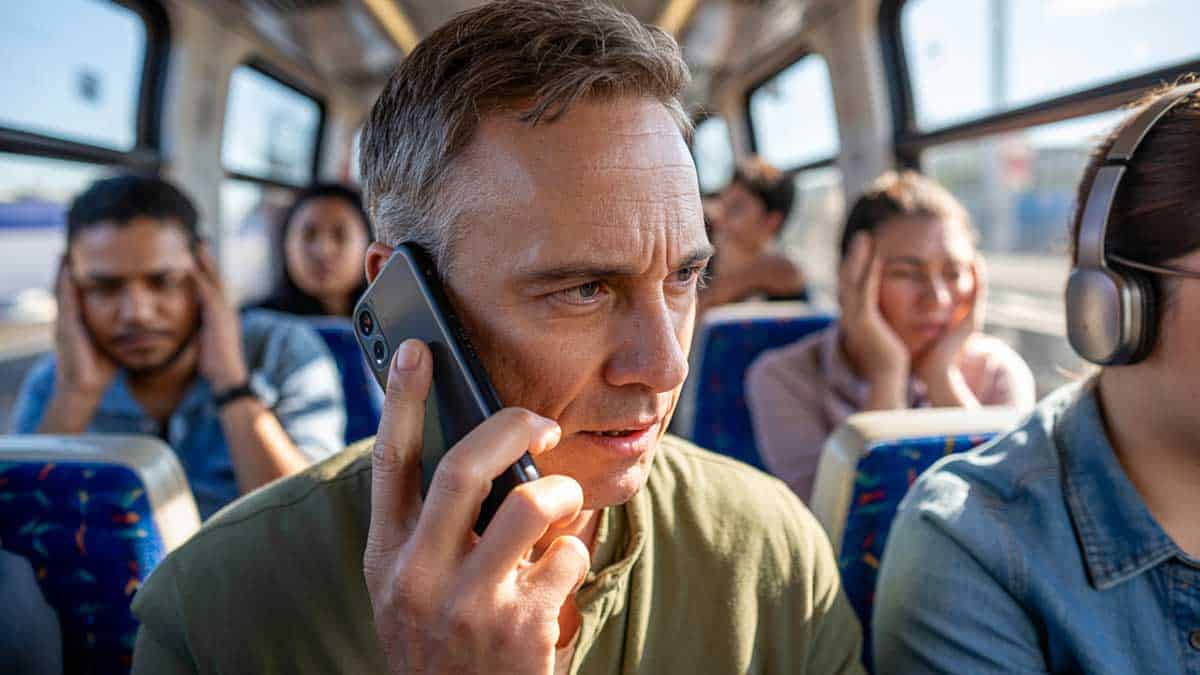
- Speakerphone calls or video chats in public areas
- Watching videos or playing music without headphones
- Speaking loudly in quiet zones, night trains, or late flights
- Taking extra space with a bag, knees, elbows, or armrests
- Stopping suddenly in doorways, at escalators, or in narrow aisles
- Reclining a seat abruptly without checking behind you
- Leaving trash on the beach, in parks, or around seats
- Overloading plates at a hotel buffet “just in case”
- Removing shoes or socks in enclosed spaces if it affects others
- Clapping on landing, which some find fun and others find unbearable
Rule of thumb: if it makes someone else lose space or quiet, it will annoy them.
The awkward truth: we do what we hate (especially when we are tired)
Most travelers are not trying to be inconsiderate. They are just exhausted. In transit, people slide into autopilot. You start with “just one short call,” then you forget your volume. You place your bag on a seat for a minute, then the train fills up. You take your shoes off “for a second,” then you doze off.
Fatigue changes priorities. When your brain is running on low power, it chooses immediate comfort over social awareness. That is why etiquette slips happen more during delays, night journeys, and crowded connections.
A more helpful goal than perfection is consistency. Build a few habits that activate automatically, even when you are stressed. Those are the habits that prevent 90% of friction.
Key idea: your best etiquette is the one you do without thinking.
The “easy to travel next to” checklist
You do not need a long moral code. You need defaults. These small choices are practical, fast, and work in almost every country because they protect the same three things: quiet, space, and cleanliness.
10 habits that make a big difference
- Use headphones for anything with sound, even short clips
- Keep calls brief and speak softly, move away if possible
- Keep your bag off seats when space is limited
- Recline slowly and check behind you first
- Do not block flow points like doors, aisles, escalators
- Serve modest portions at buffets, go back if you want more
- Pack out all trash, including “small” bits and wrappers
- Match your voice to the setting, especially at night
- If you remove shoes, keep it discreet and respectful to neighbors
- Avoid bright screens at night when people are trying to sleep
Key idea: your comfort should not become someone else’s headache.
Quick reference table
| Situation | What annoys people fast | The simple fix |
| Train or plane | Sound without headphones, speakerphone calls | Headphones, low voice, short call |
| Seating | Bag on a seat, space spreading | Bag down or overhead, compact posture |
| Recline | Sudden full recline | Check behind, recline slowly |
| Beach or park | Trash left behind | Pack it out, use bins |
| Buffet | Overloaded plates | Smaller serving, return if needed |
Key idea: be quiet, be compact, be clean.
When someone else is the problem: say it once, say it cleanly
We have all been there. You do not want drama, you just want peace. The most effective approach is calm, specific, and short. No speeches, no accusations. Just one request.
Try this three line script:
- “Hi, sorry to bother you.”
- “Could you lower the volume or use headphones?”
- “Thanks, I appreciate it.”
Guimarães 2026: Portugal’s Green Capital you’ll actually enjoy
Greece, Croatia, Albania: three neighbors, three very different travel moods for 2026
If it escalates, do not turn it into a duel. In planes and trains, staff can step in. Sometimes the best move is simply switching seats and protecting your energy.
Key idea: ask politely once, then de-escalate.