Show summary Hide summary
Summary:
- Greece stays a tourism heavyweight, with pressure in famous islands and city hotspots.
- Croatia still funnels travelers into a few iconic stops, even though the country offers much more.
- Albania is rising fast, and that speed could affect prices and coastal development.
- A calmer trip often comes down to timing, choosing the right base, and mixing coast with inland days.
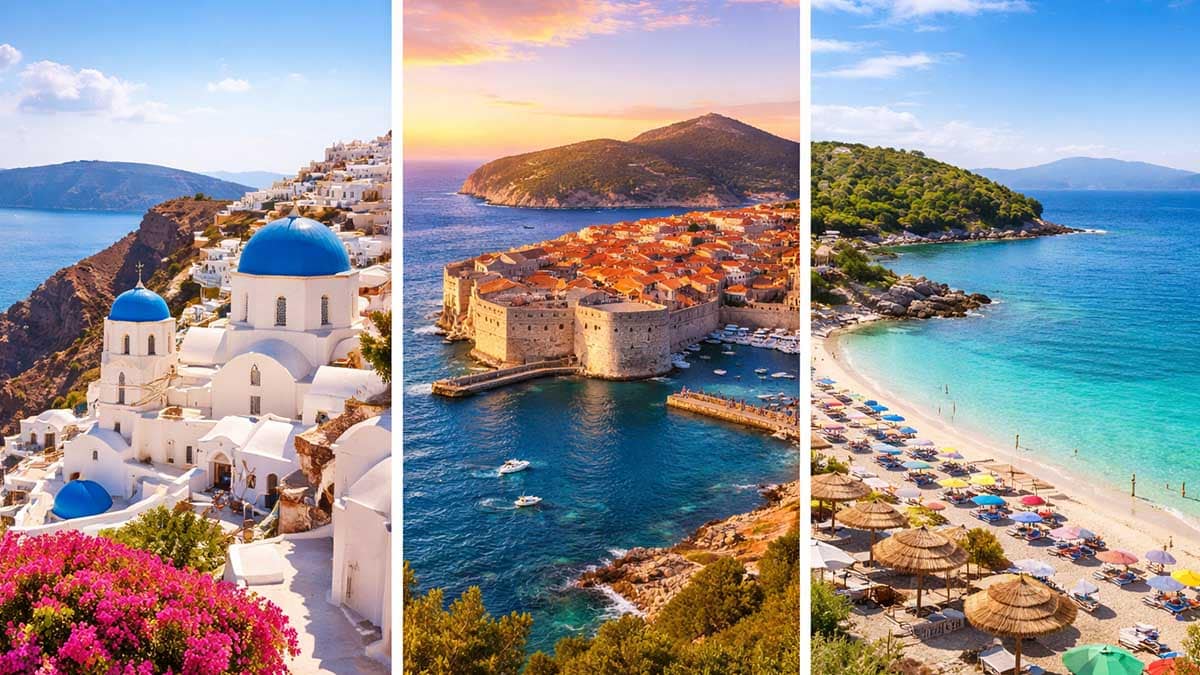
If you’ve traveled around the Mediterranean lately, you’ve probably seen the same pattern up close: one destination gets talked about everywhere, flights multiply, and suddenly the same bays and old towns feel packed for months. Greece and Croatia have lived with that reality for years.
Albania is the newer story, and it’s moving quickly. For a 2026 trip, the goal isn’t to “avoid tourists” (that’s rarely realistic), it’s to plan so your days feel smooth, not crowded, and your budget doesn’t get eaten by peak-season chaos.
Solo female travel: a simple guide to feel safe, social, and fully yourself
Lascaux IV in 2026: the 10th anniversary dates worth planning around
Greece: still the heavyweight, still the same hotspots
Greece remains a tourism giant. In 2025, it welcomed 35+ million visitors and generated around €23 billion in tourism revenue, which helps explain why certain places feel under constant pressure in summer. If your dream is quiet mornings and slow seaside meals, the difference often comes down to when you go and where you sleep.
Crowds don’t hit evenly. A few islands and headline districts absorb a huge share of demand, which means the same streets, viewpoints, and ferry routes become bottlenecks at the same hours. The good news is that Greece still has plenty of room to breathe, if you lean into smarter timing and less obvious bases.
How to make Greece feel easier
- Aim for late spring or early autumn for better rhythm and fewer queues.
- Use the mainland as a base for beaches, food, villages, and hikes with lower crowd pressure.
- Keep one famous stop, then build the rest around quieter places that fit your pace.
Croatia: the Dubrovnik magnet, and the country beyond it
Croatia is often reduced to a short highlight reel, yet tourism operates at real scale. The country recorded close to 22 million entries last year, and the same concentration problem shows up again: a few iconic stops pull huge crowds, especially in peak summer.
What many itineraries miss is that Croatia works best when you slow down. A trip built around one calm base, plus day trips, usually feels more local and less exhausting. It also helps you avoid the “move every two nights” trap that turns the coast into a race.
A simple Croatia move that changes everything
Choose one base with good access, then explore outward. You’ll spend less time packing and more time enjoying small-town evenings and easy swims that don’t require a plan.
Albania: the “go now” destination, changing fast
Albania’s rise is hard to ignore. In 2025, the country welcomed 12+ million visitors, with many travelers drawn to the coastline and others exploring inland areas. The key difference versus Greece and Croatia is how fast things are moving, which can reshape prices and the feel of certain seaside towns quickly.
Albania has talked about attracting higher-spending tourism, including more upscale hotels around Saranda and expanded air access, with a planned new airport in the Vlorë area to improve reach to the south. For travelers, better access can make trips easier, but rapid development can also mean more construction zones in the places everyone is suddenly targeting.
What Albania’s momentum could mean for you
- If your main motivation is low prices, expect coastal hotspots to keep climbing.
- If you want depth, mix the coast with inland days for better balance and a calmer pace.
- Before booking a beach base, check what’s happening locally so you don’t land in a building boom.
Which one fits your 2026 trip best
All three countries can deliver an excellent trip, but they suit different travel moods. If you want maximum variety and established logistics, Greece is hard to beat. If you want coastline with strong infrastructure, Croatia can be brilliant, as long as you avoid a copy-paste itinerary. If you want a destination that still feels like it’s opening up, Albania can be a great pick, with the caveat that change is happening fast.
Guimarães 2026: Portugal’s Green Capital you’ll actually enjoy
Power banks on flights: the SWISS / Lufthansa rule you don’t want to learn at the gate
A calmer trip checklist that works everywhere
- Travel just outside the busiest weeks, if you can.
- Stay longer in fewer places for less friction and more real moments.
- Treat one famous stop as a highlight, not the whole plan.
- Mix coast and inland days to reset the pace and protect your energy and budget.
Greece and Croatia are managing tourism at full volume in summer, while Albania is growing quickly and starting to shape a more upmarket future in certain coastal pockets. With the right timing and routing, you can still get the version people actually hope for: quiet mornings, good food, and days that feel simple instead of crowded.