Show summary Hide summary
Summary:
- Why Guimarães earned the European Green Capital 2026 title, and what it means for visitors
- The key 2026 dates to watch, including the opening ceremony (Jan 9, 2026) and major cultural programming
- A simple “two-speed” itinerary: UNESCO streets in the morning, fresh air in the afternoon
- Where to go for views and nature, from Mount Penha to riverside walking routes
- Practical tips that keep the trip human, easy, and not overplanned
If you have been to Portugal before, you probably know the pattern. Lisbon and Porto get the spotlight, then the itinerary fills up fast with “must-sees,” timed tickets, and the feeling that you are always late to your next view. Guimarães is the opposite mood, especially in 2026.
The city’s year as European Green Capital gives you a fresh angle: come for the historic charm, stay for the slower pace, and build days around walking, viewpoints, and small breaks that actually feel like a holiday. This guide keeps it practical, with dates, routes, and an itinerary you can use without turning your trip into a spreadsheet.
Solo female travel: a simple guide to feel safe, social, and fully yourself
Lascaux IV in 2026: the 10th anniversary dates worth planning around
The “Green Capital” year, what it changes for your trip
Awards can be vague, so let’s be concrete. The European Green Capital title is backed by the European Commission and comes with a year of public programming, local initiatives, and extra visibility for projects linked to mobility, public space, and quality of life. For travelers, the biggest difference is simple: a city that is actively inviting you to move through it on foot, not just photograph it.
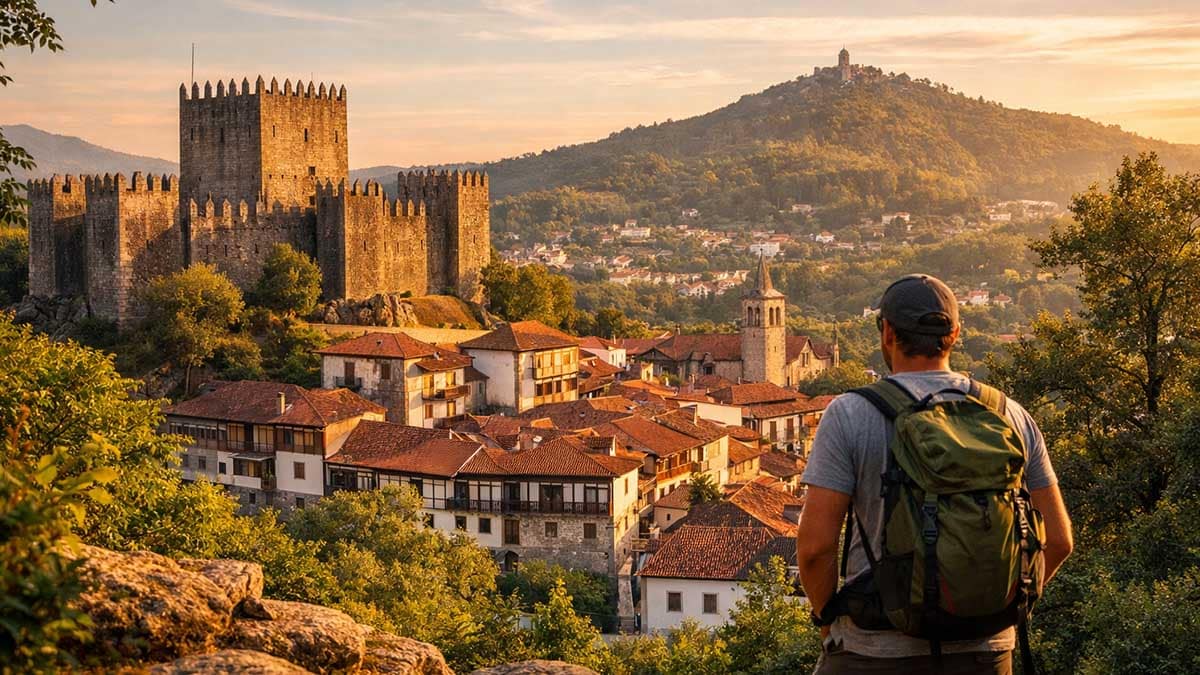
Guimarães already works well for that kind of travel. The old town is compact, and you can shift from cobbled streets to quieter green pockets in a short walk. In 2026, the city leans into that identity, so you can visit with a mindset that feels lighter: less rushing, more wandering, and more reasons to step outside.
2026 dates that can shape your timing
If you like picking travel windows with a bit of atmosphere, Guimarães has several moments in 2026 that can give your trip a clear rhythm. The official European Green Capital calendar lists an opening ceremony on January 9, 2026, which is the kind of event that makes the city feel awake and celebratory, even in winter.
Later in the year, Guimarães hosts Spring Forward, a contemporary dance festival tied to Aerowaves, scheduled for May 6 to May 9, 2026. If you enjoy evenings that feel cultural but not formal, this can be a smart time to visit. The city’s program also highlights a public-facing “green week” style sequence around June 4 to June 7, 2026, which tends to mean workshops, outdoor activities, and community events.
Here is a quick planning table you can actually use:
| When (2026) | What’s happening | What it feels like | Best for |
| Jan 9 | Opening ceremony | lively, local energy, kickoff mood | short city breaks, curious travelers |
| May 6–9 | Spring Forward (dance) | culture at night, easy daytime wandering | arts lovers, couples, solo travelers |
| Jun 4–7 | Green-week programming | outdoors, family-friendly, public events | relaxed trips, families, slow travel |
If you do not care about events, you still win. The dates simply give you a reason to book when the city is doing a little extra, while keeping the vibe low-pressure and friendly.
A two-speed itinerary that feels natural
Guimarães is at its best when you stop trying to “cover” it. Think of your day in two speeds: history and texture first, then air and space later. The historic center is UNESCO-listed, and it rewards slow attention, not speed. Start with a morning walk through the old town, letting the squares and narrow streets set your pace. Pick one museum or landmark if you want, then leave room for the unplanned moments, like a café you did not research.
After lunch, switch settings. Instead of stacking more indoor stops, go for a short green reset: a garden, a hillside viewpoint, or a longer walk if you feel energized. This approach is simple but effective because it keeps your brain fresh. You will remember the trip as a lived experience, not a list of places you sprinted through.
A realistic 48-hour outline looks like this:
Day 1: Old town, then a breathing break
- Morning: wander the UNESCO streets, take it slow, follow curiosity
- Midday: a long lunch, then a quiet coffee somewhere you like
- Afternoon: a green detour, even a short one, to change the mood
- Evening: dinner near the center, then a calm stroll when the streets soften
Day 2: Views, then an easy walk
- Morning: head up toward Mount Penha, for forest air and panoramas
- Afternoon: come back down gently, then choose a riverside route if you want extra steps
- Late day: keep it simple, snack, sit, watch the city move
This is the kind of itinerary that feels almost too easy, until you try it and realize it is exactly what you wanted: a city that lets you breathe.
Where to go for green time, views, and easy walking
The name you will hear quickly is Penha. Mount Penha sits above Guimarães and gives you that rare mix of “I’m in nature” while still being close to town. It is great for a half day: viewpoints, shade, and the feeling of space that you do not always get in city breaks. You can go up, wander, then return without turning it into a hiking expedition.
Back in the city, look for smaller green pauses that break up the stone-and-street rhythm. Even short stretches matter. A bench in a quiet garden, a little slope that opens a view, a shaded path that cuts through the urban grid, these are the moments that make the trip feel personal. If you want longer, flatter walking, Guimarães also has greenway-style routes along the Ave River and the Selho River, which are useful when you want steps without hills.
Greece, Croatia, Albania: three neighbors, three very different travel moods for 2026
Power banks on flights: the SWISS / Lufthansa rule you don’t want to learn at the gate
A few practical pointers that keep it smooth:
- Wear shoes that handle cobbles and gentle slopes, your feet will thank you
- Plan one “anchor” per day, then keep the rest flexible, less pressure is the point
- If you visit during an event week, leave mornings open, the city is nicer when you are not chasing a timetable
Guimarães is not trying to impress you with spectacle. It wins by being pleasant in the small details, which is exactly why it makes sense for 2026.