
Summary:
- Lux-scaping means one premium “bookend”: a hotel night, a spa session, a standout meal, or a stress-free transfer.
- A Marriott International study (as relayed in French press coverage) reports 59% have tried it at least once, 22% in the last 12 months.
- The most represented age group is 18–24 at 48%, vs 12% for 55–64 and 5% for 65+.
- The smartest version follows one rule: one goal, one moment, one upgrade.
- If you tend to travel “full speed”, lux-scaping can be the difference between a great trip and a trip that drains you.
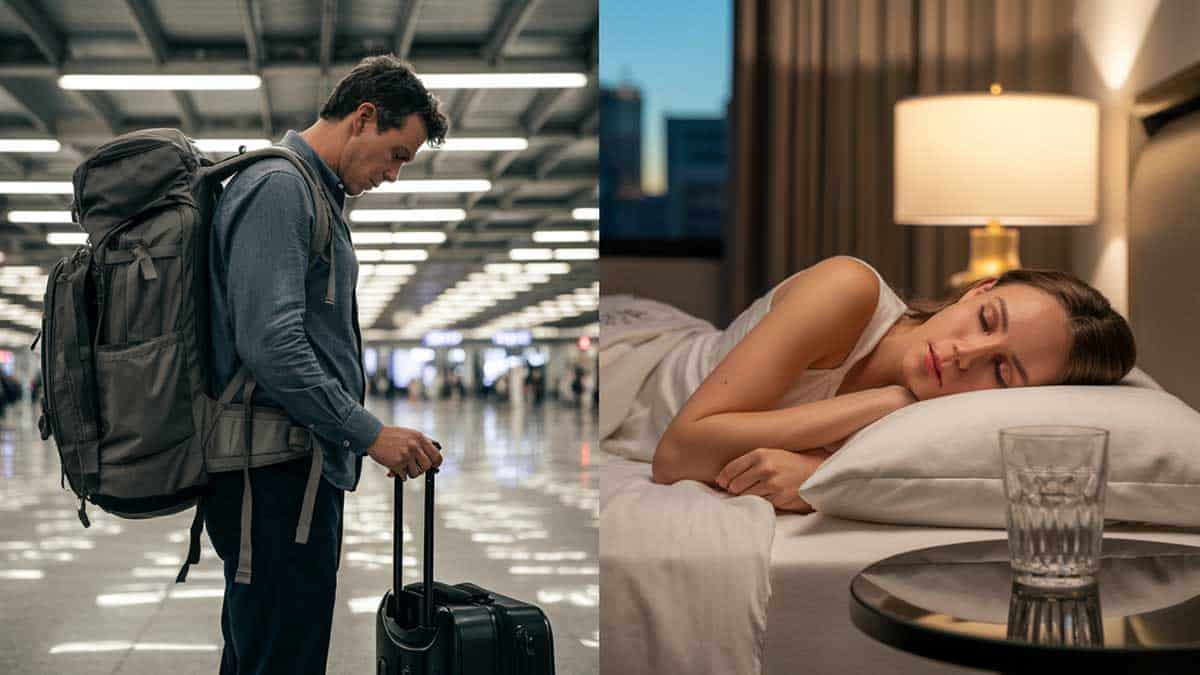
You know that feeling when you get home from a trip and your body immediately asks for a second vacation? Your photos look great, but your legs are heavy, your sleep is broken, and your brain is still running on airport adrenaline. Lux-scaping was basically invented for that moment. It’s the idea that one well-timed comfort upgrade can change the texture of the whole journey.
And it’s not just a social-media buzzword. A Marriott International study relayed in French press coverage suggests the habit is already common: 59% of respondents have tried it at least once, and 22% did so in the last 12 months. The strongest adoption shows up among 18–24 year-olds (48%), compared with 55–64 (12%) and 65+ (5%). The reasons are refreshingly practical: recover, reward yourself, or simply avoid crawling back into real life at the end.
The “micro-luxury” that actually makes sense
1) What lux-scaping really is (and what it isn’t)
Lux-scaping is simple: you add one premium pause at the beginning or end of your trip. Not a full luxury itinerary. Not a week of five-star everything. Just one moment where comfort is the point.
Think:
- A single night in a hotel where you’ll actually sleep.
- A spa or hammam session after days of constant movement.
- A meal you’ll remember for years (not necessarily expensive, just special).
- A smooth transfer after a brutal flight or overnight bus.
What makes it work is contrast. If the rest of your trip is budget-friendly, active, or chaotic, that one calm “bookend” can feel like someone hit reset.
2) Why younger travelers are leaning into it
The interesting part is how unflashy the logic is. In the same study, many people frame this as a mood shift and a recovery tool: 46% say it helps them ease into vacation at the start, while 43% prefer to end the trip on a more restful note. In other words, it’s less “luxury” and more well-timed relief.
There’s also a budget reality here. Lots of travelers don’t want to pay for comfort all the time, but they’ll happily fund one peak moment. The survey responses support that: 28% describe it as a reward, 23% as a way to diversify experiences, and 15% as a way to celebrate.
3) The only rule you really need: one goal, one moment, one upgrade
Lux-scaping goes wrong when it becomes a slippery slope. One night turns into two, then you add the fancy restaurant, then the upgrade, then the private car… and suddenly you’re paying for a mini luxury trip you never planned.
So here’s the guardrail:
Pick one goal. Choose the best timing. Spend on one thing.
Step 1: Pick your main goal (only one)
Ask yourself: what would improve this trip the most?
- Sleep (real sleep, not a few broken hours).
- Recovery (muscles, jet lag, nervous system).
- Less friction (arrivals, transfers, logistics).
- A memorable finish (a “this was worth it” moment).
If your answer is “all of the above”, the problem isn’t solved by spending. It’s solved by slowing down your itinerary.
Step 2: Place it where it has the most impact
- At the start: best after a long haul flight, a stressful week, or a time zone jump.
- At the end: best if you want to come home feeling steady instead of wrecked.
Step 3: Lock the boundaries before you book
- One night max, or one afternoon max.
- One premium category (hotel or spa, for example).
- Decide now, not while scrolling at midnight.
4) Which option should you choose? Use this quick comparison
| Lux-scaping option | Best timing | What you get | Budget-smart alternative |
| One great hotel night | After intense days / before flying home | Sleep, quiet, comfort | Weeknight stay, boutique hotel outside the center |
| Spa / hammam / massage | Day 1 or last day | Recovery, nervous-system reset | Local bathhouse, short massage, day pass |
| A standout meal | End of trip or celebration | Memory, pleasure | Lunch tasting menu, fixed-price menu |
| Easier transport | Late arrival / tight connection | Less stress, more energy | Pre-booked shuttle, direct train |
The best choice depends on your pain point. If you’re physically cooked, a massage may beat a fancy meal. If you hate travel friction, a smoother arrival can be the upgrade that changes everything.
5) Copy-paste scenarios that actually fit real trips
Scenario A: The tight city break (2–4 days)
You walk all day, you try to see everything, you sleep less than you should.
Do this: last night in a quiet hotel near the station or airport, plus a good breakfast.
Why it works: you buy a clean ending and a calm departure.
Scenario B: The backpacking trip (1–3 weeks)
You move constantly, you switch beds, you recover poorly.
Do this: after 5–7 days, get one private room and a spa or massage.
Why it works: your body gets a real reset, and your brain catches up.
Scenario C: Nature, beach, road trip
Your days are full, but the issue is rhythm more than chaos.
Do this: either a slow first day (massage + pool + nap) or a comfortable final night.
Why it works: you create a clear before/after, instead of a blur.
6) The 30-second test: is lux-scaping worth it for you?
If you can answer “yes” to three, it’s probably a good idea:
- I have long or tiring transport days.
- I know what I want to fix: sleep, recovery, or friction.
- I can keep it to one premium moment.
- I’d rather come home okay than squeeze one more cheap night.
- This upgrade solves a real problem, not a social-media fantasy.
Wrap-up
Lux-scaping is a small idea with a big payoff: one comfort “bookend”, placed with intention, can make travel feel better without rewriting your whole budget. Start small, keep it strict, and choose the upgrade that matches your real needs. Most of the time, the best luxury isn’t a label. It’s how you feel when the trip ends.