Show summary Hide summary
Summary:
- Reservations here mean an application process, not a confirmed booking
- The first step mentioned is a $1,000 non refundable deposit
- If selected, the text describes a second deposit of $250,000 to $1,000,000
- The article references a total cost that could exceed $10 million per traveler
- The roadmap cited includes 2029 (equipment/testing), 2031 (deployment mission), and 2032 (first operational version)
- The first concept described targets four guests for five nights
- The piece names GRU Space, plus Y Combinator, Nvidia Inception, SpaceX, Anduril, and UC Berkeley as part of the project’s context
The headline is irresistible: Moon hotel reservations are open, with an opening date pinned to 2032. It reads like the future just showed up on your feed, and asked for your credit card.
But once you look closely, it’s a different kind of story. This isn’t a “pick your dates, pay, see you soon” situation. It’s a startup inviting people to join a high stakes waiting list, built on deposits, selection, and milestones that still have to happen years from now.
Solo female travel: a simple guide to feel safe, social, and fully yourself
Lascaux IV in 2026: the 10th anniversary dates worth planning around
The “reservation” is really a filter, with money up front
Let’s start with the word doing the most heavy lifting: reservation. In the version described, you’re not reserving a room. You’re putting your name into a process that screens for people who can afford to wait, and pay, long before anything is real.
The first step cited is a $1,000 deposit, described as non refundable and tied to administrative handling. That’s not pocket change, but it’s also not the main barrier. The real filter comes next.
If you are selected, the text mentions a second deposit of $250,000 to $1,000,000, meant to hold your place as a potential future customer. At that point, you’re no longer “interested.” You’re financially committed to the idea that this project will still be alive in the next decade.
Here’s the simplest way to read it: you’re paying for priority, not for certainty.
Payment steps mentioned (clean view)
| Step | Amount mentioned | What it appears to do |
| Application deposit | $1,000 | Starts the process, admin fee (described as non refundable) |
| If selected | $250,000 to $1,000,000 | Holds a place as a potential future client |
| Total cost estimate | $10,000,000+ | Broad estimate for the full experience, including transport |
Dates you should remember: 2029, 2031, 2032
If the project succeeds, 2032 is the year you’ll see everywhere. Still, the more telling dates come earlier, because they are tied to things that can be checked.
The roadmap described includes three main points:
- 2029, sending equipment and running early tests
- 2031, a mission intended to deploy experimental modules
- 2032, a first operational version, assuming previous steps work out
That sequence matters because it defines what “progress” looks like. A polished website can launch in a day. A meaningful test mission cannot. If you’re trying to judge whether this is becoming real, you watch what happens around 2029 and 2031, not the marketing around 2032.
And yes, timelines can move. That’s not cynicism, it’s just how long projects behave when they rely on launches, hardware, and permissions.
What the “Moon hotel” concept looks like, at least in version one
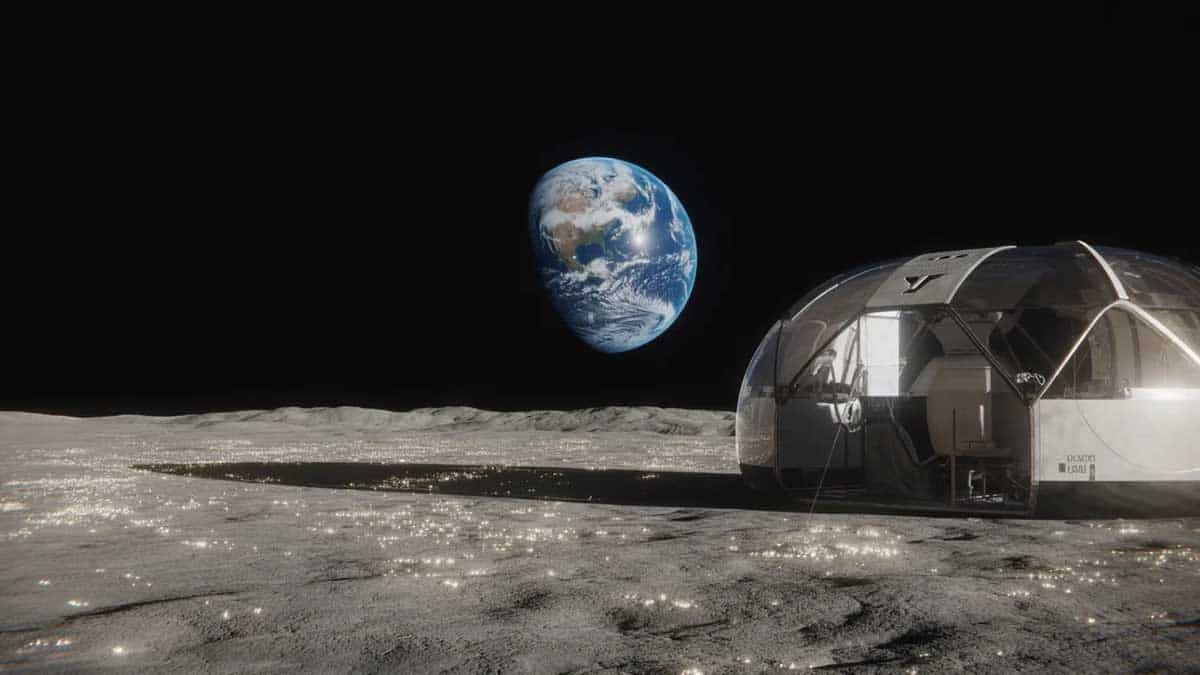
According to the description, the first version would use inflatable habitat modules sent from Earth. The goal is straightforward: maximize livable volume while keeping the structure transportable.
The early configuration mentioned is small by design: four visitors, staying five nights. That’s not a resort. It’s a limited, controlled experience, more like a premium expedition with a roof.
The text also outlines a later, expanded version aiming for about ten people, with a longer lifespan and the use of ISRU (in situ resource utilization), meaning some materials would come from the Moon rather than being shipped entirely from Earth.
If you strip away the futuristic shine, the plan reads like this: start tiny, prove the basics, then scale carefully.
Who is behind it, and why those names are in the story
The article frames GRU Space with a few recognizable reference points. It mentions Y Combinator, lists the startup under Nvidia Inception, and associates interest from investors connected to SpaceX and Anduril. The founder is described as an engineer trained at UC Berkeley.
None of this guarantees that a Moon hotel will open on schedule. Still, it tells you what the company wants to signal: it’s not positioning itself as a random dream project, but as a venture trying to look investable and technically serious.
This is where a human reading helps. When you see these signals, you don’t conclude “it’s true.” You conclude something more modest and more accurate: someone is attempting to build a credible narrative around a long timeline, and they have some recognizable associations.
Before anyone books a Moon stay, here’s the sane way to read the announcement
If you keep only what’s concrete in the information provided, the picture is clear:
- “Reservations” mean a selection process with deposits
- The money starts at $1,000, then jumps to $250,000 to $1,000,000 if you’re chosen
- The total cost estimate mentioned could be above $10 million per person
- The first plan described is limited: four guests, five nights
- The timeline referenced depends on earlier steps in 2029 and 2031
Guimarães 2026: Portugal’s Green Capital you’ll actually enjoy
Greece, Croatia, Albania: three neighbors, three very different travel moods for 2026
So what is this today? It’s a proposal that you can pay to be part of, early. It’s also a public roadmap that can be tracked over time.
If you want one practical takeaway, it’s this: treat it like a long-range bet. Watch the milestones. Keep your excitement for the moments that are measurable.