Show summary Hide summary
Summary:
- The main differences between the North Island and the South Island in New Zealand.
- How landscapes shape the travel experience on each island.
- Which island fits better with your travel pace and expectations.
- Cultural depth in the North Island versus wide open nature in the South Island.
- When it makes sense to visit only one island or combine both.
North Island: a New Zealand you experience as much as you explore
The North Island is often easier to approach, especially for a first visit. Shorter distances, larger towns, and varied scenery make it possible to travel comfortably without heavy planning.
A land shaped by fire and water
Volcanic activity defines much of the North Island. In Rotorua, hot springs and geysers remind visitors that the ground is still alive. Further south, Tongariro National Park offers hikes across mineral landscapes, with craters and colored lakes creating a constantly changing but accessible environment.
Solo female travel: a simple guide to feel safe, social, and fully yourself
Lascaux IV in 2026: the 10th anniversary dates worth planning around
Lake Taupo brings a different rhythm. Calmer and more open, it allows travelers to slow down between stages while staying immersed in a strong natural setting.
Maori culture as part of daily life
The North Island is the cultural heart of Aotearoa. Maori culture is visible and lived, not staged. It appears in community spaces, language, place names, and the stories attached to the land.
Places like Waitangi or Rotorua help travelers understand both the country’s history and its present. For many visitors, this human connection adds depth and meaning to the journey.
Soft coastlines and easy access to the sea
The northern coastline offers a more temperate and relaxed atmosphere. Areas such as Bay of Islands or Coromandel feature accessible beaches, simple water activities, and an unhurried pace.
The North Island suits travelers who want to mix culture and nature without complicating logistics.
South Island: when nature sets the pace
The South Island immediately feels more open and expansive. Towns fade quickly into the background, and the journey takes on a slower, more deliberate rhythm.
Wide landscapes and strong contrasts
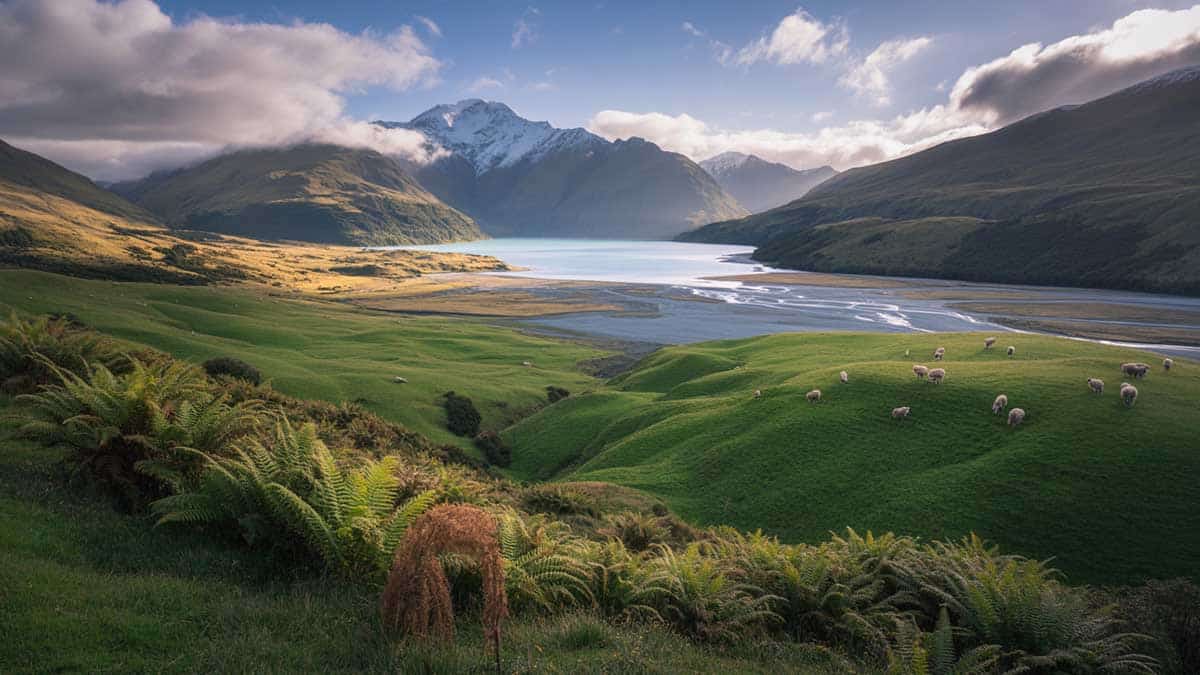
The Southern Alps run through the island and shape its identity. Glacial lakes, wide valleys, accessible glaciers, and long scenic roads define much of the experience.
Here, landscapes do not rush past. They stay. Travel becomes more contemplative, sometimes demanding, but often deeply memorable.
An island made for road trips and slow travel
The South Island rewards those who accept longer distances. Days often revolve around driving, a single hike, a viewpoint, or a long pause rather than packed schedules.
This approach appeals to travelers who want to slow down, reduce structure, and leave space for unexpected moments.
Fjords, wildlife, and chosen isolation
In Fiordland, places like Milford Sound and Doubtful Sound offer immersion in enclosed, wet, and quiet landscapes. Boat trips and kayaking experiences often unfold in near silence.
Wildlife is more visible than in the north, particularly around Kaikoura, where dolphins, seals, and whales can be seen depending on the season. This closeness to nature strengthens a feeling of intentional isolation, without feeling disconnected.
North or South: what your travel style reveals
Rather than opposing the two islands, it helps to think about your personal travel expectations and habits.
Quick comparison
| Aspect | North Island | South Island |
| Atmosphere | Lively, cultural | Quiet, wild |
| Landscapes | Volcanoes, beaches, forests | Mountains, lakes, fjords |
| Culture | Highly visible | More discreet |
| Travel style | Easy, short distances | Road trip, long drives |
| Experience | Balanced | Reflective |
The North Island suits travelers looking for a smooth and varied journey, with cultural insight and manageable distances.
The South Island fits those who want to put nature first, slow their pace, and accept distance as part of the experience.
Do you really need to choose just one island?
Ideally, combining both islands offers a more complete view of New Zealand’s diversity. Starting in the North provides cultural context, while the South delivers a stronger sense of scale and solitude.
Guimarães 2026: Portugal’s Green Capital you’ll actually enjoy
Greece, Croatia, Albania: three neighbors, three very different travel moods for 2026
If time is limited, focusing on one island often feels more rewarding than trying to see everything. New Zealand reveals itself through experience and rhythm, not through ticking places off a list.
Two islands, two ways to travel New Zealand
The North Island and the South Island offer two complementary ways of traveling. One leans toward connection and variety, the other toward observation and quiet.Whichever you choose, New Zealand tends to leave a lasting impression. The journey is not measured only in distance, but in how it reshapes perspective and pace long after the trip ends.