Show summary Hide summary
Summary:
- 2025 sits within the solar maximum window, offering stronger auroras.
- Best season runs from late August to April, with March often giving clearer skies.
- Lights commonly appear late at night, often between 1 and 3 a.m.
- Fairbanks, Chena, Wiseman and Denali are the most reliable regions.
- Staying three nights significantly increases your chances.
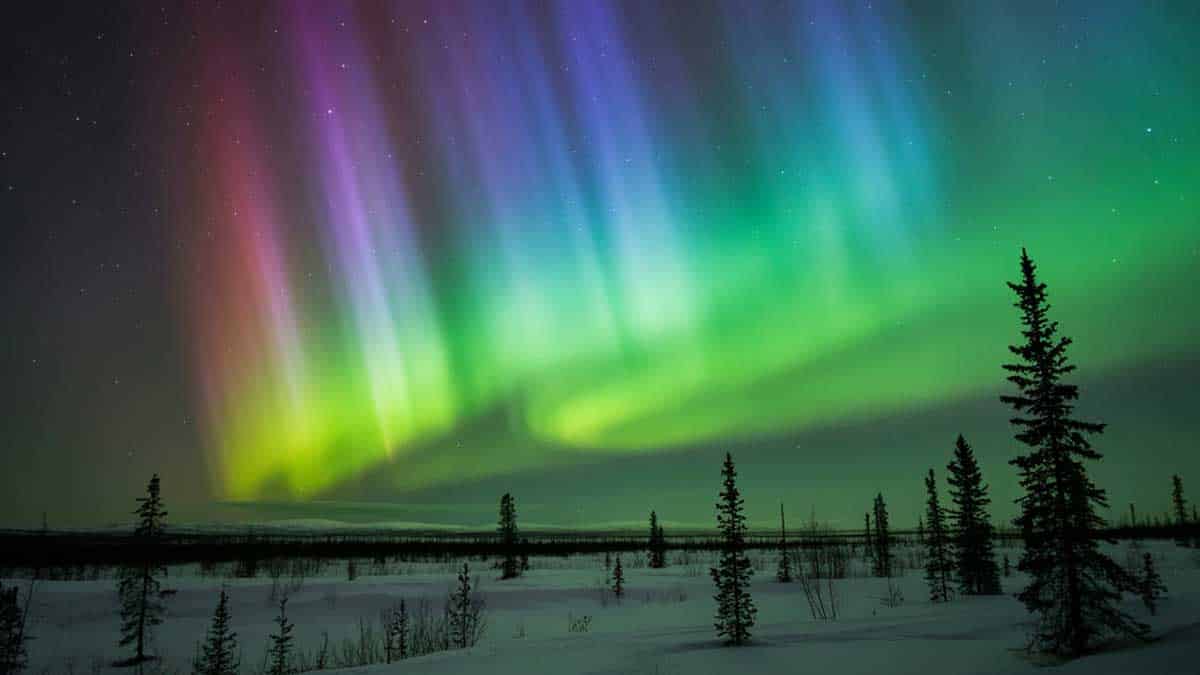
Night falls quickly in Alaska. Only a few hours after dusk, the temperature drops, the roads empty, and spruce forests turn into dark silhouettes. Then a faint arc forms above the horizon, hesitant at first, before stretching into a pale band.
Minute by minute, the band shifts, widens, and curls. In 2025, the display feels particularly alive. The sun is in the active phase of Solar Cycle 25, with predictions pointing to a peak around mid-2025, although strong activity can occur anywhere between late 2024 and 2026. For many visitors, this period may be one of the most favourable of the decade.
Solo female travel: a simple guide to feel safe, social, and fully yourself
Lascaux IV in 2026: the 10th anniversary dates worth planning around
H2 why Alaska glows brighter in 2025
Alaska sits directly beneath the aurora oval, the ring-shaped zone where solar particles regularly collide with Earth’s upper atmosphere. This geographical position, rather than the cold, is what makes the state ideal for aurora viewing.
During the solar maximum phase, solar activity spikes more frequently. When strong solar wind reaches Earth, lights brighten, move faster, and can appear even when the baseline forecast is low. Occasionally, colours shift from green to soft violet, adding layers and depth to the sky. Cold temperatures do not boost auroras. They simply coincide with clearer winter skies. What truly matters is visibility, often better from February to April when cloud cover decreases.
The best time of year to see the aurora in Alaska
Auroras can appear from late August to early April, although conditions vary significantly through the season. Autumn brings rich colours on the ground but clouds are frequent. Winter offers long dark nights, yet storms and overcast skies remain possible. March often stands out as a balanced month: fewer clouds, long nights and increased activity around the equinox.
Travellers visiting between mid-September and mid-April enjoy the strongest window. February, March and early April often combine clearer skies with dramatic snowy landscapes.
The night rhythm: when the lights actually appear
Auroras rarely follow a strict pattern. They can flicker at the horizon, dim, and then return suddenly with a burst of movement. Many experienced observers notice increased activity late at night, often between 1 and 3 a.m., although displays can occur at any hour of darkness.
Many travellers miss the show simply because they go to bed too early. Waiting outside in the stillness, sometimes pacing to stay warm and sometimes standing motionless, becomes part of the ritual. When the solar wind strengthens, everything changes quickly. A faint arc can turn into a wide spiralling curtain within minutes.
Where to see the northern lights in Alaska
Each region offers a distinct atmosphere. Rather than a strict list, here are the places where the experience truly comes alive.
Fairbanks: the heart of the aurora belt
Fairbanks sits directly under one of the most active parts of the aurora oval, with year-round flights and numerous winter lodges outside the city lights.
On clear nights, the surroundings fall silent, and a green arch often rises above the spruce treeline. Glass-roofed cabins and remote lodges allow travellers to watch the sky from the warmth of their bed.
Chena Hot Springs: warm water under a cold sky
About 60 miles from Fairbanks, Chena combines ideal geography with a memorable twist: a steaming outdoor geothermal pool surrounded by frost-covered rocks. Floating in hot mineral water while an aurora drifts overhead is one of Alaska’s most iconic winter moments. Nearby viewpoints, some slightly elevated, provide clear lines of sight.
Wiseman and the Brooks Range: the wild Arctic
North of the Arctic Circle, Wiseman is a tiny village near the dramatic peaks of the Brooks Range. The journey from Fairbanks is long, especially on winter roads, but the silence and isolation intensify the encounter. Here, auroras rise above dark mountains, and caribou occasionally move through the valleys during winter migrations.
Denali: snowy ridges under shifting light
Denali can be unpredictable. Clouds linger and access is limited in winter. But when the sky clears, the combination of snowy slopes and drifting light creates a striking scene.
From the park entrance, several open areas offer wide horizons where green curtains sweep across the peaks.
How to increase your chances (without overthinking it)
Aurora chasing requires patience more than scientific expertise.
- Stay several nights. Three or four greatly improve your odds.
- Leave the city lights. Rural lodges provide clearer skies.
- Check forecasts. They help anticipate geomagnetic windows without guaranteeing a display.
- Stay flexible. Weather can shift quickly, turning a quiet night into a spectacular one.
- Dress for deep cold. Waiting outside at minus 20 degrees Celsius is part of the experience.
Winter roads may be icy or snow-packed, and caution is essential, especially in remote areas. Distances in Alaska often feel longer in winter conditions.
Sometimes all it takes is a break in the clouds, a surge of solar wind or a brightening on the horizon for everything to change. The aurora never promises anything, yet Alaska, especially during the solar maximum years, offers one of the most genuine chances to witness it. When the sky finally ignites, the world feels suspended.
Can you see the northern lights from Anchorage?
Yes, although displays usually stay low on the horizon. For overhead shows, head north toward Fairbanks.
How many nights do you need?
Three to four nights offer a realistic chance. One night relies heavily on luck.
Guimarães 2026: Portugal’s Green Capital you’ll actually enjoy
Greece, Croatia, Albania: three neighbors, three very different travel moods for 2026
Is 2025 a good year?
Yes. It falls within the solar maximum window, when auroras tend to be more frequent and brighter.
What time is best?
Late at night, commonly between 1 and 3 a.m., although displays can appear at any hour of darkness.Can you see auroras in summer?
No. From May to July, the midnight sun prevents full darkness in much of Alaska.