
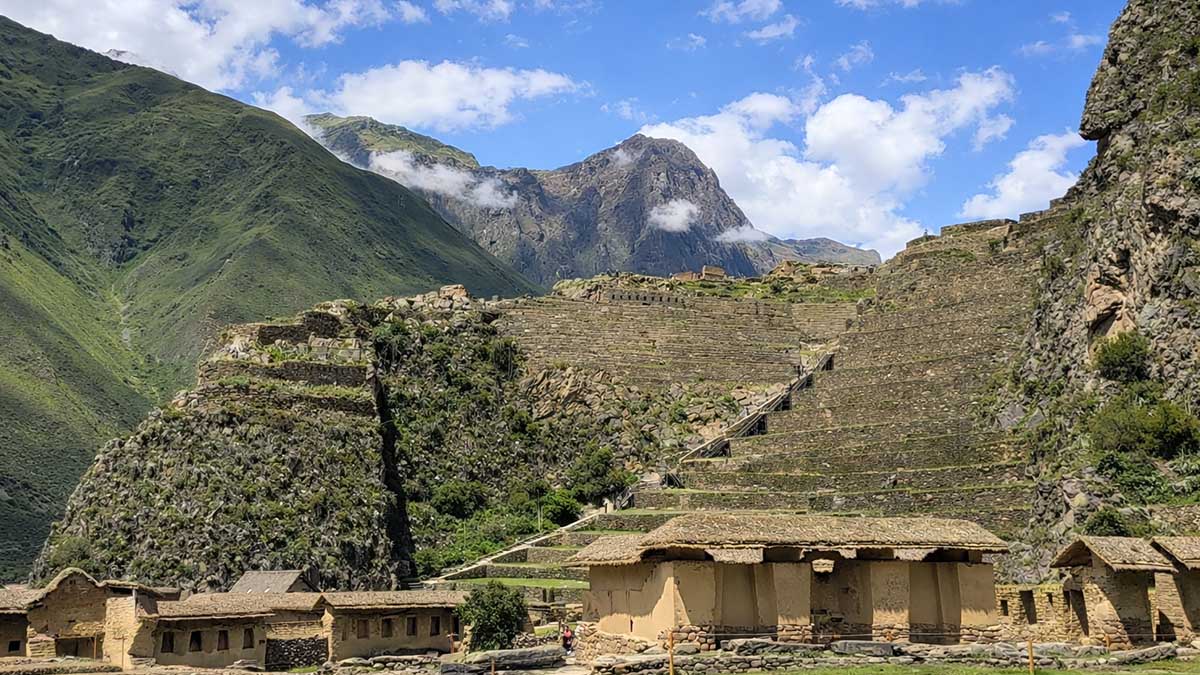
Summary:
- Rainbow Mountain is spectacular, but altitude changes the whole game
- Two nights of acclimatization can save your trip and your mood
- Maras and Moray are perfect “big wow” stops even with limited time
- The Vilcanota highlands are where Peru suddenly feels quiet and endless
- A simple 6 to 8 day plan that doesn’t turn your week into a sprint
In the Vilcanota highlands, altitude isn’t a detail you read on a brochure. It’s the first thing you feel. Your breathing becomes a little louder, the sun seems closer, and every hill looks more honest than it did five minutes earlier. One moment you’re passing alpacas and stone shelters, the next you’re standing in a landscape so open it almost looks unfinished.
The mistake most travelers make is trying to do everything too fast. The better move is simple, start in the Sacred Valley, let your body catch up, and only then go for the high-altitude hits like Vinicunca. Do it this way and the trip feels smooth, not punishing, and you’ll actually remember it for the views, not for the headache.
Vilcanota Highlands: the Peru most people don’t see
Cusco gets the attention. The Sacred Valley gets the tourists. But the Vilcanota range, southeast of Cusco, is where Peru suddenly changes tone. The roads climb, the horizon widens, and the scenery becomes clean and raw, golden grasslands, sharp peaks and long stretches where it’s just you, the wind and a few herds of alpacas.
One of the region’s standout landmarks is Quelccaya, a large ice cap that feeds wetlands and rivers. Seeing it in person is striking, partly because it’s beautiful, partly because it makes the mountains feel very real. Around it, the highlands open up into lagoons with that pale, milky-blue color you usually associate with postcards. Sibinacocha, the most famous one, can look almost white under certain skies. And on the right day, you might spot flamingos crossing the lake.
This part of Peru is also where you stop thinking in “attractions” and start thinking in places that are lived in. People herd animals, walk long distances and work in conditions that feel extreme if you’re coming from sea level. If you’re looking for the Andes to feel quiet and huge, this is where you get it.
Small things that matter up here
- Mornings can be sunny and cold at the same time
- Wind makes everything feel harsher than it looks, bring proper layers
- Layering beats one big jacket and you’ll thank yourself for gloves
Rainbow Mountain, done right, so it stays fun
Let’s be honest, Rainbow Mountain (Vinicunca) is famous for a reason. The colors are real. When the sky is clear, the mountain shows bands of red, yellow, green and muted purple, like the ground has been painted in layers.
But here’s what photos don’t show, Vinicunca sits around 5,036 meters. At that altitude, walking feels different. Not “a bit harder.” Different.
What you might feel
At this height, many people experience shortness of breath, headache, nausea, or a kind of heavy fatigue that shows up fast. It doesn’t mean you’re out of shape. It means your body is adjusting, and that takes time.
The simplest strategy to enjoy it
If you want Rainbow Mountain to feel like a highlight instead of a struggle, spend two nights acclimatizing first, go early for better light and fewer crowds, walk slow and steady, drink water and skip the ego. Nobody wins a prize for rushing at 5,000m.
Some tours offer horses for part of the climb. That can help some travelers, but it doesn’t magically erase altitude. If you feel dizzy or unusually weak, the smartest move is to rest or descend.
The Sacred Valley: markets, salt, and the quiet genius of the Incas
After the highlands, the Sacred Valley feels almost gentle. It runs along the Urubamba River, and it’s still one of the most pleasant places to travel around Cusco, green terraces, small towns and a slower rhythm that makes you want to stop doing and start being.
You can see a lot here in a short time, but the best visits are the ones that don’t feel like a checklist.
Chinchero: not a show, just life
Chinchero is often described as a textile town, but what makes it interesting is the atmosphere. The market is lively without being chaotic, and the textiles aren’t staged, they’re part of daily life. You’ll hear Spanish and Quechua, and you’ll see clothing that carries identity, not trend.
Maras: the salt pans you don’t forget
The salt pans of Maras are genuinely unforgettable. Thousands of shallow pools step down the hillside and reflect the sky like mirrors. Local families still harvest salt through evaporation, and you can watch the process in real time as you walk along the paths. Go early if you can, light is better, and it feels calmer.
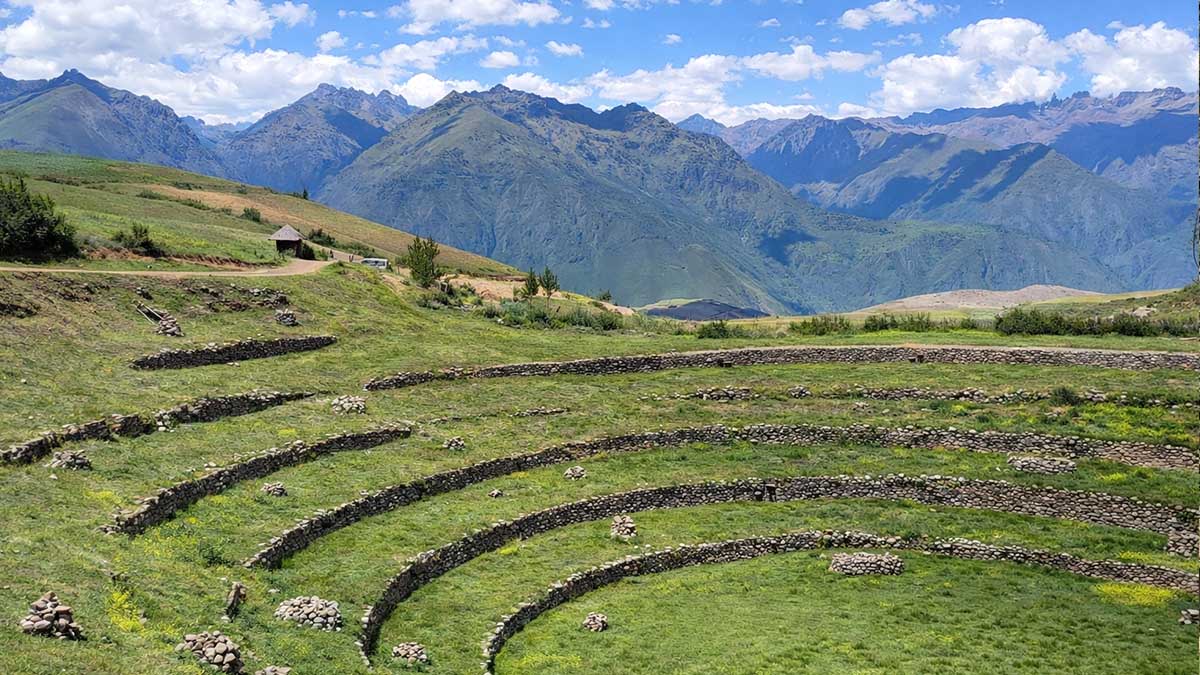
Moray: the circles in the ground
A short drive away, Moray looks like a natural amphitheater, but it was likely used to test crops in different microclimates. Whether you care about history or not, the site surprises most people. It’s bigger than it seems in photos, and it has that “how did they build this?” feeling.
Not everything sacred is a tourist stop
One of the best things about this region is that traditions aren’t locked behind glass. They’re still part of the landscape.
In lesser-known spots like Choquequilla (Naupa Iglesia), you’ll find carved rock spaces where offerings to Pachamama remain meaningful. These places don’t feel like attractions. They feel like sites with a purpose, and you’ll sense it in the way guides lower their voice or locals move through the space.
You might also hear about apus, mountains seen as protectors. Even if you’re not spiritual, it helps to know this. It changes the way you look at the landscape. You stop seeing mountains as background and start understanding why they’re treated with respect.
If your route takes you near communities like Patacancha, you may meet weavers who dye and weave alpaca wool using plants and minerals. The interesting part isn’t the “performance.” It’s the fact that the work continues because it still matters.
The practical part: when to go, how to pace it, what actually works
Best time to go
For clear skies and strong visibility, May to August is usually the safest bet. Nights are cold, but the weather is often stable. September and October can still be excellent, with fewer visitors, but conditions can be more mixed.
A realistic 6 to 8 day plan
- Day 1 to 2, Cusco, rest, light walking, short outings
- Day 3 to 4, Sacred Valley, Chinchero, Maras, Moray, Ollantaytambo
- Day 5, Rainbow Mountain, early start, slow pace
- Day 6 to 7, Vilcanota highlands, lagoons, quiet roads
- Day 8, buffer day, return and recovery
Altitude basics, don’t overthink it
Drink water regularly, avoid heavy effort in the first 48 hours above 3,000m, eat lighter than usual, and if symptoms get intense, confusion or severe breathlessness, descend and seek help.
Quick “when to go” table
| Period | Weather | Crowds | Best for |
| May to August | Clear, cold nights | High | Hiking, views, high altitude |
| September to October | Milder, mixed conditions | Medium | Balance, fewer people |
| Rainy season | More clouds and rain | Lower | Valley focus, budget |
If you only take one thing from this route, let it be this, Peru is better when you stop rushing it. Start in the Sacred Valley, move higher when your body is ready, and leave room for the parts that aren’t on the checklist, quiet roads, small markets, the kind of landscapes that make you speak less.Do it right, and you’ll come back with more than photos. You’ll come back with that rare feeling of having actually been somewhere.