 Anna Duplantis -
1 month ago
In summary
• American is swapping 777-200ERs for 787s or smaller jets on nine routes.• Most flights stay, but cabins, seat maps, and premium seats may change.
• Miami-Paris and DFW-Zurich were cut; other changes are mostly aircraft swaps.
American Airlines is steadily taking the Boeing 777-200ER off several routes that once relied on the widebody jet, replacing it with newer Dreamliners on some long-haul flights and smaller aircraft on others.
The shift affects nine routes across major American hubs including New York-JFK, Miami, Dallas/Fort Worth and Los Angeles. For travelers, the most important point is that most of these flights are not disappearing. What is changing is the aircraft, and in some cases that can mean a different cabin layout, fewer premium seats or a very different onboard experience.
The nine affected markets include London–Las Vegas, Miami–Cancun, Miami–Paris, New York–Rome, Los Angeles–Auckland, New York–Cancun, Dallas/Fort Worth–Frankfurt, New York–Rio de Janeiro and Dallas/Fort Worth–Zurich. Four have moved to Boeing 787 Dreamliners, while Cancun services have shifted to narrowbody aircraft.
The biggest change for most passengers is not losing a flight but losing the 777 they expected
American’s 777-200ER has long been a familiar sight on major international routes, with a widebody cabin, lie-flat Business Class and Premium Economy on many configurations.
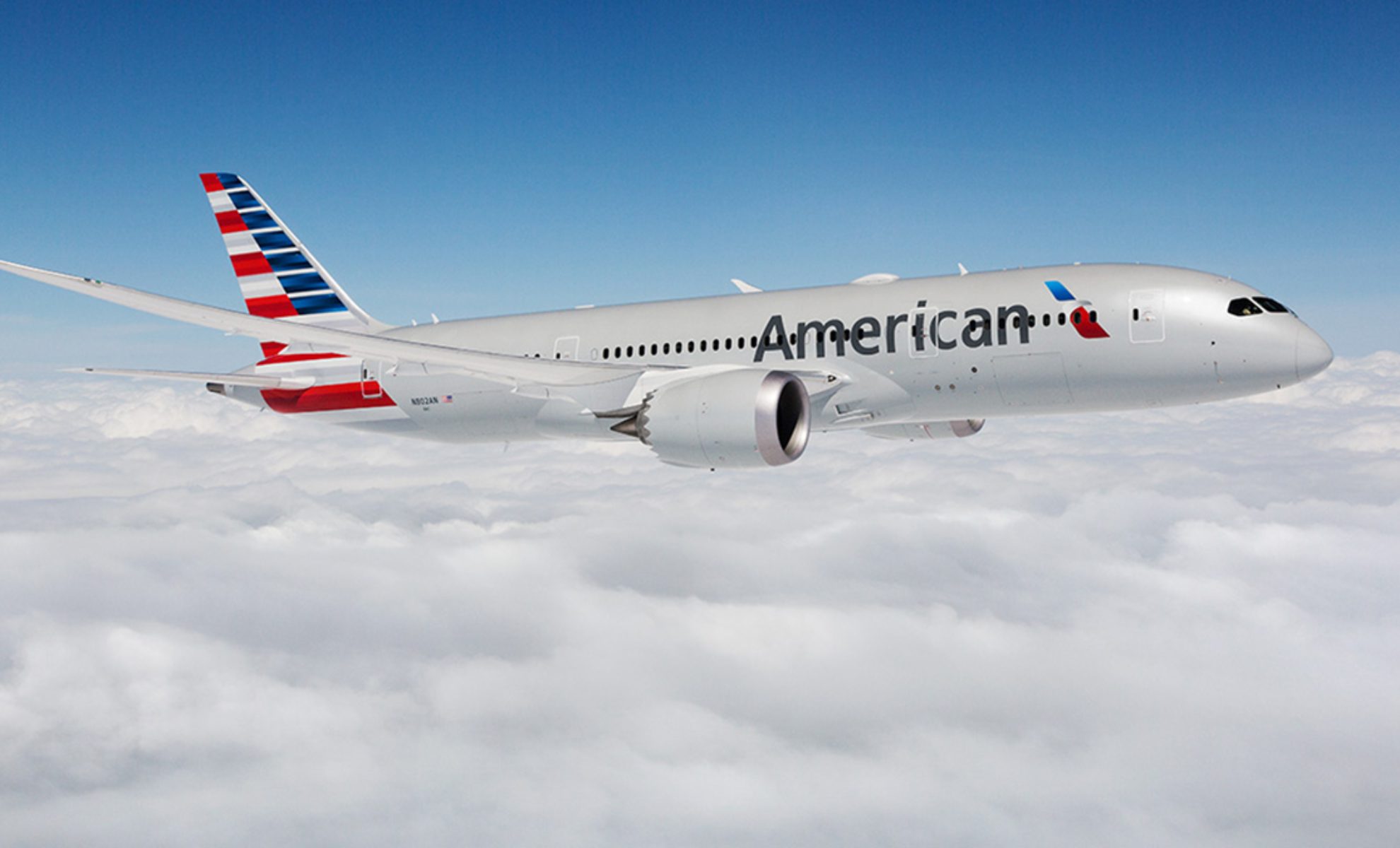
Now the airline is increasingly using the Boeing 787 instead. New York to Rome moved to the 787-9, Los Angeles to Auckland shifted to the 787-8, Dallas/Fort Worth to Frankfurt moved to the 787-8, and New York to Rio de Janeiro also transitioned to the Dreamliner.
For many travelers, that is not necessarily a downgrade. The 787 is newer, has larger windows, a lower cabin altitude and typically offers a more modern passenger environment. But anyone booking specifically for a certain seat or cabin should recheck the aircraft before departure, since an equipment swap can change seat maps and upgrade availability.
The difference is more noticeable on shorter routes such as Miami–Cancun and New York–Cancun. American has replaced the 777 there with narrowbody aircraft, eliminating the unusual opportunity to fly a long-haul widebody on a relatively short leisure route.
Two international markets have been hit much harder because the nonstop itself disappeared
Not every change is simply an aircraft substitution.
American shelved its Miami–Paris Charles de Gaulle service, leaving travelers in South Florida to rely on competing nonstop options or connections. Dallas/Fort Worth–Zurich was also cut after the 2026 summer season, making it the clearest example where the removal of the 777 also meant the loss of the route itself.
For North Texas travelers, that change matters more than which aircraft was used. American no longer provides a nonstop from DFW to Zurich, forcing passengers to connect elsewhere or choose another routing into Europe.
The other seven markets continue in some form or were temporary operations to begin with, including the special London–Las Vegas service tied to CES demand.
American is increasingly putting its newer Dreamliners where the 777 once dominated
The changes fit a much broader fleet strategy.
American has increasingly relied on the Boeing 787 for long-haul flying while continuing to modernize its premium cabins. At the same time, the carrier is upgrading its 777-300ER fleet with the new Flagship Suite product, making the larger 777 variant a more premium-focused aircraft rather than simply using 777s across a wide range of routes.
Simple Flying’s review, based on Cirium schedule data, shows that the nine changes have happened gradually since January 2025 rather than as part of one sudden round of cancellations. That distinction matters for travelers because there is no mass grounding of American’s 777 fleet underway.
Instead, the airline appears to be becoming more selective about where it uses the aircraft.
For passengers, the practical takeaway is simple: do not assume the aircraft shown when you first book will still be operating the flight months later. American’s widebody assignments are changing quickly, particularly on international routes.
The 777 is not disappearing from American Airlines, but it is becoming less common on some routes where travelers once expected to see it.
