 Luc Rongier -
1 week ago
In summary
• Hoax bomb threats disrupted at least 27 European flights.• Jets escorted planes; some flights diverted, no explosives found.
• U.S. travelers may face delays, missed connections, and screenings.
A wave of bomb threats targeting passenger aircraft across Europe has triggered fighter jet deployments, emergency diversions and security checks at airports across the continent.
At least 27 European flights were reportedly targeted by hoax bomb threats on Thursday, November 5 alone, with airlines including Ryanair, Aer Lingus, Finnair, Wizz Air and LOT Polish Airlines among those affected.
No explosives were found on the aircraft that were searched, and no injuries were reported, but the scale of the disruption forced several countries to activate military aircraft and emergency procedures.
For Americans traveling through Europe, the incidents are a reminder that even unsubstantiated threats can quickly lead to diversions, delays and missed connections.
Three Ryanair Flights to Bulgaria Were Escorted by Fighter Jets
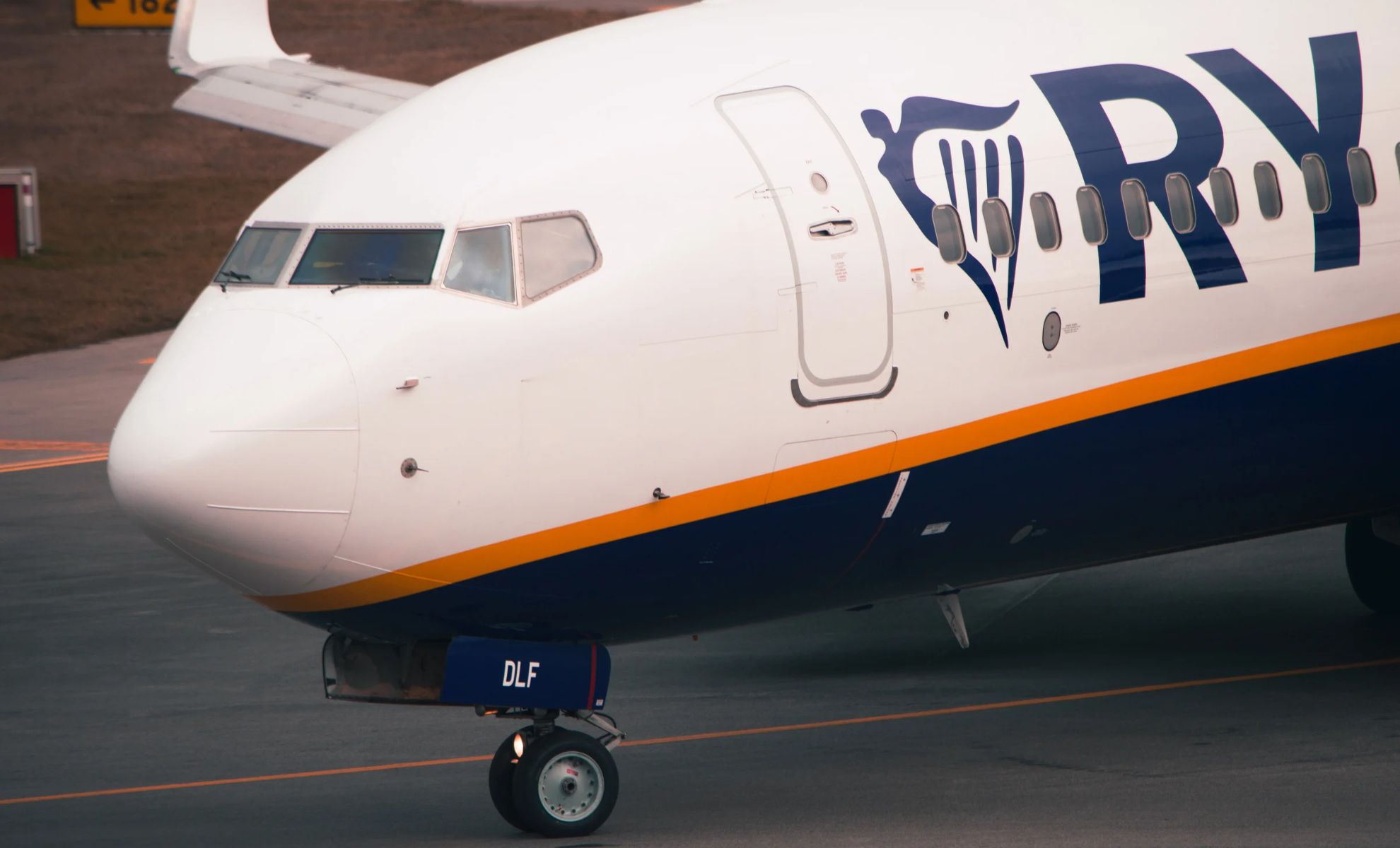
Three Ryanair flights heading to Sofia from London Stansted, Madrid and Copenhagen were targeted by bomb threats on November 5.
Bulgarian authorities scrambled military fighter jets to intercept and escort the aircraft as part of established air-defense procedures.
The flights from Madrid and Copenhagen continued to Sofia, while the London Stansted service was diverted to Plovdiv Airport, east of the Bulgarian capital.
All three aircraft were inspected after landing, and authorities reported that no explosives were found.
The incidents were part of a much larger series of threats that had already affected Ryanair flights earlier in the week.
According to Euronews, Ryanair was targeted by at least seven bomb threats during the wave of incidents.
An Aer Lingus Flight to Rome Was Forced Onto a French Military Base
One of the most dramatic incidents involved Aer Lingus flight EI402 from Dublin to Rome.
The Airbus A320 was diverted to the Évreux military air base in Normandy after authorities received a bomb threat.
French fighter aircraft escorted the plane to the military base, where passengers and crew were safely evacuated and bomb-disposal teams inspected the aircraft.
The flight was carrying 151 passengers and six crew members.
According to French authorities, military jets were ordered to intercept the aircraft after the pilots initially sought to land at a civilian airport instead of the designated military facility.
The aircraft ultimately landed safely, and no bomb was found.
Finnair, Wizz Air and LOT Were Also Caught in the Wave of Alerts
The threats spread well beyond Ryanair and Aer Lingus. A Finnair flight from Helsinki to Rome was escorted by an Italian fighter jet before landing at Rome Fiumicino Airport, where bomb-disposal teams inspected the aircraft.
Another Finnair flight traveling from Helsinki to Vienna was also targeted but landed normally.
A Wizz Air flight from Milan to Warsaw was diverted to Vienna following a threat, while another Wizz Air service from Milan to Bucharest triggered a security response after landing in Romania.
LOT Polish Airlines was also affected when a Warsaw-to-Brussels flight received a threat. The aircraft landed safely and underwent additional security checks.
Czech authorities separately activated security procedures for several Prague-bound aircraft after receiving anonymous threats.
Authorities Still Do Not Know Whether the Threats Are Connected
The biggest unanswered question is whether the incidents were part of one coordinated campaign or a series of copycat hoaxes.
European Union Transport Commissioner Apostolos Tzitzikostas said it was still « too early to draw conclusions » about whether the threats were linked.
Some threatening emails reportedly used the name « Fighters of the Male State », referencing an extremist movement associated with Russia.
However, authorities have not confirmed that the group was genuinely responsible, and there is currently no public evidence proving that a government or established organization coordinated the incidents.
Aviation security experts have nevertheless noted that the unusually high number of simultaneous threats could indicate an organized attempt to disrupt European air travel.
Why American Travelers Should Pay Attention
The immediate risk to passengers appears limited because every reported threat must be treated seriously until authorities can determine whether it is credible.
But even false threats can create major travel disruptions.
Flights may be diverted hundreds of miles from their destination, passengers can be held for security screenings, airports may temporarily restrict operations and airlines can be forced to reposition aircraft and crews.
For U.S. travelers connecting through major European hubs, that can translate into missed connections and long delays even when their own flight is not directly targeted.
The deployment of French, Italian and Bulgarian military aircraft also shows how seriously European governments are treating the current wave.
Investigations Are Continuing Across Europe
Authorities in several countries are now investigating who sent the threats and whether the incidents share a common origin.
So far, security searches have not uncovered explosives on the affected aircraft.
That makes the threats appear to be hoaxes, but officials are not dismissing them.
Every new warning still requires a full response until investigators can determine that passengers are not in danger.
For now, European aviation remains under heightened scrutiny as authorities try to determine whether this was an extraordinary series of false alarms or something more coordinated.
