
Summary:
- Cortina is a real Alpine town, not just a resort set.
- Milan Cortina 2026 puts extra pressure on peak dates, so timing matters.
- Skiing works best if you pick one sector per day.
- The best Cortina moments often happen after the slopes: aperitivo, strolls, and easy dinners.
- Venice is a practical gateway, with direct bus options depending on the season.
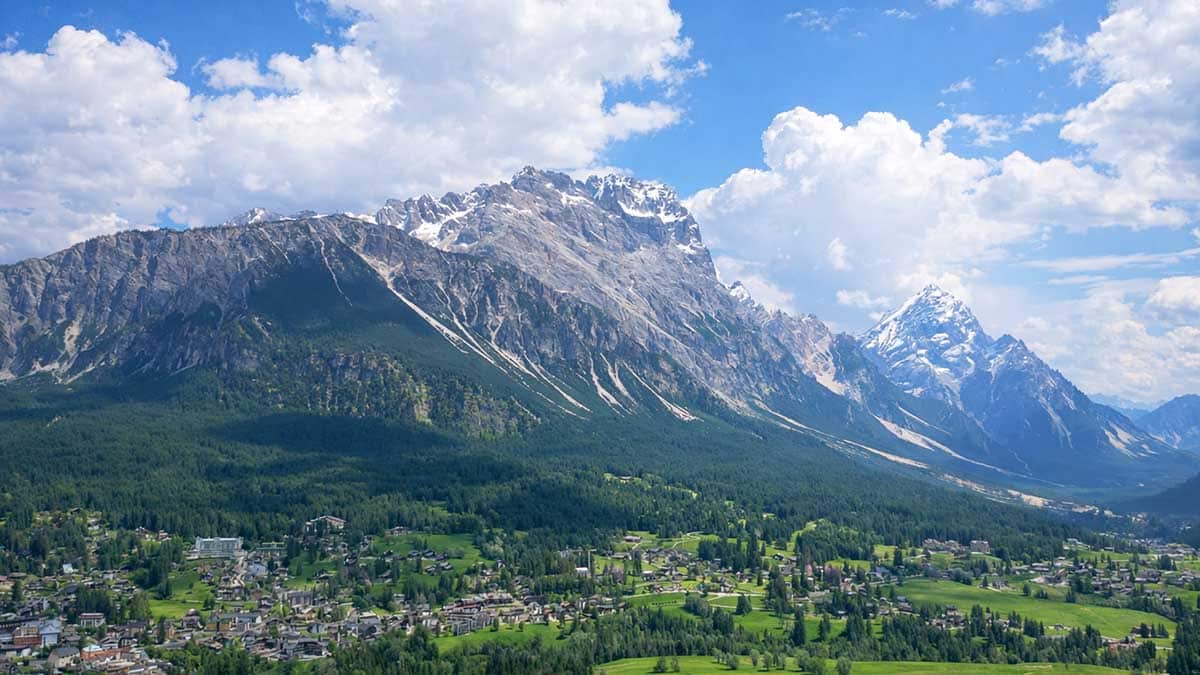
Cortina d’Ampezzo sits at 1,224 metres (4,016 ft), ringed by pale limestone walls that glow when the light drops. It’s famous for winter sports, but the real surprise is how it balances everything: serious mountains with an everyday town rhythm, luxury windows with local habits, and busy weeks with pockets of calm.
If you’re planning a trip in 2026, one detail changes the atmosphere: the Milano Cortina 2026 Winter Olympics, with the opening ceremony scheduled for 6 February 2026. That doesn’t mean Cortina becomes unlivable. It just means you’ll enjoy it more if you choose your dates with care and build your days around simple, realistic plans.
Cortina is “glam,” yes, but it’s also a town with roots
Cortina’s reputation is easy to spot: designer boutiques, well-dressed crowds, and hotels that know how to do comfort. Still, what makes the place stick in your memory is its local identity. Cortina sits in the Ampezzo valley, an area tied to Ladin culture in the Dolomites, and that cultural layer gives the destination a lived-in feeling rather than a purely seasonal vibe.
Walk through town early in the morning and you’ll notice it immediately. There’s a quiet routine before the lifts, with people grabbing espresso and heading to work or the slopes. That mix of real life and travel energy is exactly why Cortina feels different from a resort that only exists for tourists.
The 2026 Olympics change the mood, so play the calendar smart
The Olympics are a spotlight. In practical terms, that usually means higher demand, tighter availability, and more planning pressure around key dates. The opening ceremony for Milano Cortina 2026 is set for 6 February 2026, and that early-February window is the one most travellers should treat as “high intensity.”
A simple approach works best. If you want the buzz, go during the peak and book early. If you want breathing room, aim for January or March, when the mountains still deliver but the town can feel less compressed. The goal is not to “avoid” Cortina, it’s to choose the version of Cortina that matches your trip.
Ski Cortina the easy way: one sector per day
Cortina is not a tiny, self-contained ski bubble. The terrain is spread out, and days feel better when you avoid constant repositioning. Pick one main sector and commit to it, then build the rest of the day around a good lunch stop and an easy return.
Here’s a simple comparison to help you choose your “home base” for the day:
| Sector | Best for | What it feels like | Keep in mind |
| Tofana | Strong intermediates, confident skiers | Big faces and a main-eventvibe | Start early to stay comfortable |
| Faloria–Cristallo | Mixed groups, scenic laps | Quieter, more relaxed rhythm | Feels more separate, plan ahead |
| Lagazuoi–5 Torri | Views, photo-worthy routes | A Dolomites postcard day | Timing matters more here |
If you’re travelling with friends or family, choose the sector that keeps everyone happy. A day with steady confidence beats a day that turns into stress by midday.
Après-ski in Cortina: keep it simple and you’ll get it right
Cortina’s after-ski isn’t about loud crowds. It’s more about pace. You finish the slopes, swap boots, and the town shifts into aperitivo time with a calm, social energy. The best part is that you don’t need a “secret address” to enjoy it.
Try this simple pattern: a drink and a small plate, then a short walk through town while the mountains fade into evening. Add a warm dinner and you’ve got the version of Cortina that people quietly fall for. It’s the mix of good taste and normal life, not a staged show.
Venice to Cortina: the straightforward gateway
If you’re coming from abroad, Venice is often the most practical entry point. From there, travellers commonly use direct buses (season and timetables depending), or a train-and-bus combination. The direct option is popular because it’s easy, and typical journey times are often around three hours depending on the service.
A few practical habits help. Arrive in Venice early enough to keep a buffer, book ahead during holiday weeks, and pack lighter than you think. Cortina is very walkable, and you’ll thank yourself for travelling with less baggage.