

Summary:
- The opening hinges on one thing: about 30 cm of ice for safe public use.
- The Skateway can open in sections, so one stretch may be ready while another stays closed.
- Recent seasons have been less predictable, so it pays to plan with flexibility.
- The smartest move is to build a “downtown Ottawa” plan B, just in case.
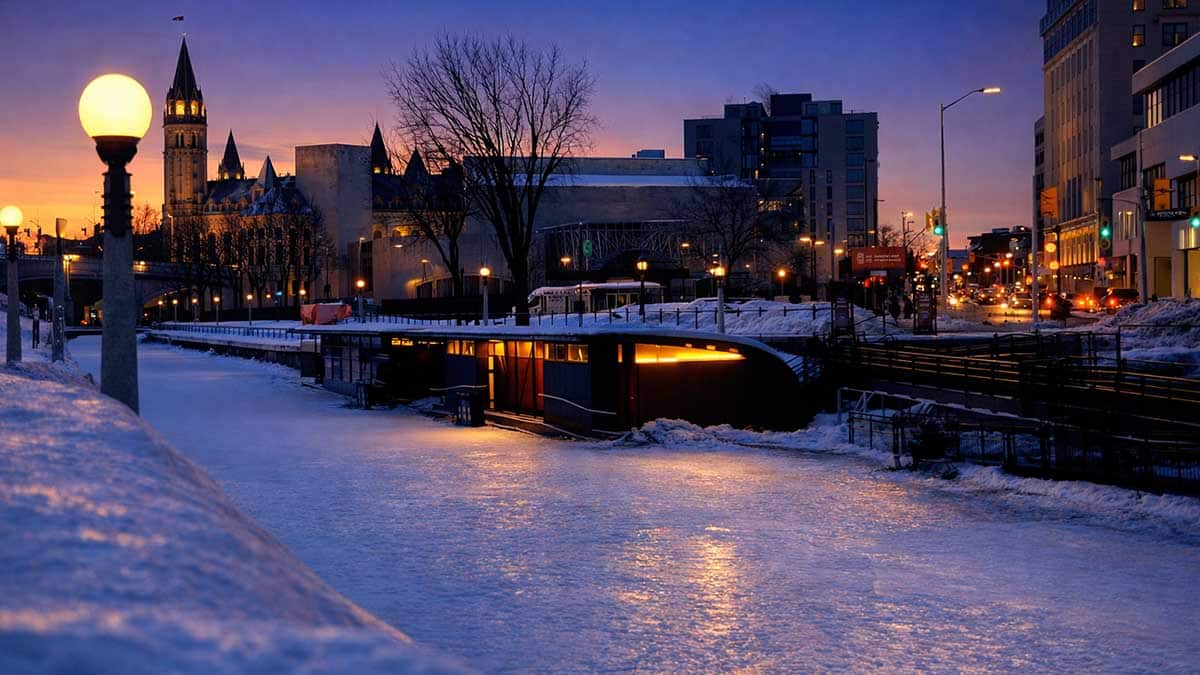
Some winter activities happen in a bubble: you drive to a venue, do the thing, and leave. The Rideau Canal, when it’s open, feels different. You are skating through the city, hopping on and off like it’s a moving promenade, with cafés and neighborhoods nearby.
The only mistake is treating it as guaranteed. The canal opens only when the ice is ready, and it can change quickly with weather swings. So plan it like a limited-time experience: bring solid info, keep a little margin, and have a backup that still makes the day feel worth it.
Not “a rink” but a city-crossing skate
What makes the Rideau Canal special isn’t just skating. It’s the format: a real point-to-point route, not laps in a rectangle. You pick an access point, glide a stretch, warm up, and continue if you feel good.
Here’s what that looks like on the ground:
- A long corridor of ice, up to 7.8 km when fully open
- A free, public space that feels like part of downtown Ottawa
- A winter vibe that works for skaters and non-skaters alike
Even if your travel buddy doesn’t skate, it’s still a fun outing. The banks are great for walking, photos, and cheering on the brave souls attempting speed runs.
The real on/off switch is 30 cm of ice
If there’s one number to remember, it’s this: roughly 30 cm of ice is the benchmark before the Skateway opens to the public. It’s not about “it looks frozen”, it’s about safety and consistency.
Also, the canal rarely opens all at once. It’s monitored and managed by sections, so conditions can vary along the route. Wind, snow cover, temperature spikes, and surface quality all influence what’s open today and what might close tomorrow.
Quick table: three common situations and what to do
| What you see | What it means | What you do |
| “Open in sections” | Some parts are ready, others aren’t | Choose a specific access point and plan a short route |
| “Rough surface or snow” | Open, but not super comfortable | Skate slower, go shorter, take breaks |
| “Warm spell forecast” | Closure risk rises fast | Put the canal early in your trip, not on the last day |
The simplest habit: check the official ice conditions update from the National Capital Commission before you head out.
Timing your trip without gambling on the weather
People often mention that the canal needs a sustained cold stretch to build strong ice, often quoted as around 10 to 14 consecutive days of solid winter temperatures. It’s not a promise, but it explains why a “kind of cold” week isn’t enough.
In recent years, that consistency has been harder to come by. That’s why the best approach for visitors is mindset and logistics: treat skating as a high-value bonus, then build the rest of your Ottawa plan so it stands on its own.
A traveler-friendly way to do it:
- Aim for dates after Ottawa has had a stable cold period
- Keep one flexible day so you can pivot
- If the canal opens during your stay, grab it early and enjoy it fully
The Ulysse way to do it: a great day, open or closed
You want the canal experience to feel easy, not stressful. That’s mostly about comfort and expectations.
A short, realistic checklist
- Dress in layers so you can adjust as you warm up
- Bring gloves that let you tie laces properly
- Wear decent socks, especially if you use skate rentals
- Pack water and a snack; cold weather hides thirst
- Plan for 60 to 120 minutes for a relaxed outing with breaks
If you’re renting skates, try to arrive earlier on busy days. Sizes can run out, and queues can turn “quick skate” into “standing around in the cold”.
If the canal closes, don’t force it
Ottawa still works beautifully as a winter city break. Switch to a downtown loop: museums, warm cafés, short walks with good photo light, and a slower pace that still feels like winter travel, not consolation.
The goal isn’t to “replace” the canal. It’s to keep the day feeling like a proper trip, with or without perfect ice.
Skating the Rideau Canal is part timing, part luck, and mostly smart planning. Catch it open and you get a simple, memorable winter moment that feels uniquely Ottawa. Miss it, and you can still have a strong winter day, as long as you built flexibility into your plan.