Show summary Hide summary
Summary:
- Active volcano hikes that are open to travelers right now.
- What these trails really feel like, beyond the photos.
- Simple safety habits that protect you without ruining the day.
- A quick comparison to pick a hike that fits your level.
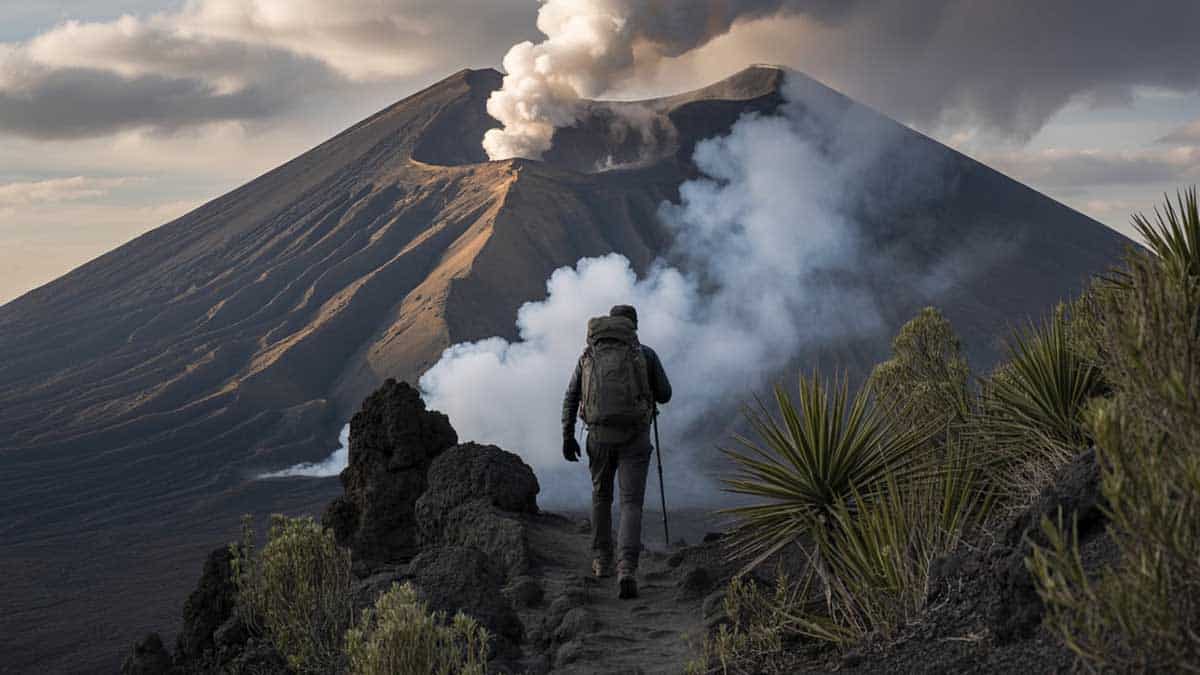
There is a fantasy many of us carry: climbing a volcano while lava glows nearby, the ground trembling under our boots, the air thick with drama. The truth is usually less cinematic, and honestly better. Because what you get instead is a living landscape, shaped by heat, ash, wind, and time.
The best volcano hikes are not about flirting with danger. They are about access, timing, and respect. You follow a route that is open for a reason, you listen to local guidance, and you experience something rare: walking on land that is still evolving. Here are the volcano hikes that make sense, what to expect, and how to do it well.
Bhutan: the country that quietly slows you down (and you’ll thank it for)
Europe in 2026: the trips worth planning around real dates
The “i want a volcano, but make it easy” picks in Europe
If you want your first volcanic hike without flying across the planet, Europe is surprisingly generous. The trails are structured, the rules are clear, and the experience still feels intense. It is the easiest way to get real volcanic scenery with strong safety frameworks.
Mount Etna, Sicily: the volcano that never looks the same twice
Etna is the kind of mountain you can visit twice and swear you are in a different place. The lower slopes often feel welcoming: wide volcanic paths, black rock that crunches under your feet, and the sea shimmering in the distance. Even a moderate route can give you a strong sense of scale and movement.
Higher up, the vibe shifts. The air gets sharper, the landscape emptier, the ground darker and rougher, like it was shaped yesterday. Access changes depending on the day. Some areas are open, others are off-limits, and sometimes you can go high only with an authorised guide. That flexibility is not a limitation. It is part of what makes Etna feel alive.
Local tip: Start early. Etna can be hot, exposed, and crowded by late morning, especially in peak season. Early light also makes the volcanic terrain look more textured and dramatic.
Mount Vesuvius, Italy: short climb, heavy atmosphere
Vesuvius is not a long hike, but the setting does most of the work. You climb a relatively direct path to the crater rim and, suddenly, there it is: Naples spread out below, the bay glowing, and a crater that looks calm, until you remember what it did. The place feels compact and intense, a rare mix for a quick walk.
It is an easy-to-medium effort, depending on heat and crowds, but it never feels casual. The wind can be strong, the sun can be unforgiving, and the trail is still volcanic ground. Go in with that mindset and you will enjoy it much more. The reward is a crater-edge panorama with real historical weight.
Eyjafjallajökull, Iceland: the long day that feels like another planet
Eyjafjallajökull is famous for its 2010 eruption, but hikers come for the atmosphere: ice, ash, huge open views, and weather that can change your plan in ten minutes. It is a hike where conditions matter as much as the route.
This is not a “let’s see how it goes” day. Glacier conditions, fog, and wind turn it into a serious outing, and guided trips are the smart way to do it. If you want your volcano hike to feel wild, Iceland delivers. Bring patience, warm layers, and the ability to accept a weather-driven schedule.
Volcano hikes that feel like real travel (not just a “spot”)
Outside Europe, volcano hikes often come with bigger contrasts: altitude, jungle, culture, or sheer scale. They feel less like a weekend plan and more like a memory you will keep replaying. In many cases, the hike is also a way to understand the local geography and identity.
Cotopaxi, Ecuador: the altitude that humbles everyone
Cotopaxi looks unreal. A near-perfect cone, snow on top, big skies, and wide Andean plains. Even if you do not attempt the summit, hiking up to the refuge already gives you that “I am really up here” feeling. The air is thinner, your steps are slower, and the landscape feels huge and quiet.
Cotopaxi is not difficult in a technical sense, but it demands rhythm. Go too fast and you will pay for it. Go steady, drink water, and let the scenery sink in. It is a clean, powerful introduction to high-altitude trekking.
Traveler’s note: If you have never been at altitude, give yourself a day or two in Quito or nearby before you push too high. That small adjustment can make the difference between a tough day and a good, steady climb.
Pacaya, Guatemala: hot ground, easy access, real volcano energy
Pacaya is often the first volcano hike travelers do in Central America. The hike is relatively short, the terrain changes quickly, and you reach volcanic ground where heat is not abstract. You can feel it through the soles of your shoes. Steam vents appear. Lava fields stretch out like frozen waves. It delivers instant volcanic atmosphere.
One thing to be honest about: you might not see glowing lava, and that is fine. Volcano activity is not a performance, and access can change. Pacaya is still a strong experience without the “wow, lava!” moment. Go for the textures and heat, not a guaranteed spectacle.
Mount Fuji, Japan: not about danger, about the moment
Fuji is one of the most climbed volcanoes in the world, and you feel that on the trail. It becomes a shared experience. People walk quietly, rest at stations, adjust layers, sip warm drinks, and keep moving. Most hikers aim for sunrise, and when the sky turns pink above the clouds, the hype suddenly makes sense. It is a steady, emotional climb.
Fuji has not erupted since 1707, but it is still considered active. That fact matters less than what the mountain represents. For many, the climb is personal, almost meditative, even when done in a crowd. It is as much about ritual and effort as it is about geology.
Mount Bromo, Indonesia: short hike, surreal landscape
Bromo is often described as easy, and the hike is not long, but the environment is so strange that it feels like a dream. A wide caldera filled with volcanic sand, dust swirling around your legs, and the crater smoking in the distance. The setting has a desert-like mood, even in tropical Indonesia.
Many people do sunrise viewpoints first, then cross the Sea of Sand and climb the staircase to the rim. It is one of those places where the smell of sulfur and the sound of the wind do more than any photo ever could. Bromo is a compact hit of pure volcanic scenery.
The safety rules that don’t kill the fun (they protect it)
Volcano hiking is simple when you treat it like what it is: a controlled adventure. The goal is not to get as close as possible. The goal is to have a day you will remember for the right reasons. A good volcano hike is built on discipline and flexibility.
Before you go
- Check official park updates the same day. Volcanoes do not care about your itinerary.
- If a guide is required, do not negotiate with reality. Book it.
- Pack layers even if it looks warm. Wind and altitude are sneaky.
- Bring extra water and a snack you actually want to eat.
On the trail
- Stay on marked routes. Volcanic ground can look solid and behave differently.
- Treat steam vents and warm spots as hazards, not photo props.
- If you feel dizzy at altitude, slow down immediately.
- If conditions shift, fog, wind, ash, do not wait for the “perfect moment.” Turn back early.
Reynisfjara right now: what changed on Iceland’s black sand beach
Europe’s 2026 travel shortlist: Madeira, Tbilisi, Milan, Glasgow
The best mindset: You are a guest in a live environment. Respect is part of the experience. It is the simplest way to protect both your trip and the site.
Quick match guide: which volcano hike should you choose?
| Volcano | Best for | Effort level | What it feels like |
| Etna | Variety and big views | Medium | Dark lava fields, shifting terrain, sea horizon |
| Vesuvius | Quick crater experience | Easy to medium | Short climb, strong atmosphere, bay views |
| Eyjafjallajökull | Wild landscapes and glacier | Hard | Wind, ice, long day, raw Iceland mood |
| Cotopaxi (to refuge) | First taste of real altitude | Medium | Thin air, massive skies, quiet scale |
| Pacaya | Beginner volcano energy | Easy to medium | Warm ground, steam, lava fields |
| Fuji | Cultural climb and sunrise | Medium | Steady ascent, shared trail, iconic summit |
| Bromo | Short hike with huge scenery | Easy | Volcanic sand, sulfur, smoking crater |
Volcano hikes reset your sense of scale. You climb, you breathe, you slow down, and you realise how small we are next to the planet’s forces. And if you do it with the right mindset, it is not risky. It is simply honest travel, grounded in rules and reality.Pick a volcano that matches your level, follow local guidance, and let the landscape do what it does best. It reminds you that Earth is still alive, and that you are lucky to witness it. The best part is leaving with a memory that feels earned and real.