Show summary Hide summary
Summary:
- The most inspiring peaks across Honshu and beyond.
- Easy day escapes near Tokyo.
- Sacred mountains with layers of culture.
- Seasonal insights to choose the right trail.
- Clear planning tips for smoother routes.
Mountains thread across Japan like a backbone, giving the country those clean, unexpected horizons that appear between buildings or over train windows. Even if you don’t see yourself as a hiker, spending a day up there changes the tempo of a trip. The silence, the cool air, the shrines hidden in the forest: everything invites you to slow down. Many travelers mention how these places help them reconnect with a calmer rhythm or find a moment of simple clarity.
This guide brings together several peaks that shape the travel experience in Japan. There is the unmistakable silhouette of Mount Fuji and quieter mountains where you can walk for hours with very few people around. Each section focuses on what you will really feel once on the trail and how to pick the mountain that matches your style. You’ll find a mix of practical notes and small observations that make a difference. Let’s head up.
Bhutan: the country that quietly slows you down (and you’ll thank it for)
Europe in 2026: the trips worth planning around real dates
Mount Fuji: more than a photo, a moment
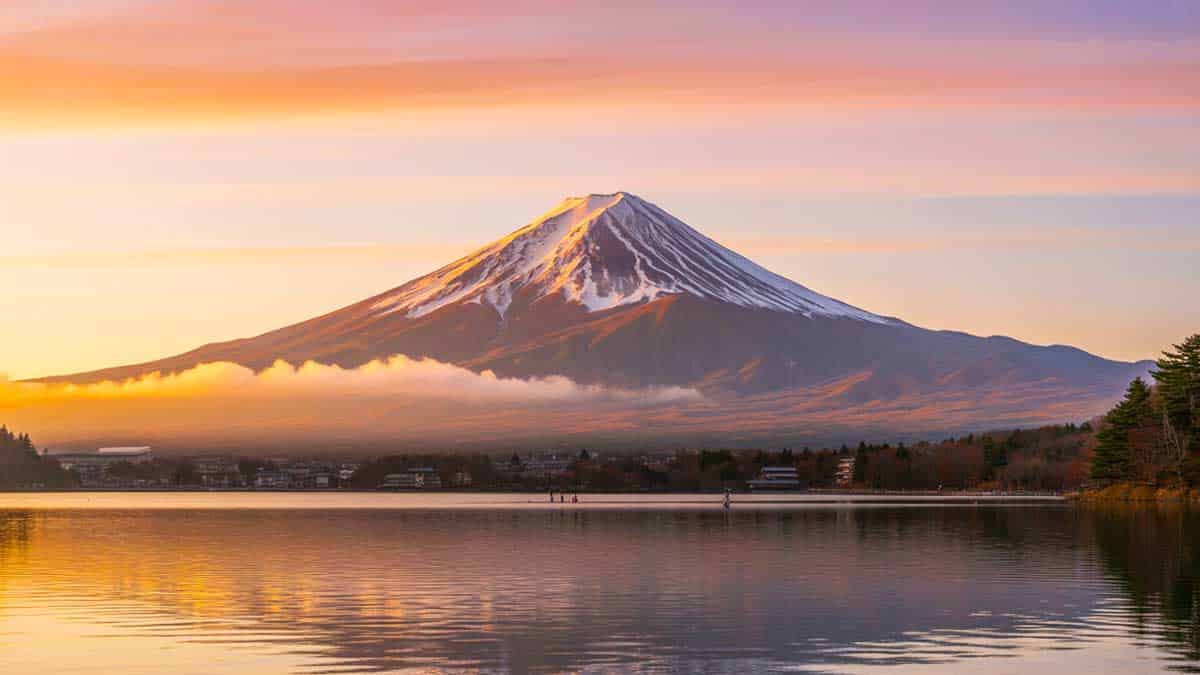
You’ve seen it everywhere, yet the first real view of Mount Fuji often surprises travelers with its scale. The symmetry feels almost unreal, especially around the Fuji Five Lakes where water and sky reflect the peak with a mirror-like calm. Even without climbing, the villages and lakes offer an atmosphere that feels both grounded and deeply scenic.
Climbing Fuji is possible only in summer, but the base area stays active all year. Spring brings flowers, winter sharpens the contours, autumn softens everything with warm light.
What to do
- Climb during the official July to August season.
- Watch sunrise from the Yoshida route.
- Photograph Fuji from Lake Kawaguchi or Chureito Pagoda.
- Explore quieter viewpoints in Fujiyoshida.
Good to know
Access from Tokyo is simple, making Fuji perfect for first-timers. If you visit outside the climbing season, hot springs nearby offer a warm seat with a perfect mountain view.
Tateyama: walking between giant snow walls
Tateyama rises behind Toyama with the quiet confidence of a high alpine mountain. The landscape changes quickly: deep snow corridors in spring, volcanic textures in summer, golden slopes in autumn. Many visitors are surprised by how accessible these environments are despite their altitude. The contrast between snow, sky and rock creates a unique sense of scale and a feeling of pure mountain air.
The Tateyama Kurobe Alpine Route links cable cars, buses and short trails, letting you step straight into high-altitude scenery without a demanding climb.
Highlights
- Spring snow walls reaching up to 20 meters.
- A 1.7 km cable car crossing steep slopes.
- Volcanic terrain and blue mountain ponds such as Mikurigaike.
- Easy paths suitable for relaxed walkers.
Budget insight
Transport adds a cost, but the mix of scenery in a single day makes it memorable.
Mount Haku: a long, quiet ascent into tradition
Mount Haku stretches between Ishikawa and Gifu and offers one of Japan’s most peaceful full-day hikes. The trail begins in dense forest, then opens into wide volcanic plateaus where the sky feels surprisingly open. It’s a mountain that rewards steady walkers and those who enjoy a calm environment.
Along the way, you’ll pass shrines and old markers that hint at centuries of pilgrimage. Nothing is staged or curated; these relics simply belong to the mountain.
What to expect
- Routes of 8 to 10 hours from June to October.
- Snow and ice shaping the landscape the rest of the year.
- A quiet atmosphere far from busy circuits.
- Long, smooth climbs ideal for hikers with consistent pace.
Traveler’s note
Choose Haku if you want depth rather than speed.
Mount Kita: a Southern Alps classic
Mount Kita, the second-highest peak in Japan, stands in the Southern Alps, a region known for bold ridges and long, satisfying climbs. The ascent mixes forest sections, open slopes and high ridgelines that feel genuinely alpine. Many travelers appreciate the sense of progression: each hour brings a clearer horizon and a stronger feeling of altitude.
Mountain huts make it possible to stay overnight and reach the summit early. Sunrise here offers a full, unobstructed view of Fuji floating above the valley.
Routes and experience
- Alternating snow valleys and rocky terrain.
- Overnight huts available.
- Some of Japan’s best high-altitude panoramas.
- A rewarding hike for travelers who enjoy long days outside.
Local tip
Start early from Kofu or sleep in a hut to enjoy the route without rushing.
Taka o and Mitake: Tokyo’s easiest nature fix
Not every mountain day needs ambition. Takao and Mitake, both near Tokyo, offer gentle escapes that mix culture, forest and fresh air.
Mount Takao
At 599 meters, Takao is a favorite after-work or weekend destination for locals. Trails weave between old cedars and the Yakuoin Temple, creating a mix of spiritual calm and casual walking. The cable car helps avoid the steepest section, making it accessible to almost everyone. The atmosphere is light, friendly and ideal for beginners.
Mount Mitake
Mitake rises to 929 meters and has a distinct personality: a mountain shrine at the top, old houses, small inns and quiet forest paths. It feels like stepping into a small mountain village far from the capital, even though it’s only an hour and a half away. The area is perfect for people who want a bit of culture with their walk.
Quick comparison
| Feature | Mount Takao | Mount Mitake |
| Access | about 1 hour from Shinjuku | about 95 minutes with JR Pass |
| Difficulty | easy | easy to moderate |
| Cultural site | Yakuoin Temple | Musashi Mitake Shrine |
| Best for | first nature walks | forest lovers |
Yari, Asama and Norikura: for travelers who want more
Mount Yari
Known for its sharp summit, Yari needs a longer approach and usually an overnight stay. The final section, steeper and more exposed, offers a taste of real mountaineering. It’s a good choice if you enjoy a sense of challenge and want something beyond a typical trail.
Mount Asama
One of Honshu’s most active volcanoes, Asama requires checking activity alerts before climbing. The route from Takamine Kogen is steady, with wide views of the highlands that make even cloudy days feel atmospheric. The volcanic landscape adds a distinctive mood to the ascent.
Mount Norikura
Reynisfjara right now: what changed on Iceland’s black sand beach
Europe’s 2026 travel shortlist: Madeira, Tbilisi, Milan, Glasgow
At 3026 meters, Norikura is one of Japan’s most accessible high peaks. Buses reach near the top, giving you altitude without technical difficulty. It’s great for families or travelers who want to feel high mountain air without a long effort.
Japan’s mountains all offer something different: calm, challenge, culture, space. Whether you climb, wander or simply sit and look around, each peak leaves a trace in its own way. If you feel like seeing Japan from above, the trails are already there, waiting.