
Summary:
- Finland tops the 2025 World Happiness Report again.
- Nordic societies thrive on trust, equality, and social balance.
- Happiness depends more on belonging than on income.
- Costa Rica and Mexico enter the top 10 with strong optimism.
- France and the US see a noticeable drop in well-being.
Every year, the World Happiness Report measures how people around the globe evaluate their lives. Finland has now taken first place for eight consecutive years, a rare consistency that tells a bigger story.
In the Nordic region, happiness isn’t seen as a personal goal but as a shared responsibility. Citizens expect fairness, social trust, and a life that leaves room for both family and rest. The result is a calm, steady contentment that doesn’t rely on luck or luxury.
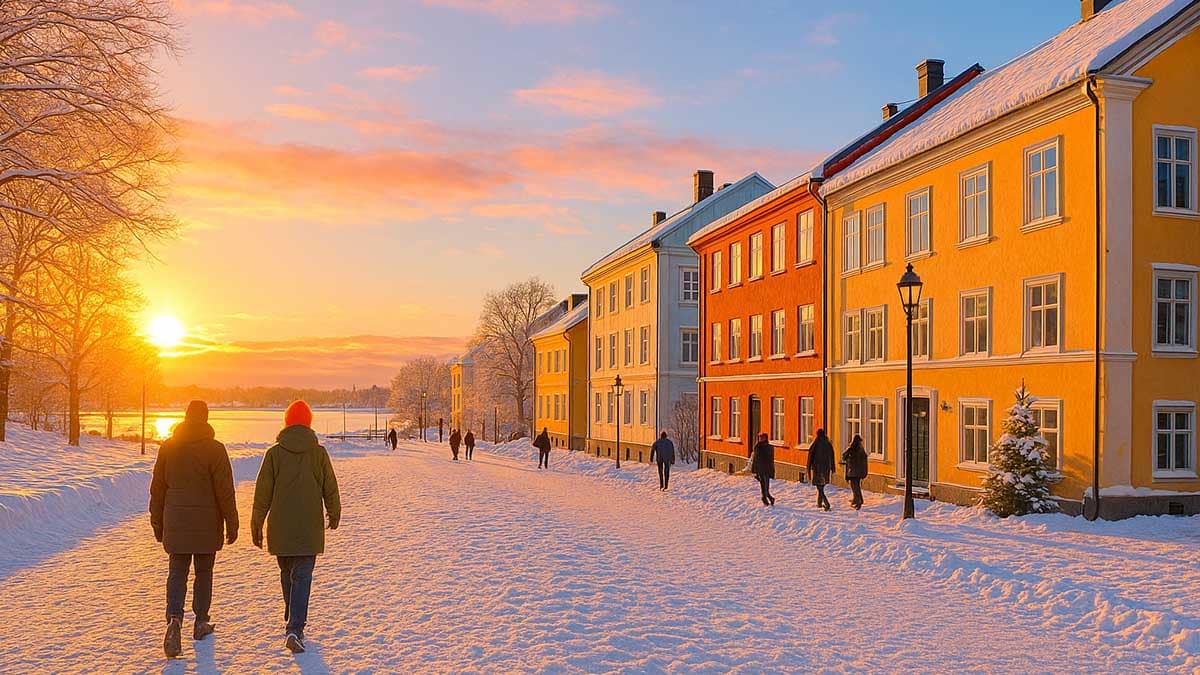
What sets these societies apart is their ability to align daily life with collective values. From public services to workplace culture, policies encourage people to slow down, spend time outdoors, and connect with others. In Finland, even simple habits like gathering in public saunas or spending weekends in nature reflect a mindset where well-being comes first.
How Finland built its “happiness system”
Finland’s success comes from decades of choices that put people first. Universal healthcare, accessible education, and green cities are only part of what locals sometimes call their “happiness system.”
Public policies are designed to make life smoother, not just richer. Trust in institutions runs high, corruption stays low, and work-life balance is more than a slogan. The Finnish model treats stability and equality as basic rights rather than privileges.
Core elements of Nordic happiness:
- Education and healthcare for everyone.
- Transparent governments people can trust.
- Time for family, nature, and rest.
- Equal opportunities and gender balance.
- Active community life and volunteering culture.
When citizens feel protected and respected, they participate more. It creates a cycle of trust and contribution where well-being becomes self-sustaining.
A wider picture: happiness across the world
The 2025 results show that happiness isn’t limited to wealthy nations. Costa Rica and Mexico joined the top 10 thanks to strong community ties and a deeply rooted optimism about life.
Meanwhile, France dropped to 33rd place, and the United States to 24th, their lowest rankings so far. Researchers link this decline to growing mistrust, social isolation, and political fatigue.
| Rank | Country | Region |
| 1 | Finland | Northern Europe |
| 2 | Denmark | Northern Europe |
| 3 | Iceland | Northern Europe |
| 4 | Sweden | Northern Europe |
| 5 | Netherlands | Western Europe |
| 6 | Costa Rica | Central America |
| 7 | Norway | Northern Europe |
| 8 | Israel | Middle East |
| 9 | Luxembourg | Western Europe |
| 10 | Mexico | North America |
This global mix proves that happiness takes many shapes, but one thing remains constant: it flourishes where trust, equality, and belonging form the backbone of society.
What the numbers really mean
The World Happiness Report evaluates six factors: income, social support, life expectancy, freedom, generosity, and corruption perception. Among these, social support consistently has the greatest impact.
In places where people can count on others, satisfaction rises. A Finnish teacher, a Costa Rican farmer, or an Icelandic student might all describe a similar peace of mind despite their differences. What unites them is the belief that they’re part of a community that won’t let them fall.
Beyond statistics, the report highlights a vital truth. Happiness is a measure of trust in the future. When people feel that their voices matter and their institutions are fair, hope becomes part of everyday life.
What the world can learn from the Nordics
The Nordic model isn’t flawless. Winters are long, taxes are high, and isolation can hit hard in the darker months. Yet the region’s approach offers a lesson: well-being is built, not wished for.
Lessons for a happier life and society:
- Build systems that inspire trust and transparency.
- Encourage balance instead of overwork.
- Value empathy and fairness over competition.
- Support mental health as a collective duty.
- Treat community as the real source of security.
While other countries chase productivity, the Nordics invest in contentment and connection. Their quiet success suggests that true progress isn’t measured in GDP but in how people feel about their lives.
Finland and its neighbors remind the world that happiness isn’t about endless growth or status. It’s about balance, purpose, and trust. The Nordic lesson is simple yet powerful: societies thrive when people care for one another.
In an age of distraction and uncertainty, their approach feels refreshingly human. Happiness doesn’t have to be loud or spectacular. Sometimes, it’s found in the quiet assurance that you belong somewhere, and that’s enough.