Show summary Hide summary
Summary:
- Why Blue Voyage stands among the largest 3D printed ceramic installations in the world.
- How Studio RAP blended digital design with handcrafted glazing.
- What travelers feel when walking between these wave shaped walls.
- Where to find this installation inside the hotel.
Travelers often expect luxury hotels to impress with polished lobbies or panoramic views. Yet one of Dubai’s most surprising encounters happens before reaching the reception desk. At Jumeirah Marsa Al Arab, a five star hotel by the Gulf, visitors enter through two tall ceramic walls whose shapes echo the motion of the sea. Blue Voyage, created by the Dutch studio RAP, stands as a remarkable example of how digital tools and manual expertise can shape a space that feels genuinely alive.
The installation creates the sensation of walking between two sculpted waves that shift with the light. Beyond its visual appeal, Blue Voyage offers a moment of calm that contrasts with the surrounding energy of Dubai. This article explores how it was made, what travelers notice when they pass through it, and why it has become a subtle highlight for visitors. Let’s dive in.
Solo female travel: a simple guide to feel safe, social, and fully yourself
Lascaux IV in 2026: the 10th anniversary dates worth planning around
A monumental piece of 3D printed architecture
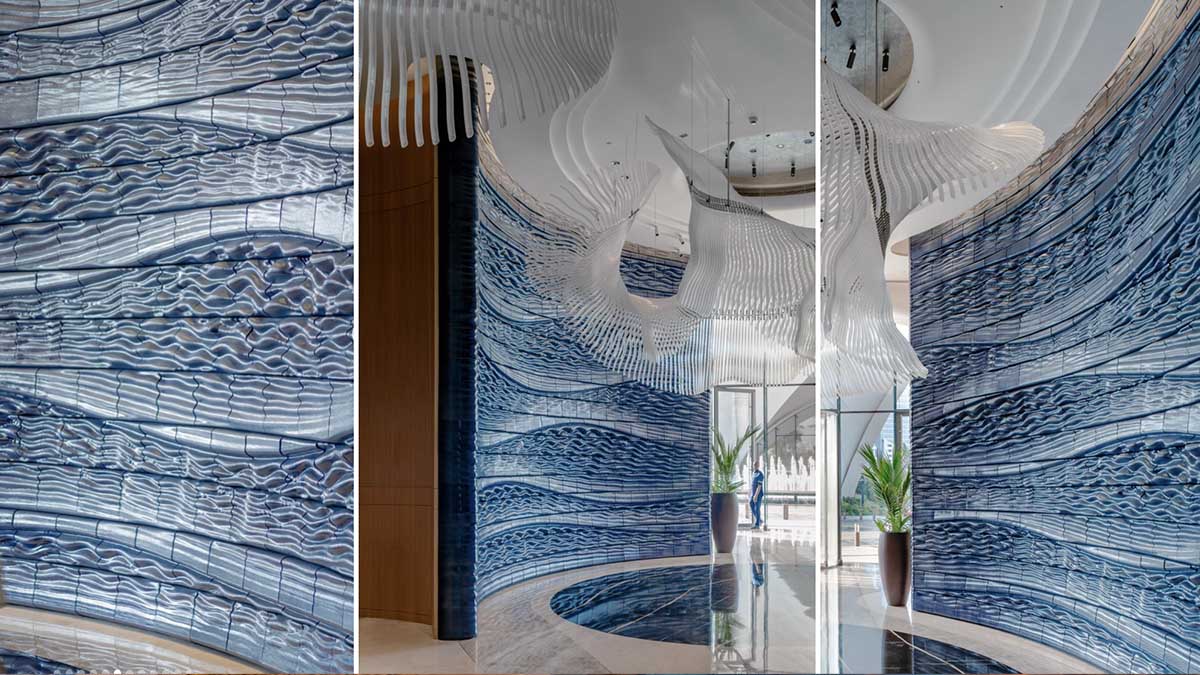
Blue Voyage is considered one of the largest ceramic 3D printed installations worldwide. Each wall rises nearly six meters high and nine meters wide, creating a structure that feels both imposing and fluid. Rather than relying on repetitive patterns, each tile contributes to a continuous movement that runs across the entire surface.
This sense of flow was intentional. Studio RAP designed the piece to echo the nearby Gulf waves, resulting in a surface that shifts with perspective. As travelers approach, the curves reveal delicate contrasts between light and shadow, giving the installation a living, breathing quality without overstating its presence.
How each tile was designed and crafted
Despite its organic look, the installation was built through precise computational modeling. Each of the 900 ceramic tileswas adjusted individually to define curvature, depth and alignment. This process allowed the studio to create a surface that feels natural while remaining technically controlled.
Once the digital models were complete, the tiles were printed in the Netherlands using Kuka robotic arms capable of shaping detailed ceramic forms. After printing, each piece was fired and glazed by Royal Tichelaar, a Dutch pottery company known for refined craftsmanship. This combination of digital precision and hands on finishing gives Blue Voyage its distinctive texture and warmth.
Traveler’s note
Many visitors pause to observe how the glaze reacts to shifting light. The surface subtly changes tones, creating a moment of quiet curiosity for those stepping into the hotel.
A space created for travelers to walk through
Blue Voyage was designed as a passage rather than a static sculpture. The two facing walls naturally guide guests as they enter the hotel, forming a corridor shaped by light, shadows and gentle curves. This transition from the bright exterior of Dubai to the cooler interior of the lobby creates a sensory break that many travelers appreciate.
Some describe the experience as walking inside a stylized representation of water. Others enjoy the feeling of calm before stepping into the bustling parts of the hotel. The installation succeeds because it offers a small, unexpected moment of stillness without overwhelming the space.
What this means for you
You can visit Blue Voyage even if you’re not staying at the hotel, and the entrance remains open for travelers who wish to take a closer look.
What this tells us about contemporary hotel design
More hotels are integrating artworks into their spaces, but few incorporate computational design and large scale 3D printing as thoroughly as Blue Voyage. The installation demonstrates how architecture can offer a tailored, site specific experience while staying accessible to travelers.
For visitors, it adds a different dimension to Dubai. Beyond its skyline and well known landmarks, the city also hosts projects that explore new ways of shaping materials and space. Blue Voyage reflects this atmosphere by blending digital craft with a calm, sensory experience available to anyone who walks through the entrance.
Practical Details for Travelers
Guimarães 2026: Portugal’s Green Capital you’ll actually enjoy
Greece, Croatia, Albania: three neighbors, three very different travel moods for 2026
If you plan to see Blue Voyage during a trip to Dubai, here are a few helpful details:
Where to find it
- Location: Entrance of Jumeirah Marsa Al Arab, Dubai
- Access: Open to visitors without reservation
- Best time to visit: Late afternoon or early evening when the light enhances the ceramic reflections
Quick comparison table
| Aspect | Blue Voyage Experience | Typical Hotel Art |
| Interaction | Walk through | Viewed from a distance |
| Material | 3D printed ceramic | Mixed materials |
| Design process | Parametric modeling plus glazing | Traditional techniques |
| Emotional effect | Calm and sensory | Decorative |
Local tip
Combine your visit with a walk along the waterfront where the sea provides a peaceful contrast to the hotel’s interior energy.Blue Voyage is more than a decorative feature. It offers travelers a chance to walk through a sculpted passage of ceramic waves, shaped by both digital design and careful craftsmanship. Whether you’re staying at Jumeirah Marsa Al Arab or simply exploring Dubai, taking a moment to pass between these walls adds a quiet and memorable pause to your trip.