
Summary:
- Easy, real-life ways to get around without stress.
- How locals mix buses, ferries and scenic drives.
- Secret spots worth the detour.
- Tips for traveling slower, safer and smarter.
Most travelers stop in San Juan, take a few photos of pastel facades, then call it a day. But Puerto Rico’s real spirit lives beyond the capital, in the curve of a mountain road where clouds hang low, in a roadside stand where salsa spills from the radio, or on a ferry full of families heading home. Each ride, each pause, tells a story.
This guide isn’t about ticking off destinations. It’s about moving through Puerto Rico the way locals do: with time, curiosity and a touch of improvisation. You’ll find here the most practical ways to get around, but also the small choices that make a trip feel alive. In Puerto Rico, travel isn’t just logistics. It’s a state of mind. The road, the sea and even the wait between two buses become part of the experience.
San Juan on the move: walking, riding and wandering
San Juan can be lively, messy and endlessly charming, sometimes all at once. The trick is to mix and match how you move.
- Walk whenever you can. The old town is compact, and every turn reveals a new mural, a street musician or a view of the sea. Stop for shaved ice at a street cart or grab a strong coffee at a corner kiosk. That’s how locals pause.
- Try the metro. The light-rail line links Santurce, Río Piedras and Bayamón. It’s clean, cheap and used by students, office workers and night-shift staff heading home, a small slice of everyday life.
- Ask before you ride the bus. Schedules aren’t always clear, but advice at the stop often comes with a smile. You might end up in the right place, or somewhere even better.
- Hop on a bike or scooter. The coastal path from Condado to Piñones is pure joy, especially when the sun starts to fade. It smells of sea salt and grilled seafood, and the breeze feels like a reward.
Local note: Early mornings are calm and cool, perfect for exploring before the traffic heat rises. And if you get lost, don’t worry. In San Juan, even detours are part of the adventure.
The open road: where every mile feels like a discovery
Once you leave the capital, a car isn’t just transport, it’s freedom. Puerto Rico’s roads twist through green hills, past waterfalls and roadside grills that smell like roasted pork and coffee.
Driving here takes patience and a sense of humor. Potholes are common, music is loud and drivers greet each other with quick beeps that sound almost friendly. Once you adapt, the road becomes addictive. You can pull over for a swim in a hidden beach cove, stop at a stand selling empanadillas or follow signs to a mountain village where time seems to stand still.
The famous Ruta Panorámica is worth every curve: 167 miles of scenery, from the western city of Mayagüez to the mountain town of Cayey. Take it slow. Half the joy lies in the stops you didn’t plan.
| Region | Worth the drive | Distance from San Juan |
| Central mountains | Ruta Panorámica | 167 miles |
| North coast | Arecibo Caves | 50 miles |
| South coast | Ponce Old Town | 75 miles |
| East coast | Ceiba Ferry Terminal | 40 miles |
Traveler tip: Rent your car in San Juan. Prices drop sharply compared to smaller towns. Always double-check insurance and ferry permissions if you’re thinking of taking the car to the islands. And take your time. Puerto Rico isn’t made to be rushed.
Hop in: públicos and the art of sharing the ride
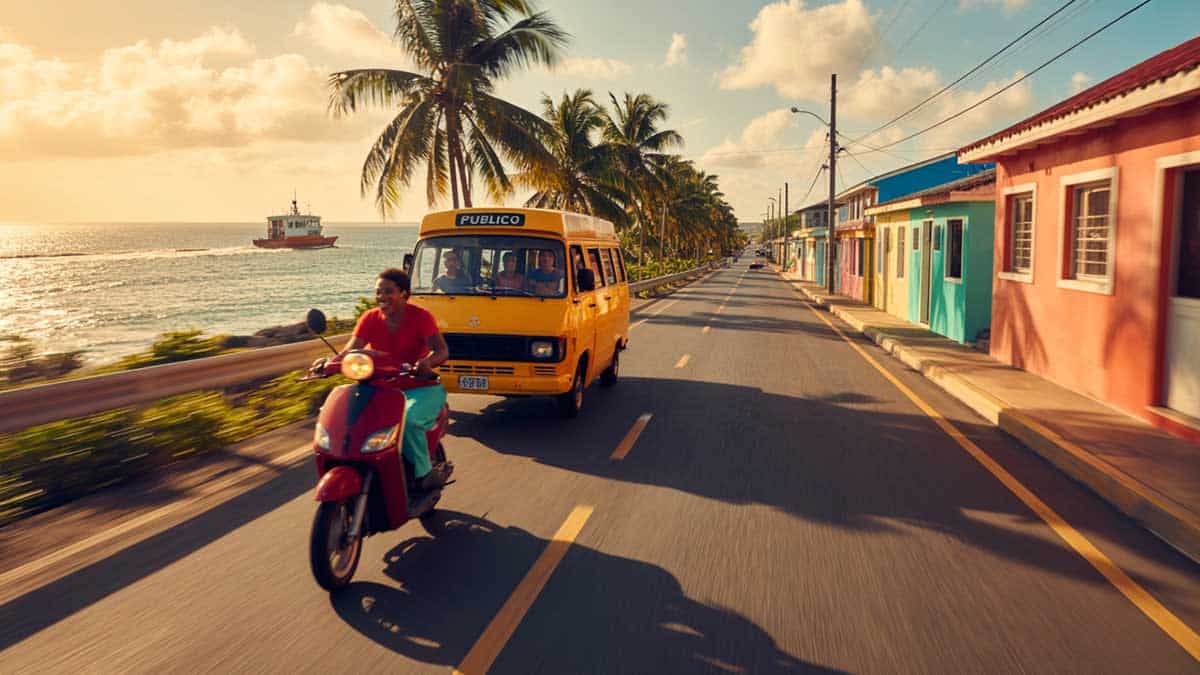
Want to feel Puerto Rico up close? Take a público, one of those shared vans that run between towns. There’s no fixed schedule, no digital booking, just locals and travelers hopping in until it’s full. Someone’s always telling a story, sharing snacks or turning up the radio.
It’s not the fastest way to move, but it’s the one that makes you part of the scene. A retired teacher might tell you about the old days; a young student might share their playlist. For a few dollars, you’ll cross miles and maybe a few cultural gaps too.
Other useful options:
- Uber: Easy to find in San Juan and along the north coast, though sometimes pricier during rain or rush hour.
- Taxis: Still reliable in Ponce and Mayagüez. Settle the fare before you go. Many drivers double as guides and know the best roadside cafés.
Good to know: Públicos are best for short distances and daytime rides. Don’t expect luxury, expect connection. The journey is part of the story.
Beyond the shore: ferries, flights and the slow way south
A trip to Puerto Rico wouldn’t be complete without crossing the sea. Ferries to Vieques and Culebra leave from Ceiba several times a day, carrying commuters, beachgoers and daydreamers alike. Grab a seat by the window. If luck’s on your side, dolphins might join the ride.
Flying from San Juan is quicker, but the ferry is where you feel the island breathe. The air smells of salt and sunscreen, vendors sell pastelillos and coconut water, and locals nap through the crossing as if it were a daily commute.
Before you go:
- Be early, at least an hour ahead.
- Travel light, ferries fill up fast.
- Check schedules in hurricane season, delays happen.
- Keep an eye out for humpback whales in January. It happens more often than you’d think.
Budget note: Round-trip fares to Vieques or Culebra average 12 to 15 dollars for visitors. For locals, it’s often just a few dollars less, a reminder that the ferry isn’t a tourist attraction but part of island life.
Travel gently: simple habits for a better journey
Puerto Rico’s beauty asks for care. A few mindful habits go a long way.
- Share rides or carpool when you can.
- Bring a refillable bottle, plastic piles up fast.
- Drive slowly through rural areas; chickens and dogs have no fear of traffic.
- Support local rentals, guides and cafés, your money stays where it matters.
- Skip night driving in the mountains unless you know the roads.
Beyond ecology, traveling gently is a way of syncing with the island’s pace. Puerto Rico isn’t in a hurry, and you don’t have to be either. Take time to talk, to listen, to stop at that unknown beach you just passed. Sometimes, the most memorable moment of the trip is the one you didn’t plan.
Getting around Puerto Rico isn’t about checking routes off a map. It’s about learning its rhythm. From the chatter in a público to the hum of tires on the Ruta Panorámica, movement here becomes its own kind of music. Each curve, each conversation, adds another note.
Go slow, stay curious and let the island show you how it moves, one ride, one road, one ferry at a time.